
From Town Square to Smartphone: Envisioning Hastings’ Digital Community Next Season | Ep.10

Image Photo Credit: HastingsNow.com/ashley
Style: Playful Soft-3D Characters
What It Looks Like: Rounded forms, pastel plastics, Pixar-esque lighting
Why It’s Hot: Perfect for mascot design and gamified UX.
One-Line GPT-4o Prompt Template*: “Bubble-gum pink axolotl mascot, soft-3D illustrative render, glossy clay material, studio key-light.”
As HastingsNow looks to the next season, they aim to put the community’s spirit – from Main Street shops to local voices – right in the palm of residents’ hands.
A Look Back – Community Connection Then and Now
Hastings has always been defined by its community connections. Picture the early 20th century: neighbors chatting at the Red Wing Depot, town meetings in the old city hall, the local newspaper hot off the press carrying community tidbits. The town square wasn’t just a place; it was an idea – that feeling of knowing what’s happening with the people around you. Over time, the ways we connect evolved. We got the telephone (suddenly you could hear news from across town instantly), then radio and TV broadcasting regional happenings. By the 2010s, social media became Hastings’ digital watering hole, with Facebook groups sharing school events or local alerts. Yet, as we stand in 2025, there’s a sense that the future of local community connection will look quite different from the past niemanlab.org, thepivotfund.org. Traditional local media has fragmented; Facebook’s feed has become noisy and less local-specific; and younger generations gravitate to platforms their parents don’t use. So where does that leave a community like Hastings? Co-founders of HastingsNow, Peter and Ashley, paint an exciting vision that might be our answer: a next-generation app and digital ecosystem tailor-made for Hastings – essentially, Hastings in the palm of your hand.
Present Reality – Laying the Digital Groundwork
Right now, HastingsNow.com and its social media channels already act as a de facto community hub. But Peter and Ashley see the limitations of current platforms. As Peter says, “I think brands can look forward to better content, more options and having more fun storytelling at the local level.” This hints that the status quo (a Facebook page, a website, scattered comments) isn’t enough. The team has been working on what Peter calls “our Local Pigeon MVP app”, which is nearing its beta release. This app is envisioned to host “Local Voices” seasons – likely episodic stories or podcasts featuring Hastings residents and businesses – effectively bringing the concept of a local talk show or radio hour to your smartphone on-demand. Imagine scrolling a feed where the content is only Hastings: a 30-second soundbite from the high school coach after a big game, a storytelling snippet from the owner of the new bakery on 2nd Street, a civic update from the mayor – all in one place, without the clutter of national politics or cat memes that dominate general social media. This hyper-local focus is where many experts see the future of local news and connection headed: platforms that double down on community content and trust folsomtimes.com, thepivotfund.org.
Ashley is particularly excited about integrating “new AI capabilities… as it fits within our storytelling.” This means the app won’t just be a static feed; it could be intelligent. For instance, AI could transcribe audio posts instantly (so you can read or listen), or even translate them (imagine a story told in Spanish by one resident with subtitles in English for others – or vice versa – bridging cultural gaps in town). AI might help personalize content: if you always engage with local sports stories, the app shows you more of those. The key is that these tech features will be woven in subtly to enhance the human stories, not replace them. As Peter notes, it’s about “producing excellent content for our favorite local brands” and presumably local people/places too. The tech is in service of human connection.
Future Vision – Hastings in Your Hand
So, let’s cast forward to next season, as the question asks. What can residents look forward to? According to Peter, “Next season we should have our first beta-testers using our app and a few ‘Local Voices’ seasons under our belt… slowly transitioning to a steady rhythm of excellent content.” Ashley adds, “There should be an app where you can consume and connect with the local community – Hastings in the palm of your hands.” This paints a picture of daily life in the near future: A resident wakes up, checks the Hastings app and sees a new 2-minute story published by a neighbor about their experience at the Rivertown Days festival last night. They listen while brewing coffee. Scrolling, they find a Soundbite from a local farmer at the Saturday market talking about this year’s pumpkin crop – they tap ‘like’ and maybe send it to a friend. In the afternoon, the resident uses the app to discover a new cafe’s special via a 15-second video clip the owner posted in the feed. Feeling connected, they drop by the cafe later. In the evening, perhaps they record their own Soundbite reacting to the latest Hastings Raiders game and post it – earning a few comments from other fans by next morning.
This scenario isn’t utopian; it’s very plausible and close at hand. What it does is digitally replicate and enhance the town square experience. Everyone can contribute (with moderation and verification to keep it civil and trustworthy, as hinted by Ashley’s note about brands becoming verified on the app). It blends the roles of content creator and consumer – you might listen one day and speak up the next. This is part of a larger trend of hyperlocal engagement, where communities use technology not just to consume information but to actively participate in it strikingly.com. Hastings could be ahead of the curve here. While other towns might rely solely on Facebook or a patchwork of Nextdoor and email lists, Hastings may have a one-stop-shop app that rivals what bigger cities have tried (often, larger cities use Nextdoor for neighbor posts, but it lacks curated storytelling; or they have local papers with apps, but not community-generated content).
Another facet of the future vision involves fun and integration. Peter mentions “having more fun storytelling at the local level.” Perhaps the app will incorporate gamification – imagine earning badges for contributing stories (“Community Reporter” badge after 5 posts, etc.), or interactive polls on local issues, or AR filters to decorate a photo of the Hastings bridge and post it. Since Ashley is keen on trying new tech as it fits, one could even foresee experiments with things like augmented reality historical tours (point your phone at a historic building and hear a Soundbite about it), or AI-driven personalization (maybe a chatbot in the app that can answer questions like “When is the next city council meeting?” based on local data).
Community and Culture – Why It Matters
All this tech talk circles back to community impact. Hastings’ residents should look forward to something very important: a stronger sense of togetherness. In an era when technology often fractures attention and pulls us into global echo chambers, Hastings is working on tech to pull its people closer locally. It’s aligning with a movement in journalism and civic tech emphasizing community trust and engagement thepivotfund.org. By verifying local brands (and likely notable community contributors) on the app, HastingsNow aims to ensure credibility and safety, addressing the misinformation worries that plague larger social media. Essentially, they want an online space as neighborly as a block party.
Imagine the cross-generational appeal: teenagers might use the app to promote school events or share TikTok-style snippets about youth culture in Hastings; parents might follow parks and rec updates and local business offers; seniors might enjoy audio stories of local history or city announcements. Bridging these groups in one platform can increase empathy and understanding across the community. It’s a bit like a digital campfire where all ages gather to hear what’s going on.
To sum it up, Peter and Ashley’s vision for next season is ambitious and exciting: a locally-focused, tech-empowered community forum that’s equal parts news, storytelling, and social connection. If successful, it could make Hastings a model for other small cities. We often hear of brain drain from small towns or the decline of local news, but here is a counter-narrative: a reinvention of local media powered by community voices and cutting-edge tech.
As Matt Mullenweg, the co-founder of WordPress, said, “Technology is best when it brings people together.” brainyquote.com Next season in Hastings, technology – via HastingsNow’s new app and initiatives – is poised to do exactly that. Residents should look forward to a more connected day-to-day life, where staying informed and involved in our town is as easy as unlocking your phone. The heart of Hastings has always been its people and stories; soon, there’ll be a new heartbeat in our hands, making those stories more accessible and interactive than ever. It’s Hastings, evolving with the times yet preserving its soul, one Soundbite at a time brainyquote.comfolsomtimes.com.
Sources: HastingsNow Co-founders Interview; Nieman Lab on future of local news niemanlab.org; Pivot Fund on community trust thepivotfund.org; Mullenweg quote on tech and connection brainyquote.com.
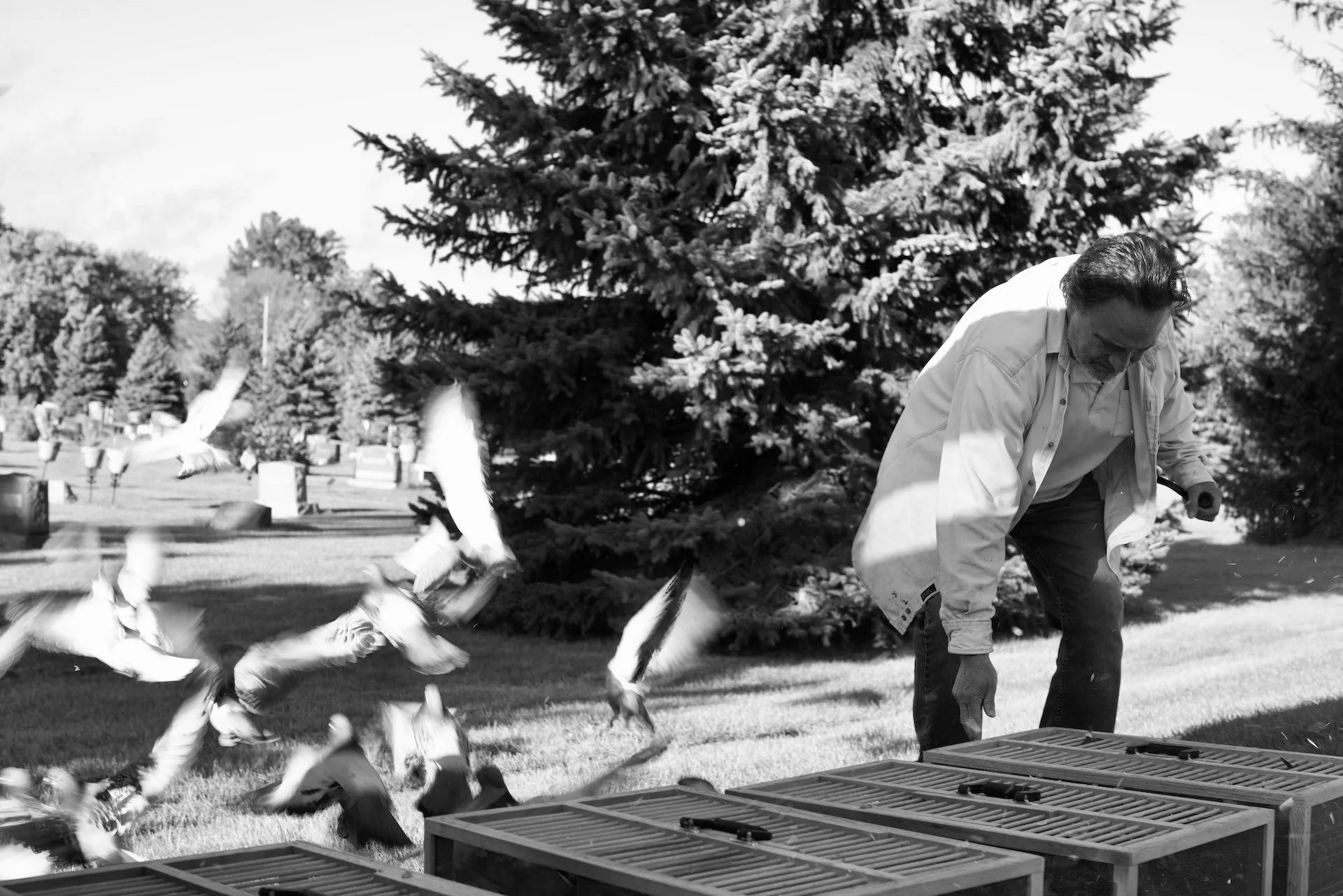
Local Pigeons have been delivering messages for ages from carrier pigeons throughout human history, in the first World War to racing pigeons today. Image credit: HastingsNow.com/peter