
When a Town Can No Longer Hear Itself
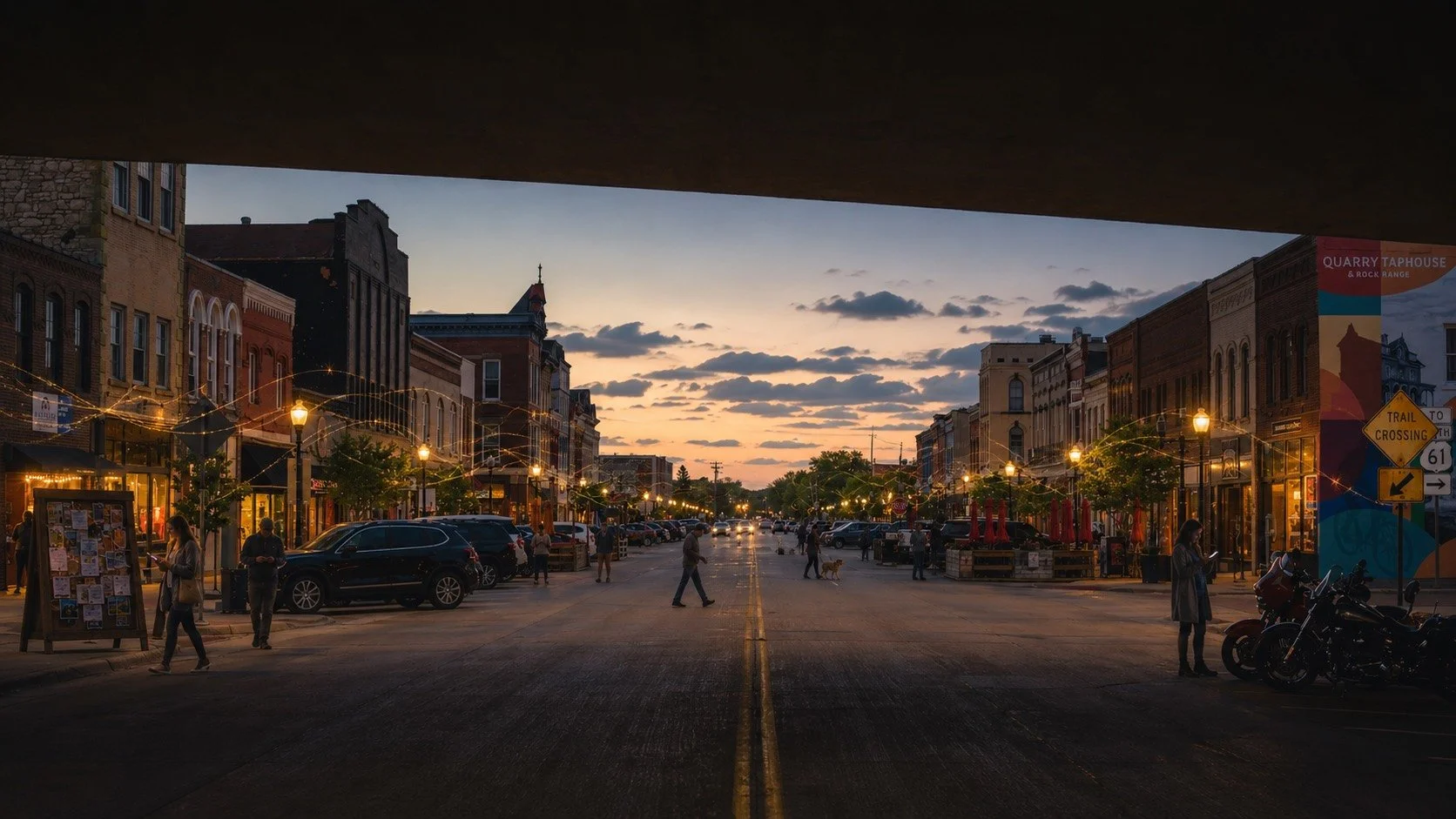
Local Pigeon and HastingsNow.com are developing a Civic Signal Design model in Hastings, Minnesota. Photo by HastingsNow.com
Civic Signal Design, Local Pigeon, and the urgent work of helping communities know what matters
There is a quiet kind of collapse that does not arrive all at once.
It does not always look like boarded windows, empty shelves, sirens, or smoke on the horizon.
Sometimes it looks like a town full of good people who can no longer tell what is true.
Sometimes it looks like a resident missing an important local update because it disappeared into a social feed.
Sometimes it looks like a small business owner posting the same announcement in five places and still wondering whether anyone saw it.
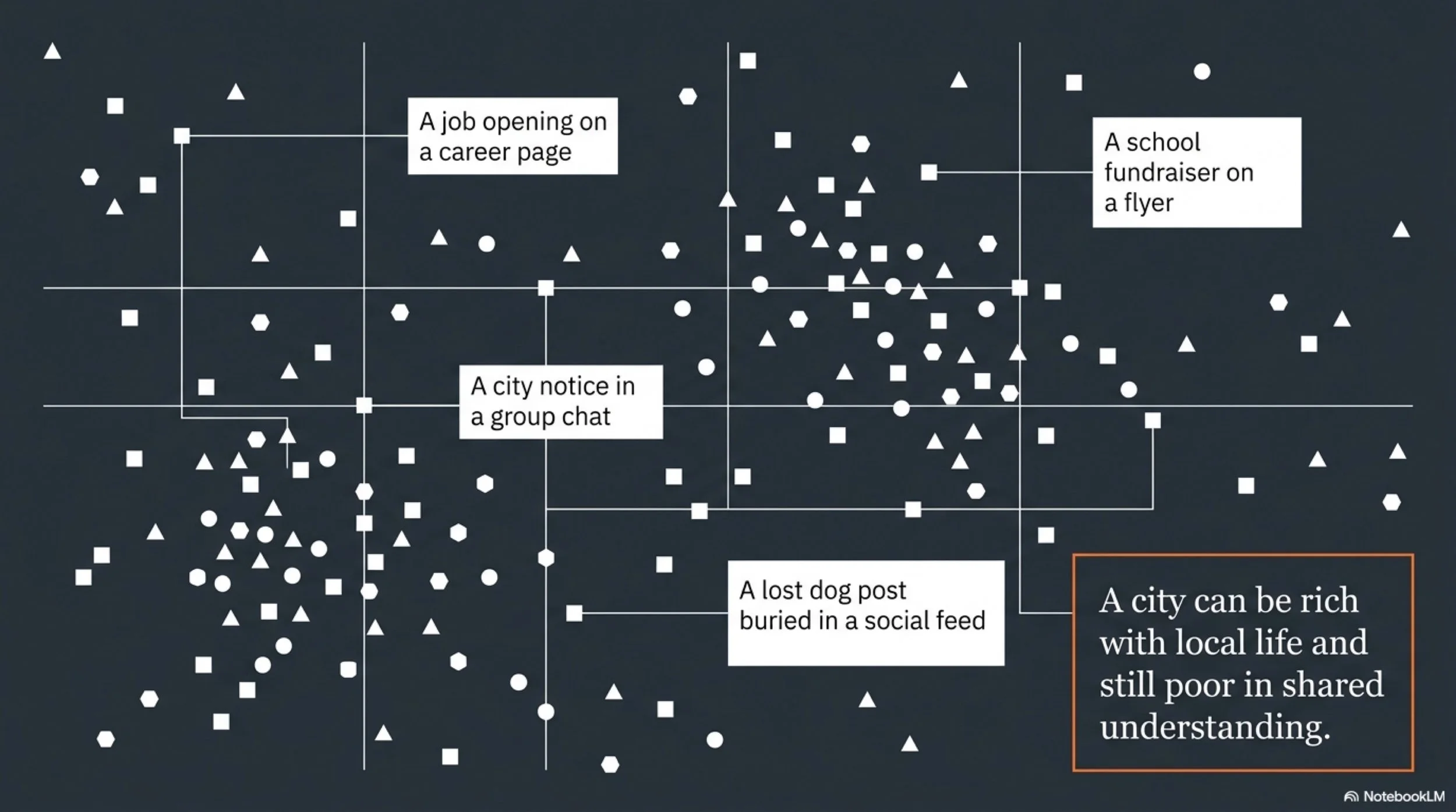
Sometimes it looks like a nonprofit needing help, a school event needing attention, a city notice needing clarity, a job opening needing applicants, a fundraiser needing neighbors, and all of it scattered across websites, Facebook posts, flyers, screenshots, inboxes, group chats, and half-remembered conversations.
Sometimes collapse begins when a community can no longer hear itself.
That may sound dramatic.
But maybe drama is what we need when the ordinary systems of local trust begin to fail quietly.
Because the crisis is not only national. It is local.
The crisis is not only political. It is informational.
The crisis is not only that people disagree. Free people will always disagree.
The deeper crisis is that people increasingly do not share the same signals. They do not see the same facts. They do not know which sources to trust. They do not know what is current, what is expired, what is sponsored, what is rumor, what is verified, what is automated, what is human, what is useful, and what is simply loud.
And when a town loses its shared signals, it loses more than information.
It loses coordination.
It loses memory.
It loses neighborliness.
It loses the ability to act together.
A community cannot respond to what it cannot clearly know.
That is the starting point.
And that is why Local Pigeon exists.
The problem is not that nothing is happening
Hastings, Minnesota is not empty.
It is full of motion.
Someone is hiring. Someone is opening. Someone is closing early. Someone is hosting a class. Someone is organizing a fundraiser. Someone is playing music downtown. Someone needs volunteers. Someone is collecting donations. Someone is changing their hours for the holiday. Someone is welcoming a new employee. Someone is launching a youth program. Someone is offering a deal. Someone is asking for help. Someone is remembering a loved one. Someone is trying to make rent. Someone is trying to keep a business alive. Someone is trying to tell the town something useful.
The problem is not that local life is dead.
The problem is that local life is scattered.
The information is everywhere and nowhere.
A city can be rich with local life and still poor in shared understanding.
That is the strange condition of modern communities. We have more posts, more platforms, more tools, more cameras, more microphones, more newsletters, more groups, more apps, more AI summaries, and more ways to say something than any town in history.
And yet a resident can still ask:
“What is actually happening today?”
That question should be easy.
It is not.
So maybe the future of local media is not more content.
Maybe the future is better signals.
The central idea: the health of a community depends on the quality of its shared signals
A signal is not just information.
A signal is information that can be trusted enough to act on.
A weather alert is a signal.
A parade route is a signal.
A job opening with a real source and a clear application link is a signal.
A restaurant update with the correct hours is a signal.
A school deadline is a signal.
A nonprofit need is a signal.
A Soundbite from a real local source is a signal.
A rumor is not a signal.
A vague promotional post is not yet a signal.
A screenshot with no source is not a reliable signal.
An AI-generated summary with no visible source is not a civic signal.
A sponsored item pretending to be editorial judgment is a corrupted signal.
This distinction matters.
Because when a community receives bad signals, it does not merely become misinformed. It becomes disorganized.
People miss things.
People distrust things.
People withdraw.
Businesses feel invisible.
Residents feel overwhelmed.
Nonprofits feel unheard.
Editors burn out.
Sponsors push harder.
Platforms reward whatever keeps attention.
And eventually, the town’s shared life starts depending on systems that were not built for the town.
That is the crisis.
Local Pigeon’s answer is simple:
Help communities turn scattered local activity into verified, human, useful civic signals.
That is the work.
That is the philosophy.
That is the product.
Civic Signal Design
We need a name for this work.
The best name may be Civic Signal Design.
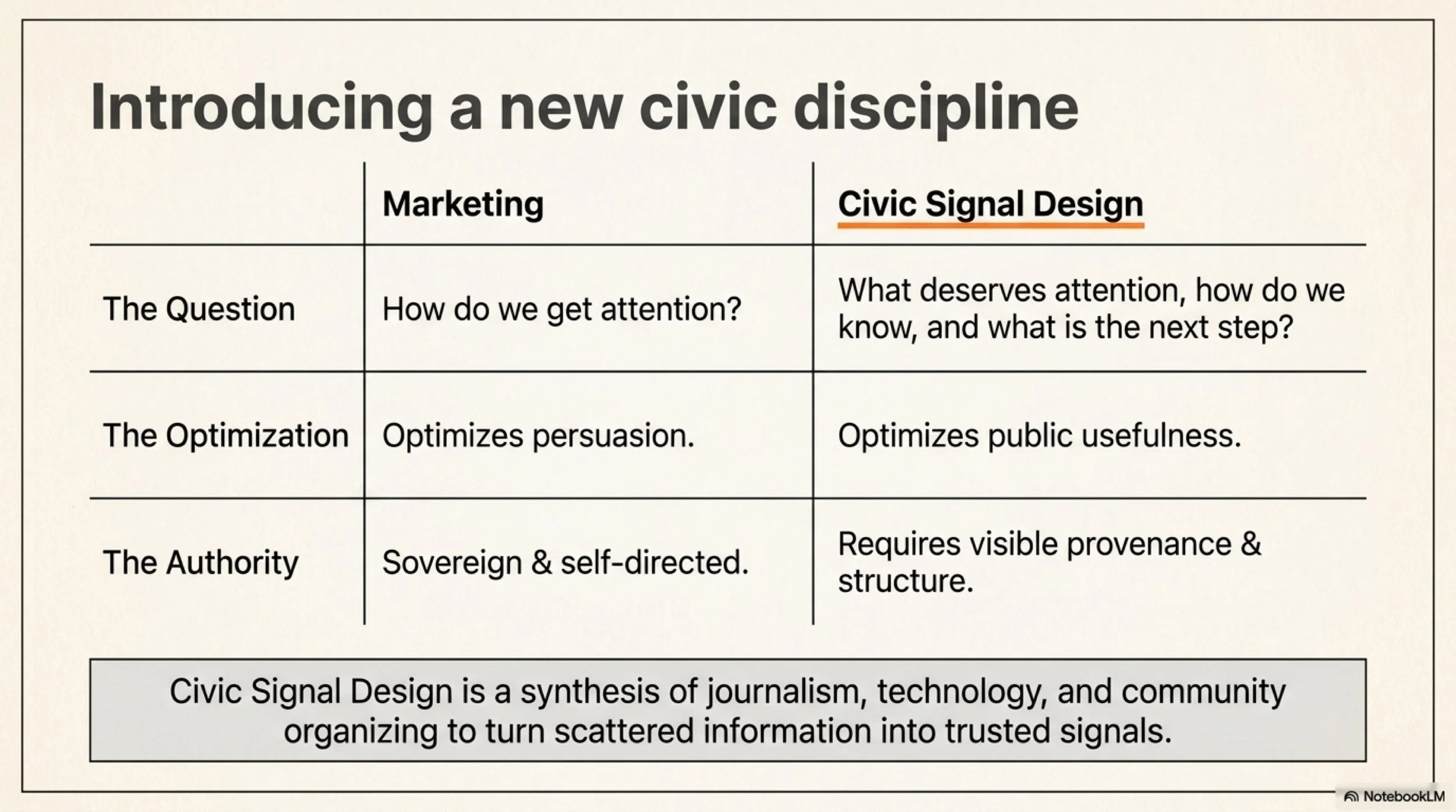
Civic Signal Design is the practice of helping a community turn scattered information into clear, source-backed, human-centered signals residents can trust, understand, and act on.
It is not just journalism.
It is not just marketing.
It is not just technology.
It is not just AI.
It is not just community organizing.
It is a new combination of all of them, guided by one question:
What would help a community know what matters without becoming more noisy, more manipulated, or more dependent on distant platforms?
Civic Signal Design asks:
Who said this?
Is it local?
Is it current?
Is it useful?
Is it public-safe?
Is there a clear next step?
Is the source visible?
Is money influencing attention?
Is AI helping or inventing?
Can the update be corrected?
Can residents understand it quickly?
Can local businesses participate without becoming influencers?
Can the town build a daily habit of shared usefulness?
This is not abstract.
This is practical.
It is the difference between “Big things coming soon!” and “Kids pottery class opens Monday; ages 8–12; 12 spots; register here.”
It is the difference between “We’re hiring!” and “Toolmaker Apprentice opening in Hastings; full-time; apply here; source: company careers page.”
It is the difference between “Don’t miss out!” and “Farmers market Saturday, 9 a.m. to 1 p.m., Riverside Park.”
It is the difference between noise and signal.
Moral systems design: making the right thing easier
Civic Signal Design is part of a larger idea: moral systems design.
Moral systems design means building tools, rules, habits, incentives, labels, workflows, and correction paths that make trustworthy behavior easier.
Not because people are perfect.
Because people are busy.
Because people forget.
Because people are tired.
Because people are emotional.
Because people are under pressure.
Because businesses need revenue.
Because platforms reward attention.
Because AI can sound confident even when it is wrong.
Because even good people need good systems.
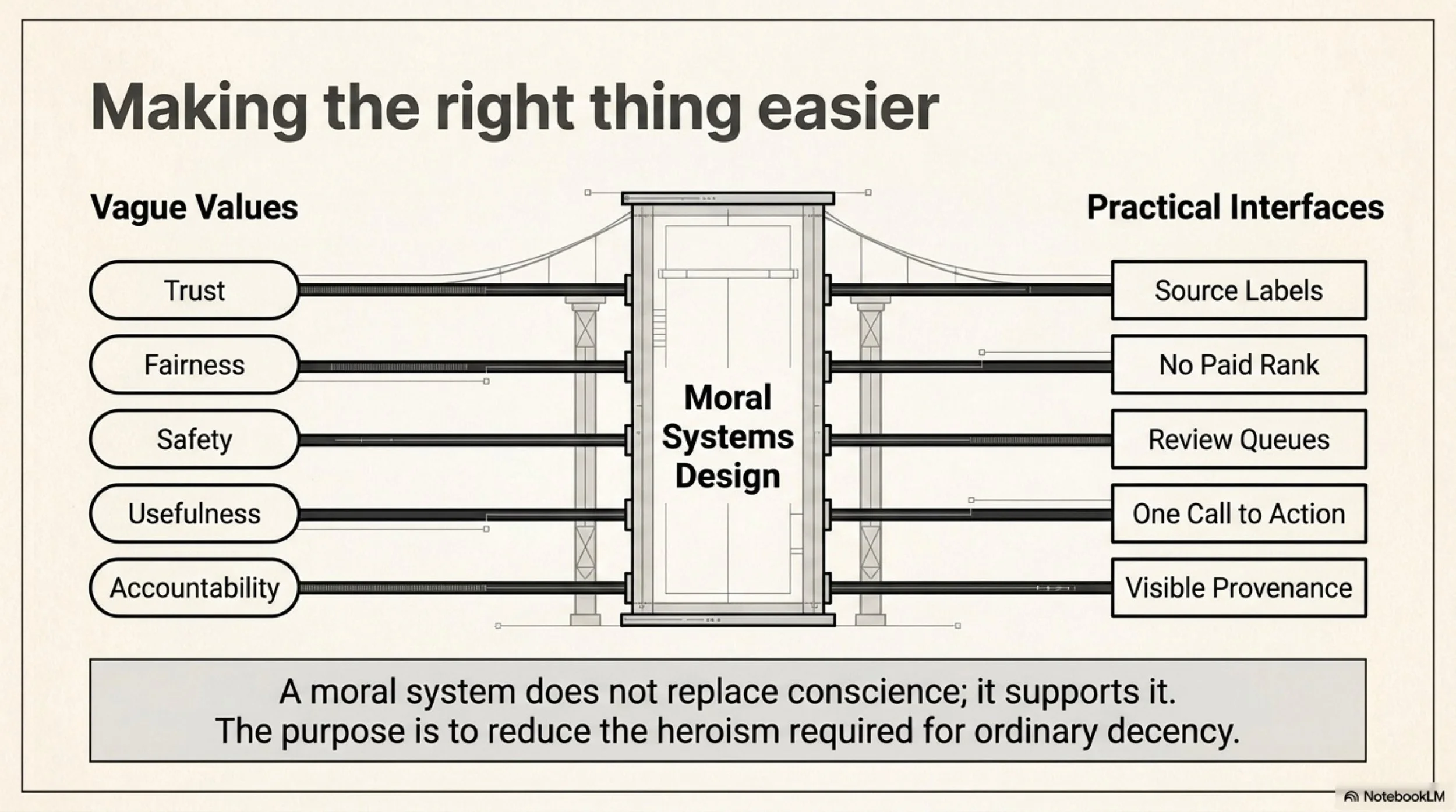
A moral system does not replace conscience. It supports conscience.
It takes values that would otherwise remain vague and turns them into practice.
Trust becomes source labels.
Fairness becomes no paid rank.
Humility becomes correction paths.
Safety becomes review queues.
Usefulness becomes one clear call to action.
Human dignity becomes a refusal to impersonate, manipulate, or expose people.
Accountability becomes visible provenance.
This is where the work becomes beautiful.
Because a moral system is not a speech about goodness.
It is a design that quietly helps people do better.
A crosswalk is a moral system.
A library card is a moral system.
A food label is a moral system.
A public meeting agenda is a moral system.
A correction notice is a moral system.
A trusted local update is a moral system.
The purpose is not to make people morally superior.
The purpose is to reduce the amount of heroism required for ordinary decency.
That is what Local Pigeon is trying to do for local information.
The before and after
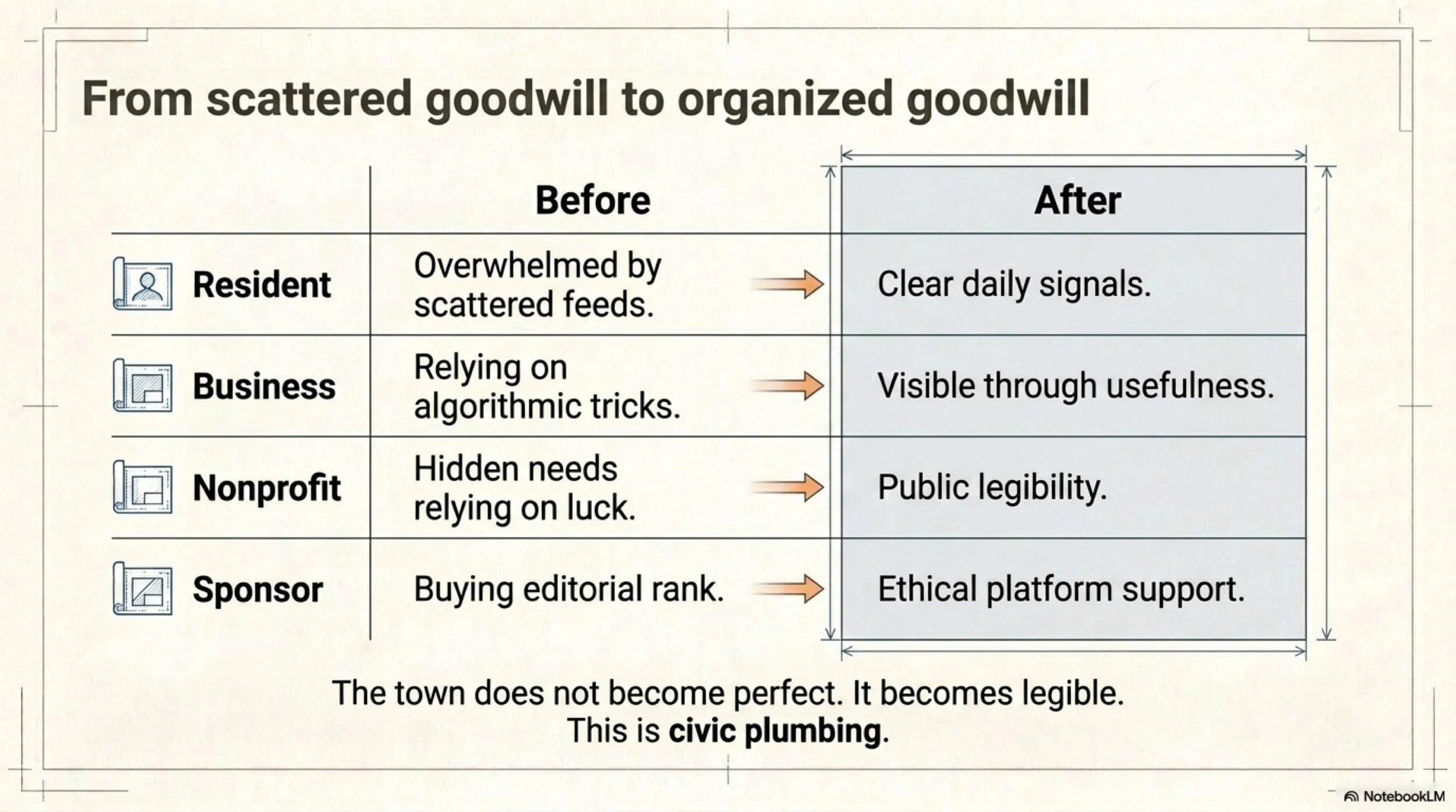
Before a community integrates a moral civic signal system, local trust is personal, hidden, uneven, and fragile.
People rely on who they know.
Businesses rely on social algorithms.
Residents rely on scattered feeds.
Nonprofits rely on goodwill.
Editors rely on memory.
Sponsors rely on access.
AI relies on whatever it can scrape.
The loudest signals rise. The most useful signals often do not.
After a community integrates a moral civic signal system, trust becomes more public, structured, inspectable, and repairable.
A resident can see where something came from.
A business can submit a clear update.
A nonprofit can explain a need.
A sponsor can support the platform without buying editorial rank.
An operator can review, hold, correct, archive, or elevate a signal.
A Soundbite can preserve the human voice behind an update.
A daily LOCAL 10 can help residents know what is most useful today.
The town does not become perfect.
It becomes more legible.
That is the real transformation:
Before: goodwill scattered. After: goodwill organized.
This is not utopia.
This is maintenance.
This is civic plumbing.
This is the work of helping a town’s shared life flow again.
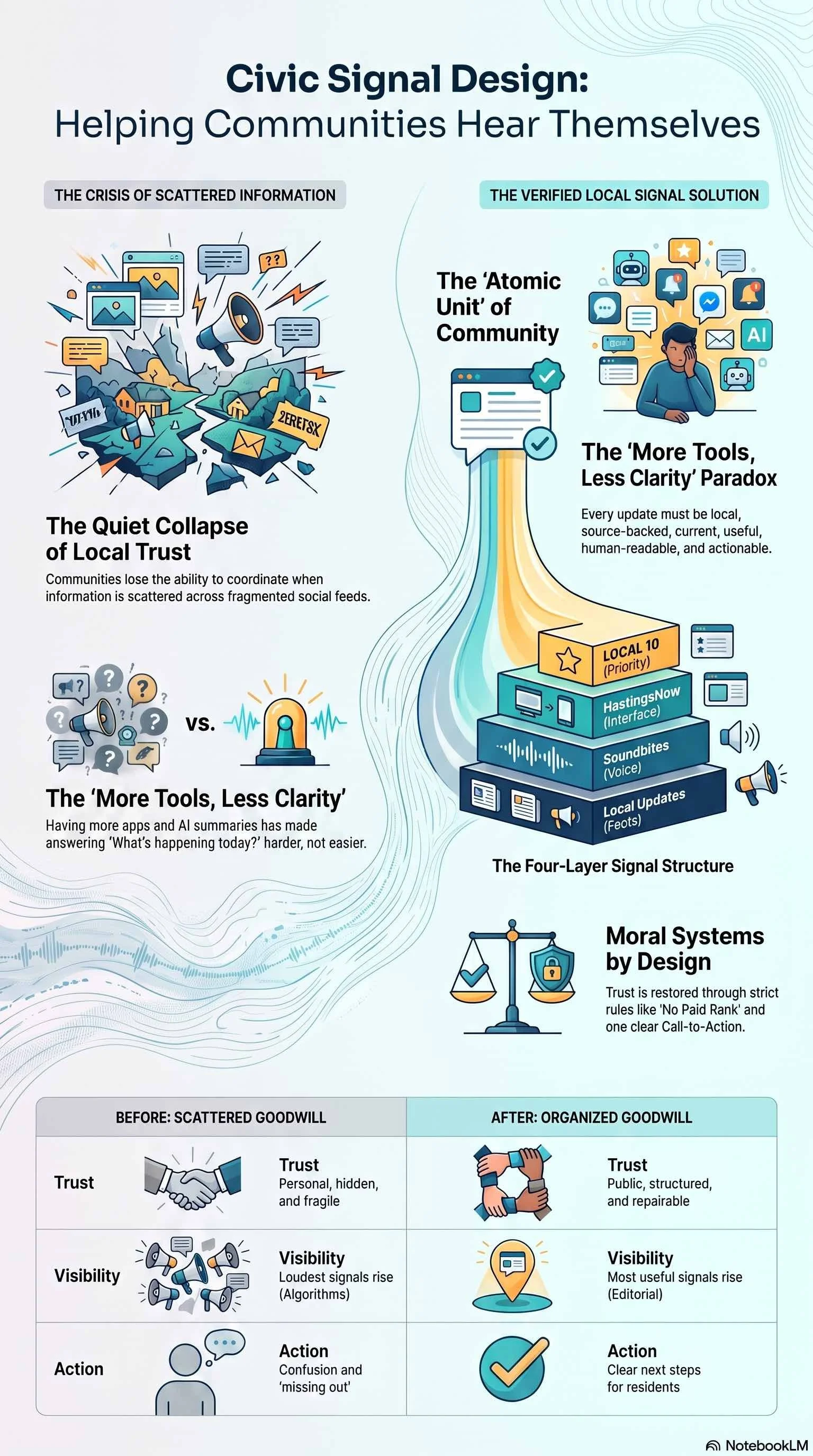
Infographic by HastingsNow.com
Through a Tocqueville lens: local self-knowledge
Alexis de Tocqueville saw something important about American democracy.
He saw that democracy was not sustained only by elections, laws, or institutions in Washington. It was sustained by habits. Associations. Local participation. Townships. Newspapers. Churches. Committees. Clubs. Civic rituals. Ordinary people practicing the art of self-government together.
Democracy was not merely a system of voting.
It was a way of learning how to act together.
That insight matters urgently now.
Because a community cannot govern itself if it cannot know itself.
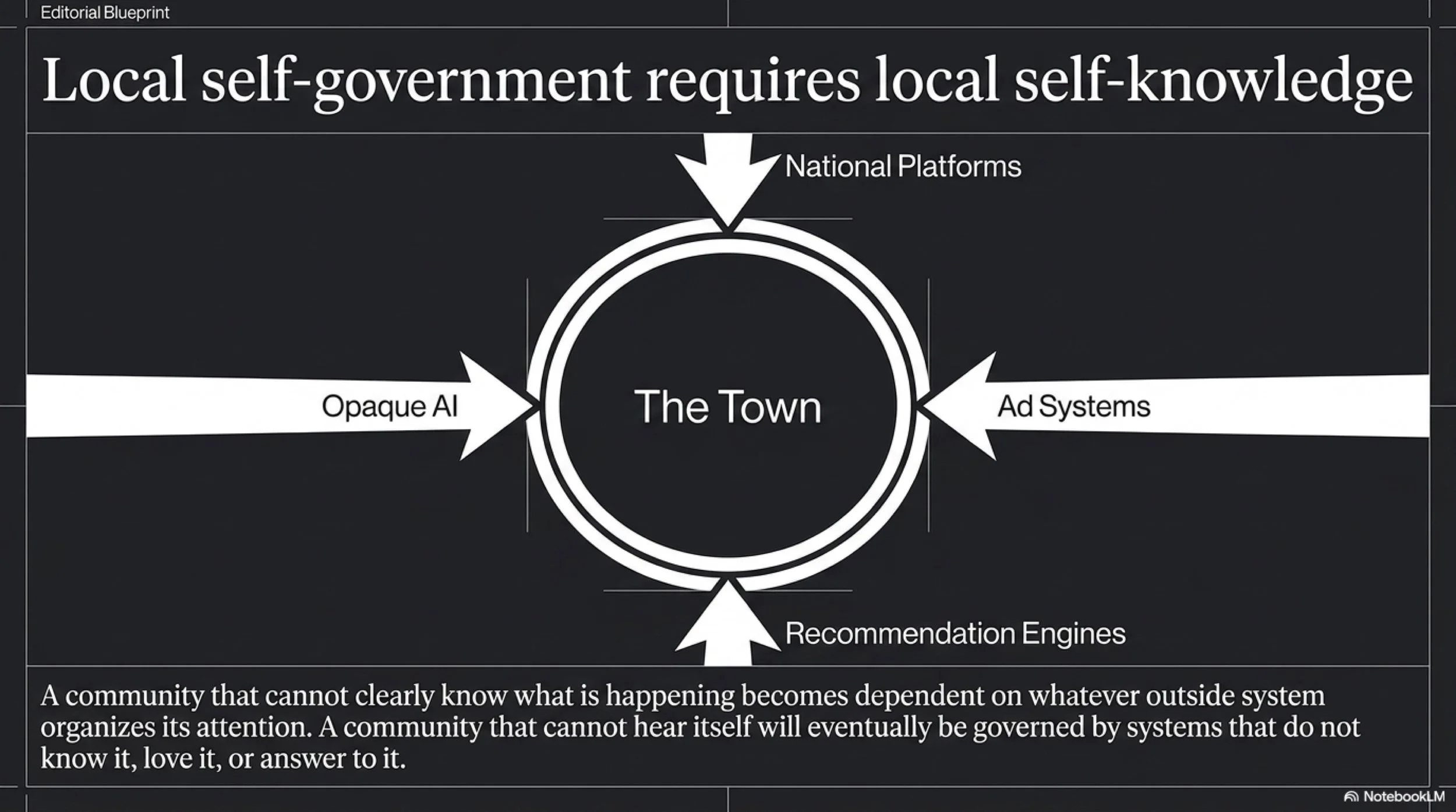
Local self-government requires local self-knowledge.
A town that cannot clearly know what is happening becomes dependent on whatever outside system organizes its attention.
Today, that outside system is often the national platform: Facebook, Google, TikTok, Instagram, Nextdoor, opaque AI answers, search algorithms, ad systems, recommendation engines, and feeds designed primarily for engagement rather than local truth.
Those tools can be useful.
But they are not a substitute for a town’s own civic signal system.
Through a Tocqueville lens, Local Pigeon is not merely a media tool.
It is a modern civic association machine.
It helps local sources become visible.
It helps residents find useful signals.
It helps businesses participate without buying false importance.
It helps human operators make transparent editorial judgments.
It helps a community practice self-knowledge.
And self-knowledge is not a luxury.
It is a condition of self-government.
The philosophical claim is this:
A community that cannot hear itself will eventually be governed by systems that do not know it, love it, or answer to it.
That is why this matters.
Why Hastings matters
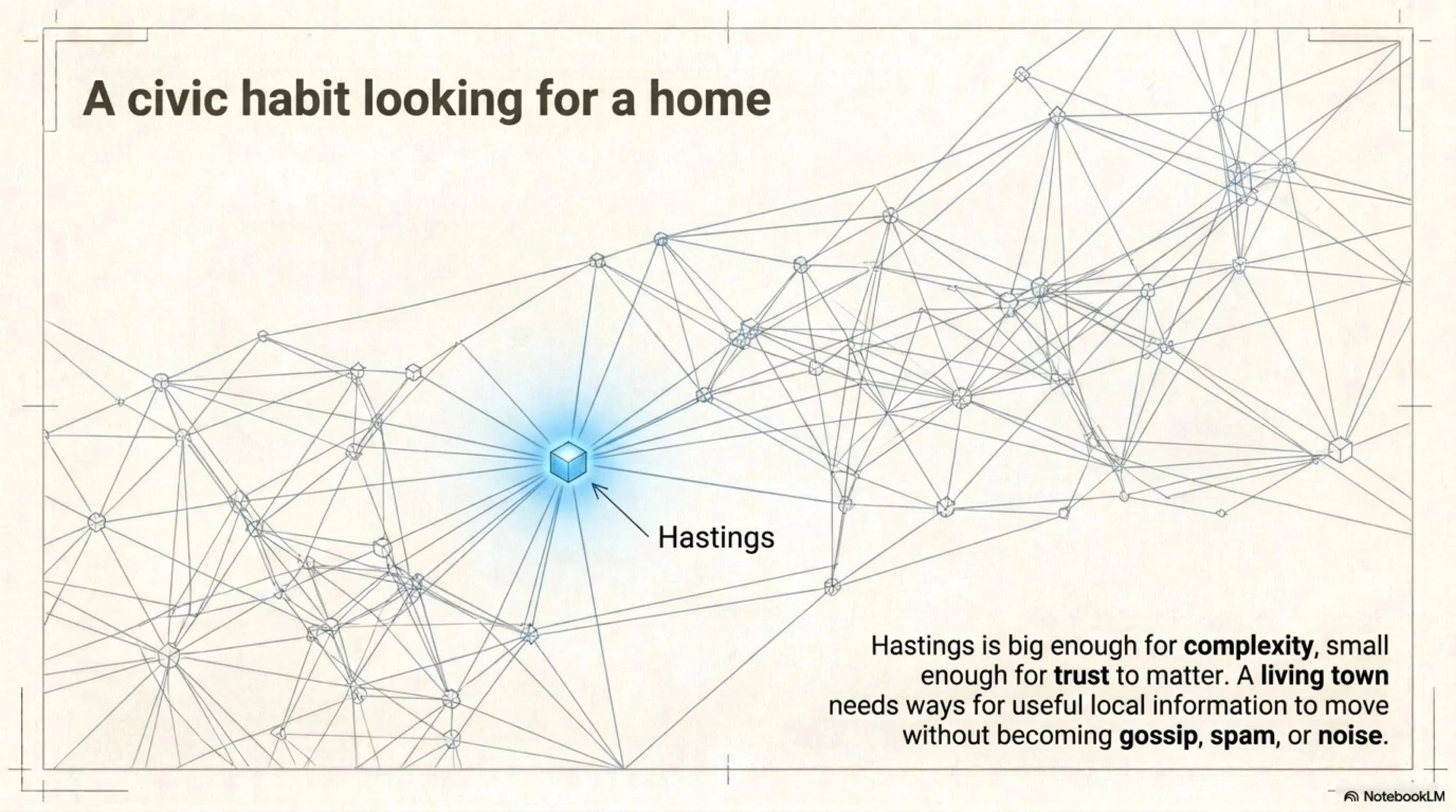
Hastings is a perfect place to begin because Hastings is big enough to contain complexity and small enough for trust to still matter.
People know names here.
People recognize storefronts.
People remember who showed up.
People notice when something feels real.
People also notice when something feels off.
That makes Hastings an ideal proving ground for a better local information system.
Not because Hastings is broken.
Because Hastings is alive.
A living town needs better circulation.
It needs ways for useful local information to move without becoming gossip, spam, or noise.
It needs a way for a pottery studio, a restaurant, a church, a gym, a nonprofit, a manufacturer, a city department, a school, a musician, a florist, a vet clinic, a boutique, a food shelf, and a resident organizer to share useful signals without each becoming a full-time media company.
That is the opening.
Local Pigeon can begin in Hastings not as an app looking for users, but as a civic habit looking for a home.
The atomic unit: the Verified Local Signal
Every scalable philosophy needs a small unit.
For Local Pigeon, the atomic unit is the Verified Local Signal.
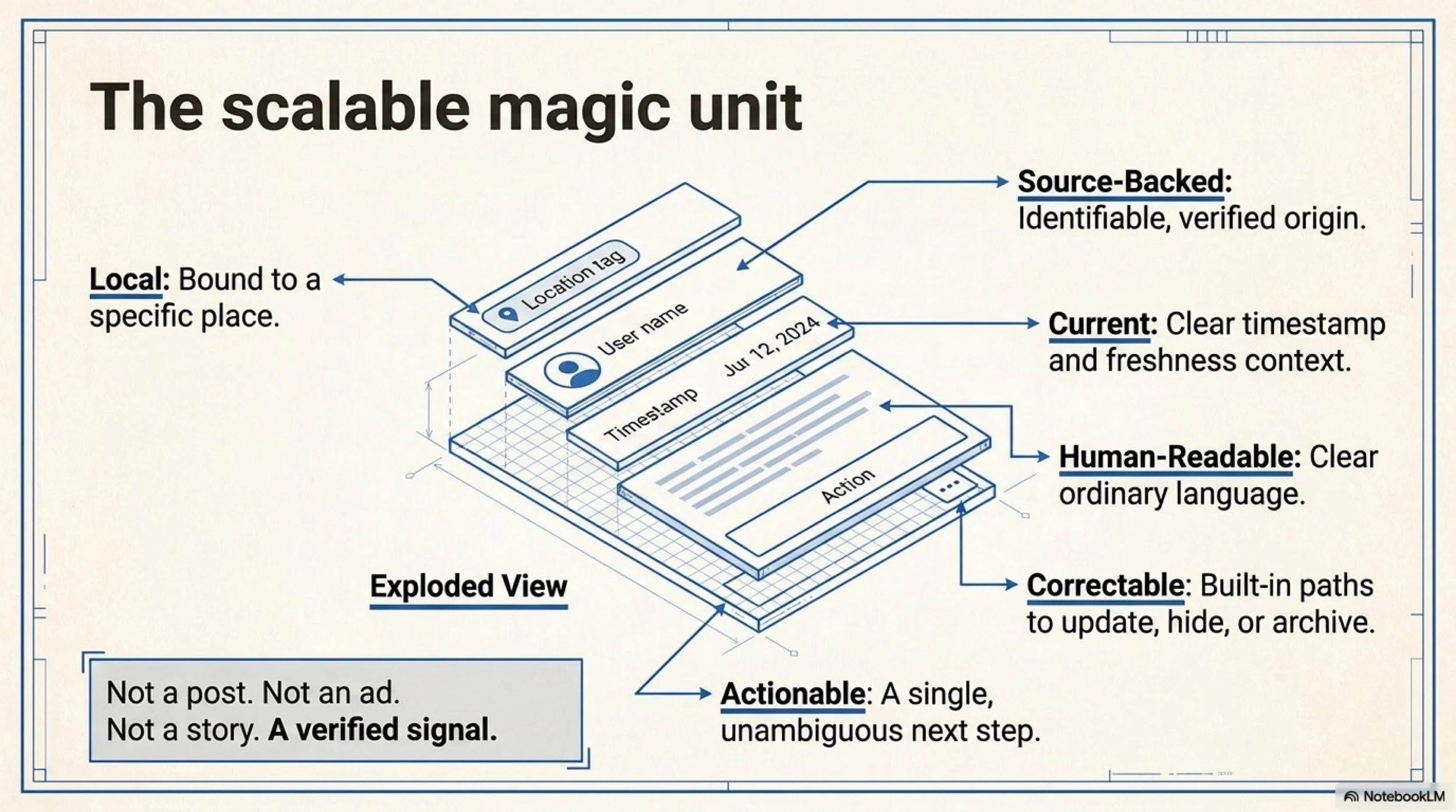
A Verified Local Signal is:
local — it matters to people in a specific place.
source-backed — residents can see where it came from.
current — it has a date, time, or freshness context.
useful — it helps residents know, do, attend, apply, buy, donate, volunteer, remember, or act.
human-readable — it is clear in ordinary language.
actionable — it has one obvious next step when a next step is needed.
correctable — it can be updated, hidden, clarified, archived, or repaired.
That is it.
That is the magic unit.
Not a post.
Not an ad.
Not a story.
Not a social update.
A signal.
This matters because a city does not need infinite content. A city needs enough reliable signals to coordinate its daily life.
One signal at a time, the town becomes clearer.
One signal at a time, businesses become easier to discover.
One signal at a time, residents save time.
One signal at a time, trust becomes visible.
One signal at a time, the community practices self-knowledge.
That is how the system scales.
Every city has different businesses, people, problems, festivals, histories, weather, and civic personalities.
But every city needs better local signals.
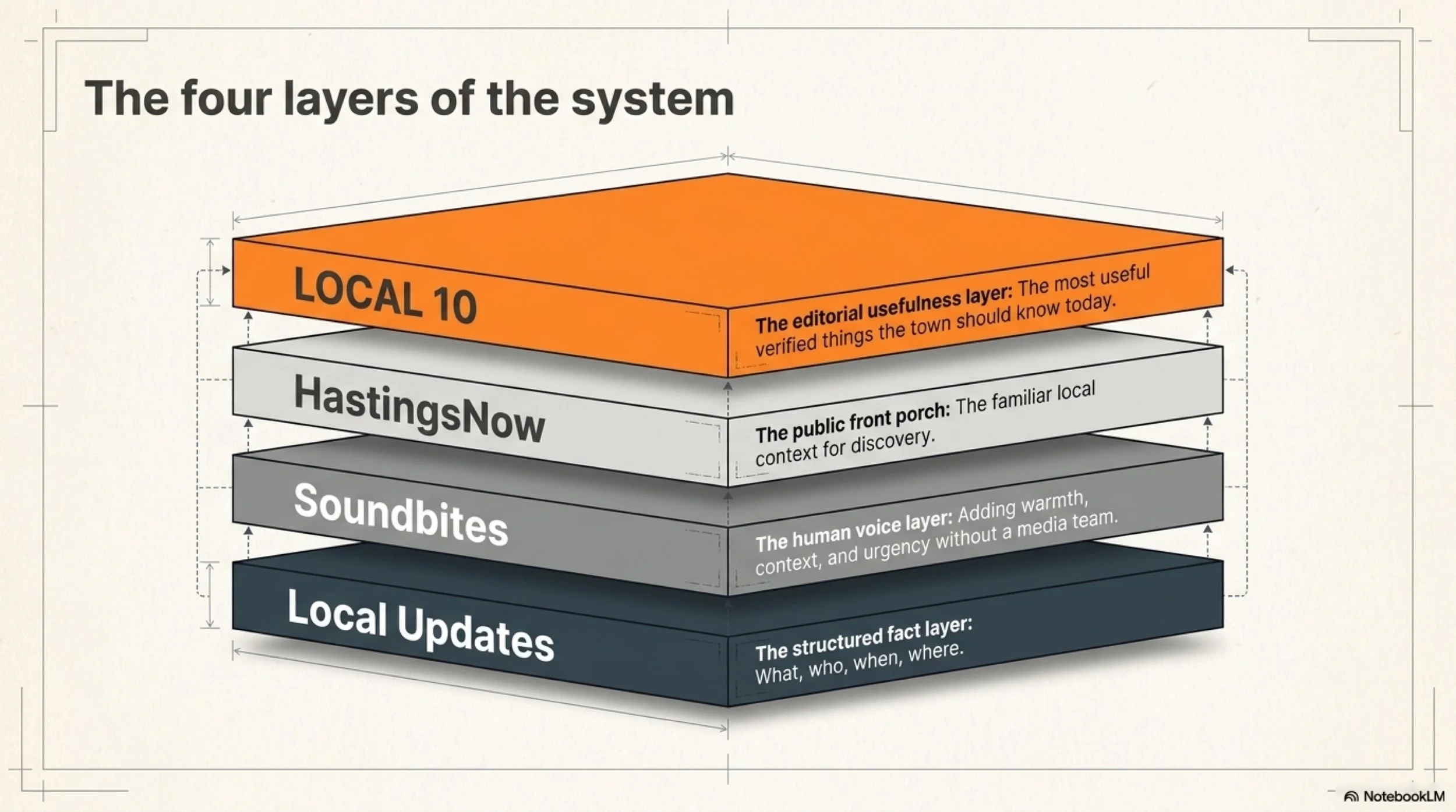
The structure: Local Updates, Soundbites, HastingsNow, LOCAL 10
Local Pigeon’s structure is simple when compressed.
Local Updates are the structured fact layer.
They answer:
What is happening?
Who is the source?
When is it?
Where is it?
What should residents do next?
Is it a deal, job, event, announcement, or useful community note?
Soundbites are the human voice layer.
They answer:
Can we hear the real local source explain this in a short, human way?
Can voice add trust, warmth, context, urgency, or accountability?
Can a business owner, nonprofit leader, organizer, artist, educator, or civic source speak directly to residents without needing a podcast studio or a media team?
HastingsNow is the public front porch.
It helps residents encounter the signals in a familiar local context.
Weather. History. LOCAL 10. Useful updates. Community stories. Shareable local pages.
LOCAL 10 is the editorial usefulness layer.
It answers:
What are the most useful verified local things Hastings should know today?
Not what paid the most.
Not what got the most engagement.
Not what shouted loudest.
What is useful?
This is the structure:
Local Pigeon collects the signal. Soundbites humanize the signal. HastingsNow explains the signal. LOCAL 10 prioritizes the signal.
That sentence can travel.
That sentence can sell.
That sentence can become doctrine.
Why one CTA matters
One of the most important design choices is also one of the simplest:
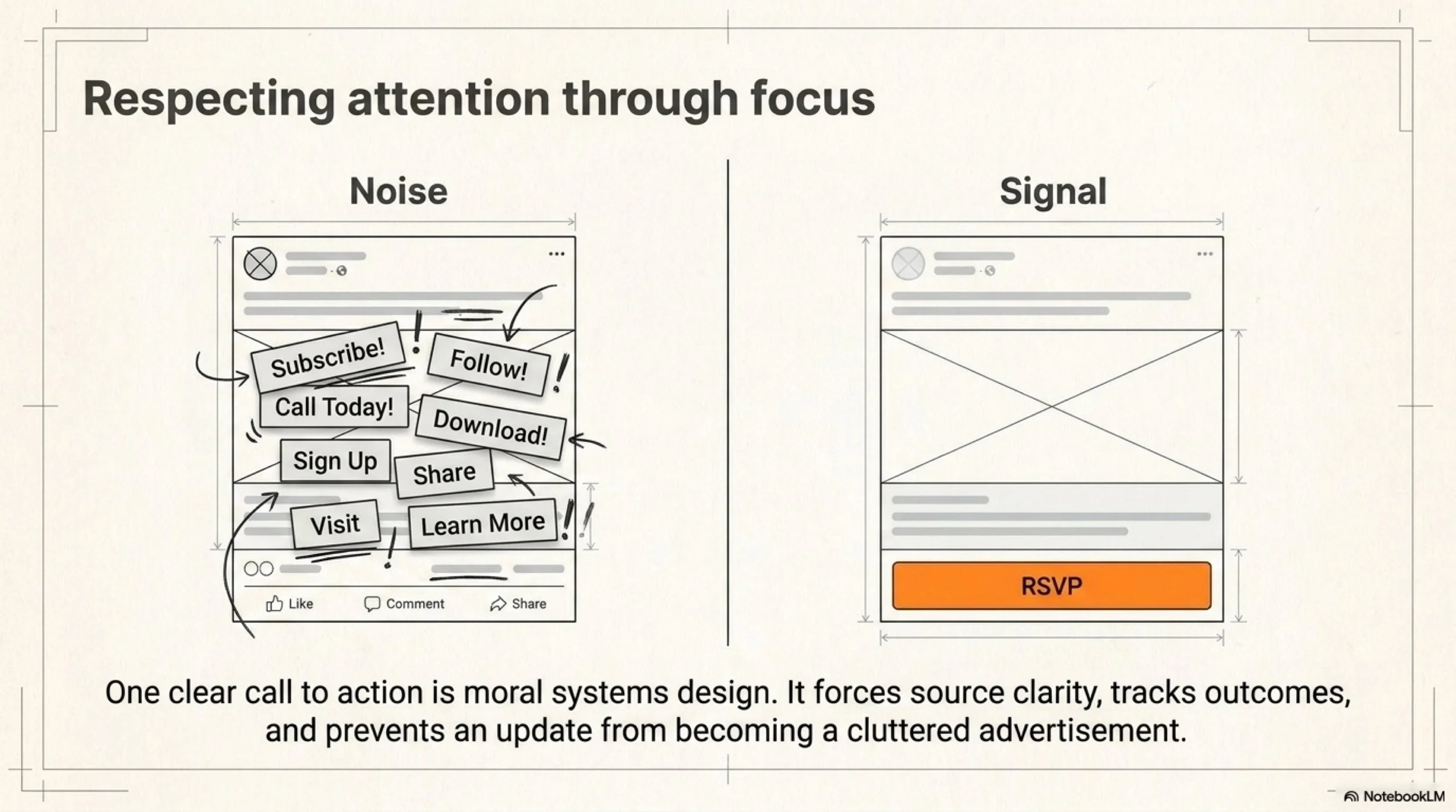
One clear call to action.
Not seven buttons.
Not twelve links.
Not “learn more, subscribe, follow us, call today, sign up, share this, download this, visit this, also check our Instagram.”
One next step.
Claim.
Call.
RSVP.
Apply.
Donate.
Book.
Learn.
Visit.
Order.
Subscribe.
One CTA is not merely a design preference. It is moral systems design.
It respects the resident’s attention.
It forces the source to clarify the purpose.
It reduces confusion.
It makes outcomes easier to track.
It prevents an update from becoming a cluttered advertisement.
It turns a vague message into a useful civic signal.
This is how philosophy becomes interface.
The public does not need to know the theory.
They feel the difference.
They click because the next step is clear.
Why no paid rank matters
Another essential rule:
No paid rank.
This is non-negotiable.
A business can pay for services.
A sponsor can support the platform.
A local brand can purchase help creating better updates, better Soundbites, better pages, better storytelling, better proof, better publishing support.
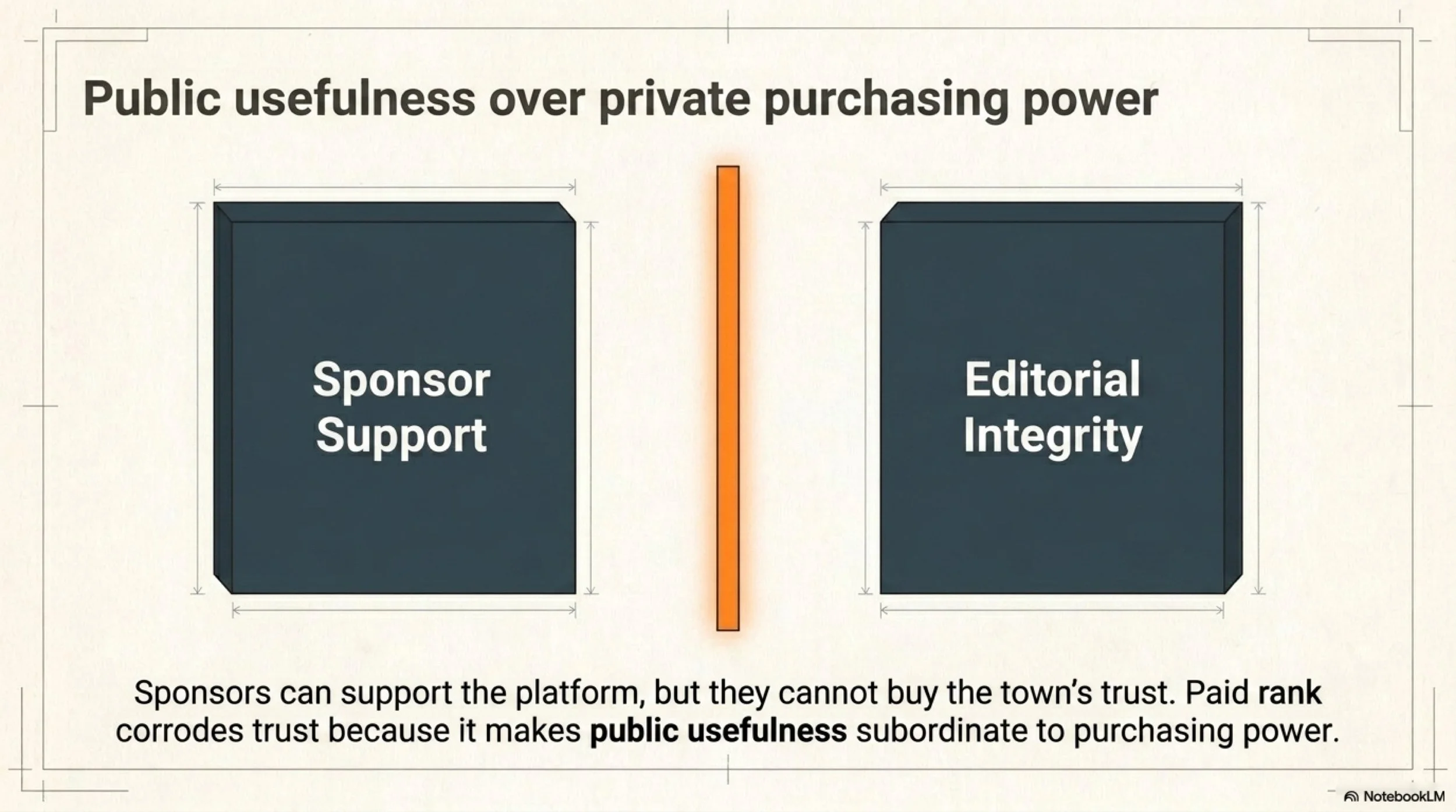
But payment cannot secretly determine what is presented as the most useful thing residents should know today.
That distinction is the line between a trusted civic signal system and a local attention racket.
Paid rank corrodes trust because it makes public usefulness subordinate to private purchasing power.
Residents eventually feel it.
Businesses eventually resent it.
Editors eventually lose authority.
The platform eventually becomes just another ad product wearing community clothing.
Local Pigeon must be different.
The promise should be clear:
Sponsors may support the platform. They may not buy the town’s trust.
That is politically powerful, commercially honest, and philosophically serious.
It gives business a place.
It gives residents protection.
It gives operators a spine.
It gives Local Pigeon a reason to be believed.
Why AI needs a leash
AI is not the enemy.
AI may be essential.
A tiny local team can use AI to summarize updates, draft posts, cluster duplicates, prepare briefs, identify missing dates, suggest better headlines, translate messy input into clean language, and help operators work faster.
That is good.
But AI must not become the source of local reality.
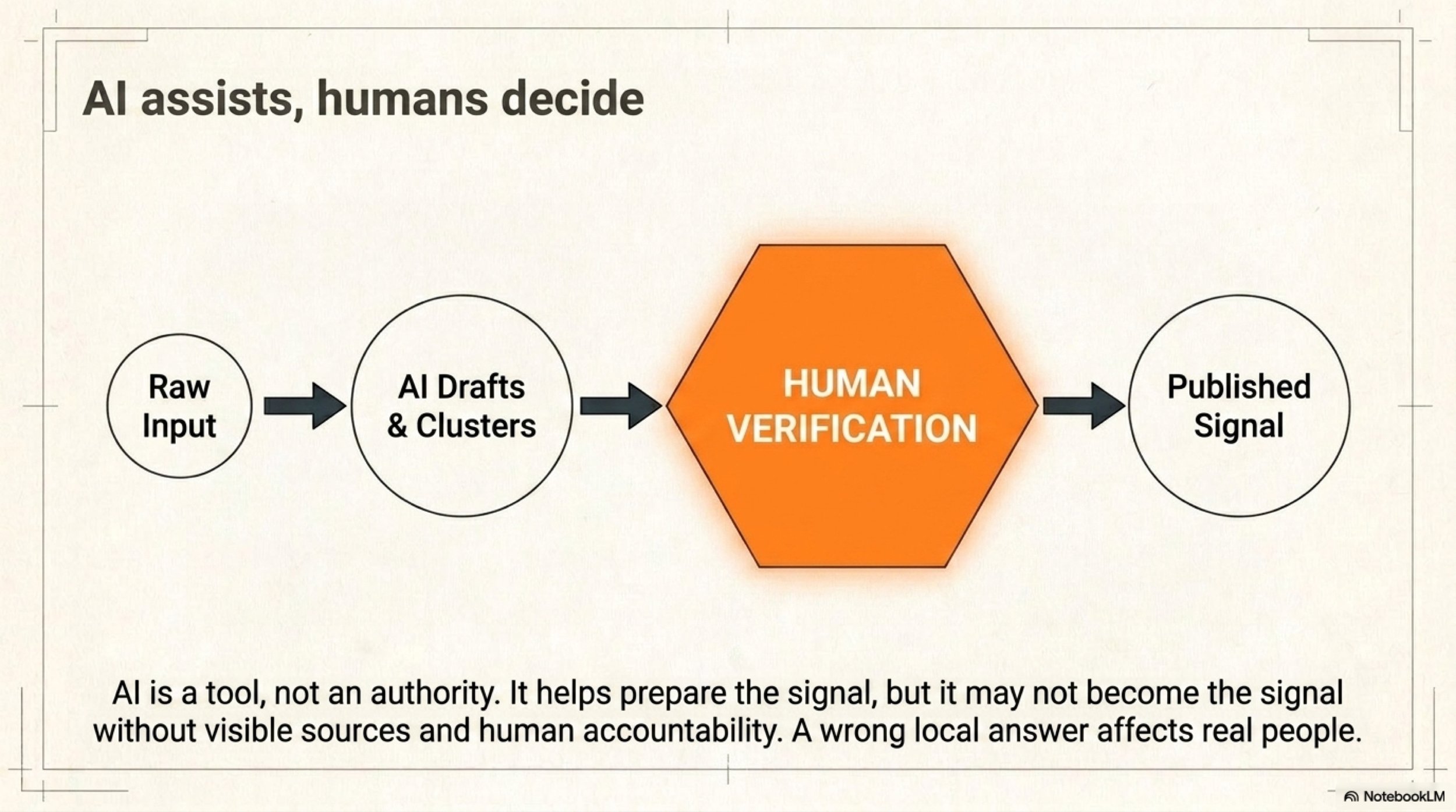
AI should assist.
Humans should verify.
AI should draft.
Humans should publish.
AI should suggest.
Humans should decide.
AI should help organize signals.
Humans should preserve judgment.
The danger is not that AI exists. The danger is that AI will make unsupported local claims sound official.
A wrong local answer is not abstract.
It affects real people.
It can send someone to the wrong event, misstate a business offer, confuse a job applicant, misrepresent a nonprofit need, or turn a rumor into something that feels confirmed.
So Local Pigeon’s AI principle should be simple:
AI may help prepare the signal. It may not become the signal without visible sources and human accountability.
That is a public-interest AI philosophy Hastings residents can understand.
No academic jargon required.
The magic novelty
The novelty of Local Pigeon is not one feature.
The novelty is the combination of properties.
It is small enough to use.
A short update. A 30-second Soundbite. One CTA. One clear signal.
It is human enough to trust.
Real local voices. Real sources. Real places. Real operators.
It is structured enough to scale.
Events, jobs, deals, announcements, Soundbites, daily LOCAL 10, city-by-city.
It is bounded enough to protect trust.
No paid rank. No AI autopublishing. No invented facts. No hidden private data.
It is repairable enough to stay humble.
Correct. Clarify. Hide. Archive. Expire. Revoke. Improve.
It is local enough to matter.
Not generic content. Not national noise. Not abstract trend-chasing.
It is philosophical enough to inspire.
A city should know itself.
It is practical enough to sell.
Businesses need visibility. Residents need clarity. Operators need workflow. Sponsors need ethical support.
That is the unusual combination.
A product that is only philosophical will not survive.
A product that is only commercial will not deserve trust.
A product that is only technical will not love the town.
Local Pigeon can be all three:
useful, ethical, and economically alive.
That is the magic.
The critic’s question
A harsh critic might ask:
“Is this just a romantic name for local marketing?”
The answer must be honest.
It could become that.
If the system is sloppy, it becomes marketing.
If sponsors control attention, it becomes marketing.
If AI generates unsupported filler, it becomes marketing.
If every paid customer expects placement, it becomes marketing.
If residents cannot tell what is verified, it becomes marketing.
If correction is weak, it becomes marketing.
If Local Pigeon does not protect the public promise, it becomes marketing.
But it does not have to.
The difference is structure.
Marketing asks:
“How do we get attention?”
Civic Signal Design asks:
“What deserves attention, how do we know, and what should residents do next?”
Marketing optimizes persuasion.
Civic Signal Design optimizes public usefulness with provenance.
Marketing can be part of the system.
But it cannot be sovereign.
That is the answer.
And it is strong enough for critics because it admits the danger.
A serious philosophy does not deny its corruption path.
It designs against it.
The resident’s question
A resident does not need a lecture.
A resident asks:
“How does this help me?”
The answer:
It helps you know what matters today.
It helps you find useful local updates without digging through scattered feeds.
It helps you see the source.
It helps you hear local voices.
It helps you know whether something is an event, job, deal, announcement, or community need.
It helps you act quickly.
It helps you trust the information a little more.
It helps Hastings become easier to understand.
That is enough.
Do not overcomplicate the public promise.
For residents:
Local Pigeon helps Hastings know what matters.
That is the front door.
The philosophy can live behind it.
The business owner’s question
A business owner asks:
“How does this help me?”
The answer:
It gives you a simple, trusted way to share useful updates with residents without needing to become a full-time content creator.
You can share a class, a deal, a job, an announcement, a schedule change, a seasonal offer, a need, a story, or a short Soundbite.
You can be more visible by being more useful.
That phrase matters:
More visible by being more useful.
That is the ethical business promise.
Not visibility through manipulation.
Not visibility through paid rank.
Not visibility through algorithmic tricks.
Visibility through usefulness, clarity, source identity, and repetition over time.
This is good for businesses because most local businesses do not want to become influencers.
They want to serve people.
Local Pigeon should help them do that.
The operator’s question
A Local Pigeon Operator asks:
“What is my job?”
The answer:
Your job is to help the city produce better signals.
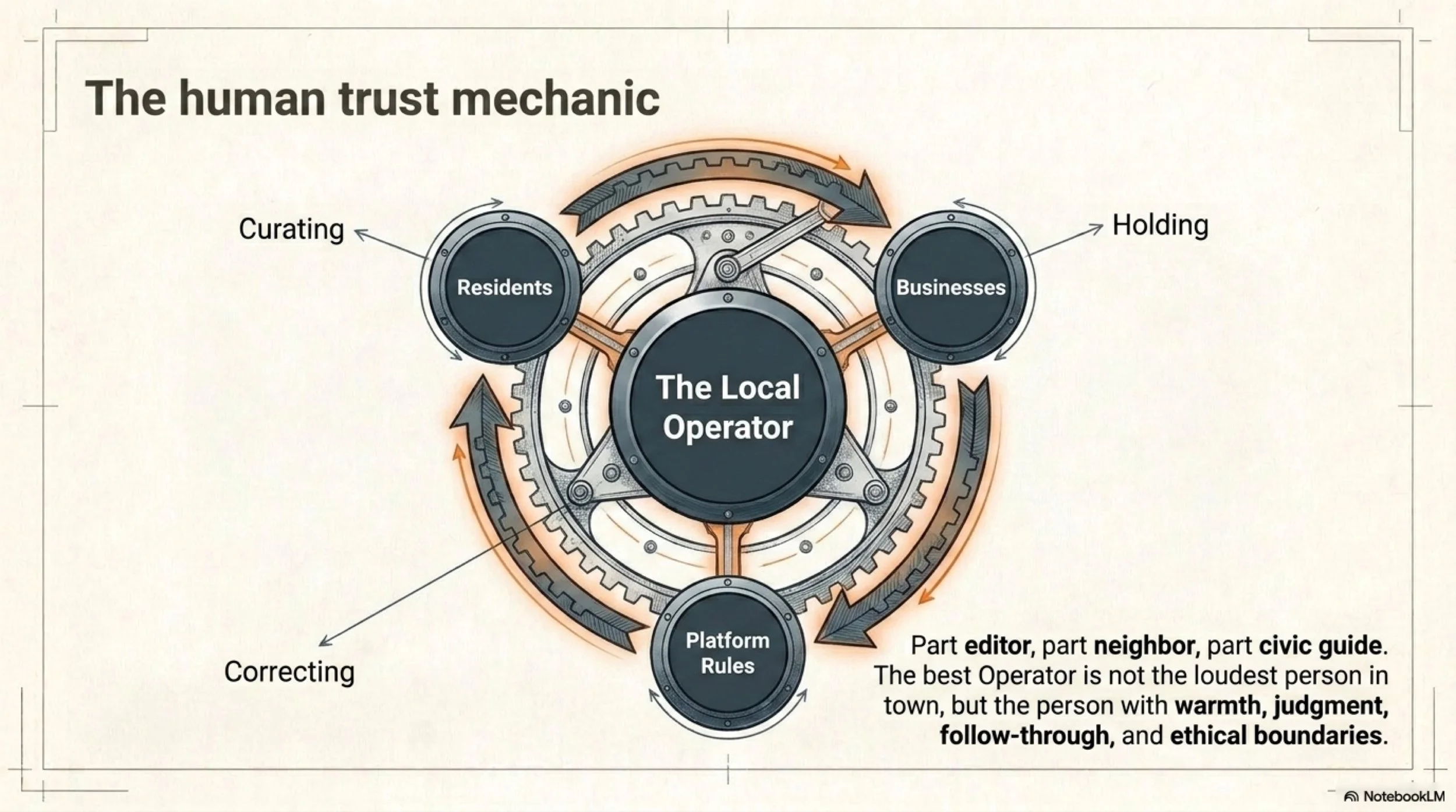
You are part editor, part neighbor, part trust mechanic, part small-business helper, part civic guide.
You do not merely post things.
You ask:
Is this useful?
Is it verified?
Is the source clear?
Is the date right?
Is the CTA clear?
Is this too promotional?
Does this need a Soundbite?
Should this be held?
Should this be corrected?
Should this be considered for LOCAL 10?
The best Local Pigeon Operator is not the loudest person in town.
It is the person with warmth, judgment, follow-through, and ethical boundaries.
Every city has people like this.
They are chamber volunteers, event planners, photographers, former newspaper people, nonprofit communicators, PTA organizers, librarians, church bulletin people, retired teachers, local connectors, and trusted neighbors who always seem to know what is happening.
Local Pigeon gives them a system.
That is how this scales.
The political question
The political question is not partisan.
It is deeper.
Who controls a town’s attention?
Who decides what local information rises?
Who benefits when the town is confused?
Who profits when every business must rent attention from national platforms?
Who protects residents from rumor, hype, hidden sponsorship, and machine-generated certainty?
Who helps ordinary people know what is happening where they live?
This is political because it concerns the public square.
But it does not require party politics.
The Local Pigeon position can be:
Local self-government requires local self-knowledge.
That line should be repeated.
A community cannot govern, support, shop, volunteer, hire, donate, attend, remember, deliberate, or repair together if it cannot clearly know itself.
This is a civic infrastructure argument.
Roads help people move.
Water systems help people drink.
Libraries help people learn.
Local signal systems help people know.
And knowing is the first step toward acting together.
The urgency
The urgency is real because the vacuum will not remain empty.
If local communities do not build their own trusted signal systems, other systems will fill the gap.
National platforms will fill it.
AI answer engines will fill it.
Political rumor networks will fill it.
Paid influence will fill it.
Private group chats will fill it.
Engagement algorithms will fill it.
Search engines will fill it.
Whoever organizes attention organizes reality.
That sentence is not melodrama.
It is the basic condition of the information age.
If Hastings wants to remain more than a market segment, it needs ways to know itself outside systems that do not answer to Hastings.
That does not mean rejecting national tools.
It means building local civic capacity on top of them, beside them, and sometimes in resistance to them.
Local Pigeon is one attempt.
Small at first.
Imperfect at first.
But necessary.
What success looks like
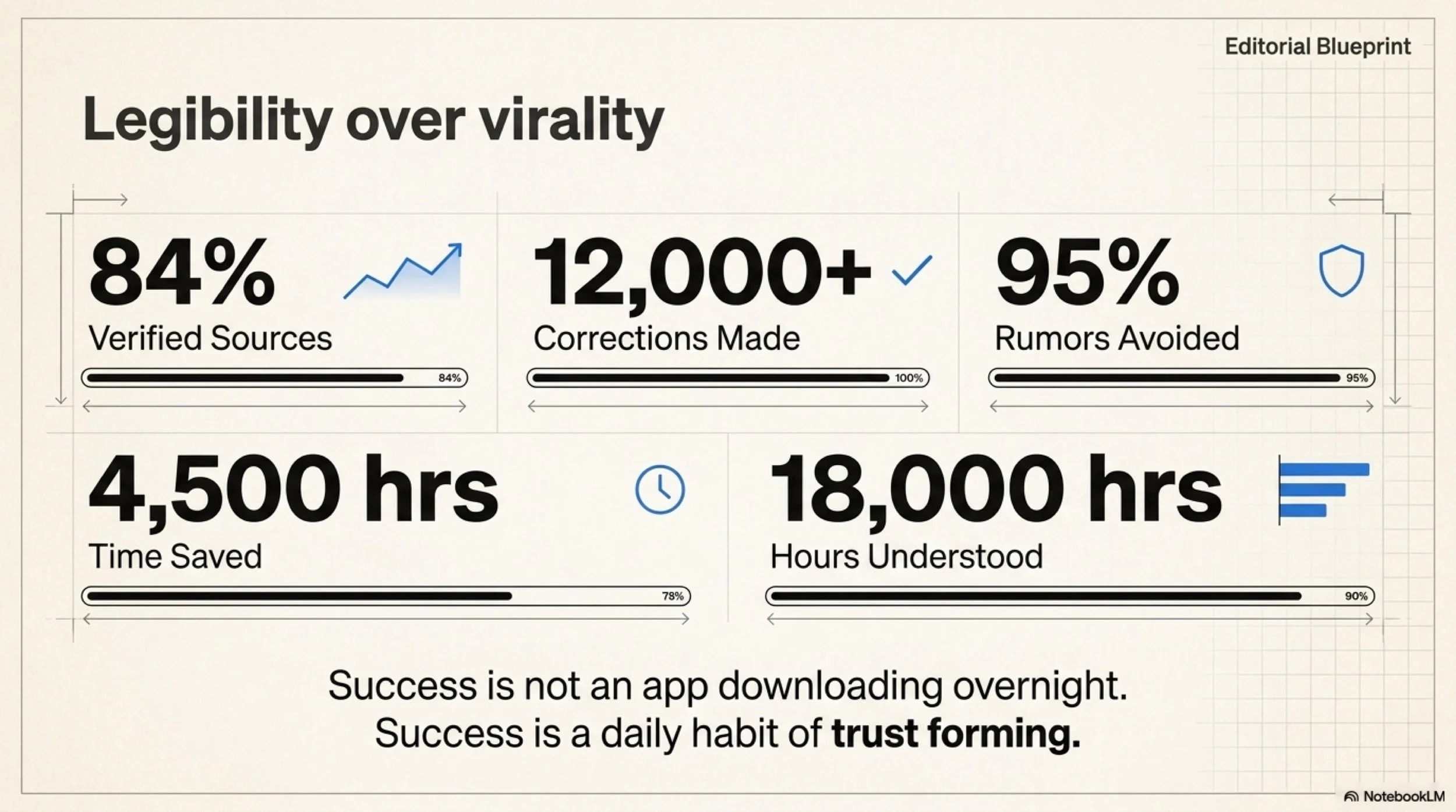
Success does not look like everyone downloading an app overnight.
Success looks like a daily habit forming.
Residents begin to check HastingsNow or Local Pigeon because it saves time.
Businesses begin submitting clearer updates because the format teaches clarity.
Nonprofits begin reaching more people because their needs become easier to act on.
Sponsors support the platform because they respect the boundary.
Operators become trusted because they correct mistakes and avoid hype.
Soundbites make local information feel human again.
LOCAL 10 becomes a civic ritual: not the most viral things, but the most useful verified things Hastings should know today.
Over time, the town becomes more legible.
That is success.
You can measure it.
Verified sources.
Published signals.
Soundbites recorded.
Useful updates submitted.
Corrections made.
Expired items removed.
Residents clicking clear CTAs.
Businesses renewing.
Nonprofits helped.
Jobs filled.
Events attended.
Donations made.
Hours understood.
Rumors avoided.
Time saved.
Trust preserved.
The philosophical becomes tangible.
That is the only way this works.
What could go wrong
A serious movement must name its dangers.
Local Pigeon could become too complicated.
It could become too dependent on Peter.
It could become too sales-driven.
It could become too cautious.
It could become too vague.
It could become too editorially controlling.
It could become too AI-assisted.
It could become too hard for businesses to use.
It could become another feed.
It could become another ad product.
It could become a beautiful philosophy without enough revenue.
These are real risks.
The answer is focus.
One verified local signal.
One clear source.
One useful next step.
One daily rhythm.
One honest sales promise.
One operator loop.
One correction path.
One city proving the model.
Do not try to save society in the abstract.
Help Hastings know what matters today.
Then do it again tomorrow.
That is how a serious thing begins.
The Local Pigeon Doctrine
Here is the doctrine in plain language:
A community cannot act together if it cannot know itself.
Useful local information is scattered.
Scattered information weakens trust.
The answer is not more noise.
The answer is better civic signals.
A civic signal should be local, source-backed, current, useful, human-readable, actionable, and correctable.
Local Updates create structure.
Soundbites add human voice.
HastingsNow gives the public a front porch.
LOCAL 10 prioritizes usefulness.
AI may assist but not replace human judgment.
Sponsors may support but not buy rank.
Mistakes must be correctable.
Trust must be visible.
The purpose is simple:
Help towns hear themselves clearly.
That is the story.
The line worth building around
Every movement needs a sentence people can remember.
This may be yours:
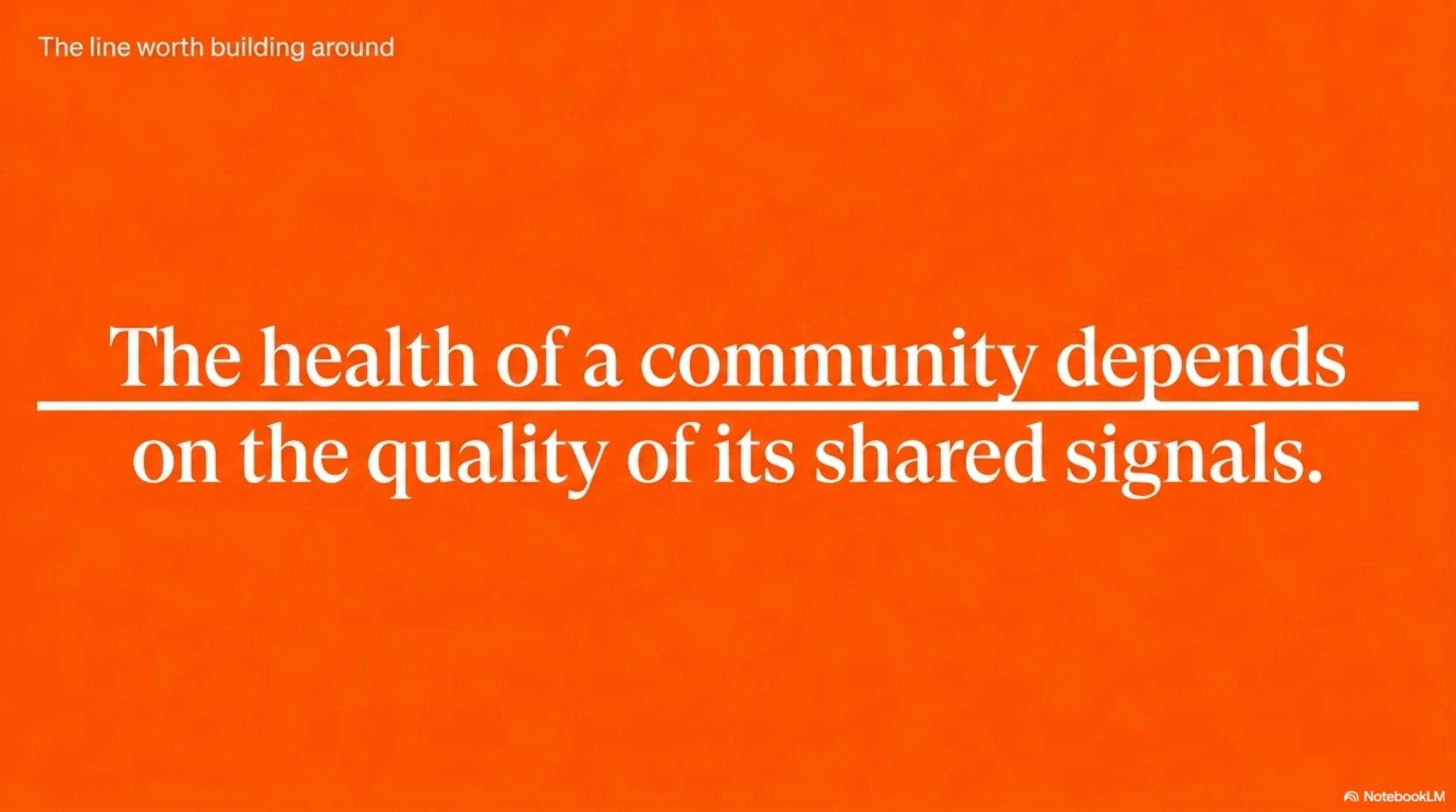
The health of a community depends on the quality of its shared signals.
That sentence is simple enough for Hastings.
It is serious enough for Cambridge.
It is philosophical, political, practical, and scalable.
It can become a talk.
It can become a manifesto.
It can become a sales page.
It can become a city operator training principle.
It can become a product requirement.
It can become a question asked every morning:
“What are the highest-quality shared signals Hastings needs today?”
That is how the idea becomes operational.
Are we saving the world?
Maybe not.
At least not all at once.
But the world is mostly made of places.
And places are made of people.
And people act together through signals.
So improving the signals of one place is not small.
It is local-scale civilization repair.
It is easy to become intoxicated by giant abstractions: democracy, society, collapse, AI, truth, trust, media, institutions, polarization, capitalism, community.
Those words matter.
But they become real only somewhere.
On a street.
In a town.
At a school.
Inside a business.
At a city meeting.
On a Saturday morning.
In a family deciding where to go.
In a nonprofit asking for help.
In a resident wondering what is true.
The work becomes real in Hastings.
That is the discipline.
Do not begin with saving the world.
Begin with one town hearing itself clearly.
Then another.
Then another.
That is not ambiguity.
That is a strategy.
What this looks and feels like
It feels warm, not grandiose.
It feels practical, not ideological.
It feels like a town becoming easier to navigate.
It feels like fewer people saying, “I didn’t know.”
It feels like more people saying, “I saw that on HastingsNow.”
It feels like a business owner saying, “That was easy.”
It feels like a resident saying, “This actually helps.”
It feels like a sponsor saying, “I understand we support the platform, but we do not buy rank.”
It feels like an operator saying, “We held that because the source was unclear.”
It feels like AI becoming a tool, not an authority.
It feels like a correction made without shame.
It feels like the public square getting a little cleaner.
It feels like a town discovering that trust is not nostalgia.
Trust can be designed.
Trust can be practiced.
Trust can be repaired.
Trust can be made visible.
Not perfectly.
But enough to matter.
Final word
There is a kind of despair that comes from seeing too much.
Seeing the collapse of trust.
Seeing local journalism weaken.
Seeing national platforms dominate attention.
Seeing AI arrive faster than communities can adapt.
Seeing businesses struggle to be heard.
Seeing residents overwhelmed.
Seeing good people scattered.
But there is also a kind of hope that comes from seeing the unit.
The unit is not “save society.”
The unit is one verified local signal.
One source.
One useful update.
One human voice.
One clear next step.
One correction path.
One daily rhythm.
One town becoming a little easier to trust.
That is enough to begin.
Local Pigeon does not need to claim it can fix everything.
It needs to prove that a town can hear itself more clearly.
If Hastings can do that, other cities can too.
And if enough towns begin to repair their shared signals, then perhaps something larger begins to repair as well.
Not through slogans.
Not through outrage.
Not through nostalgia.
Through civic signal design.
Through moral systems made practical.
Through the strange, beautiful work of making the right thing easier.
Through a hometown learning to trust itself again.