
Moral Systems Design: The Strange, Beautiful Work of Making the Right Thing Easier
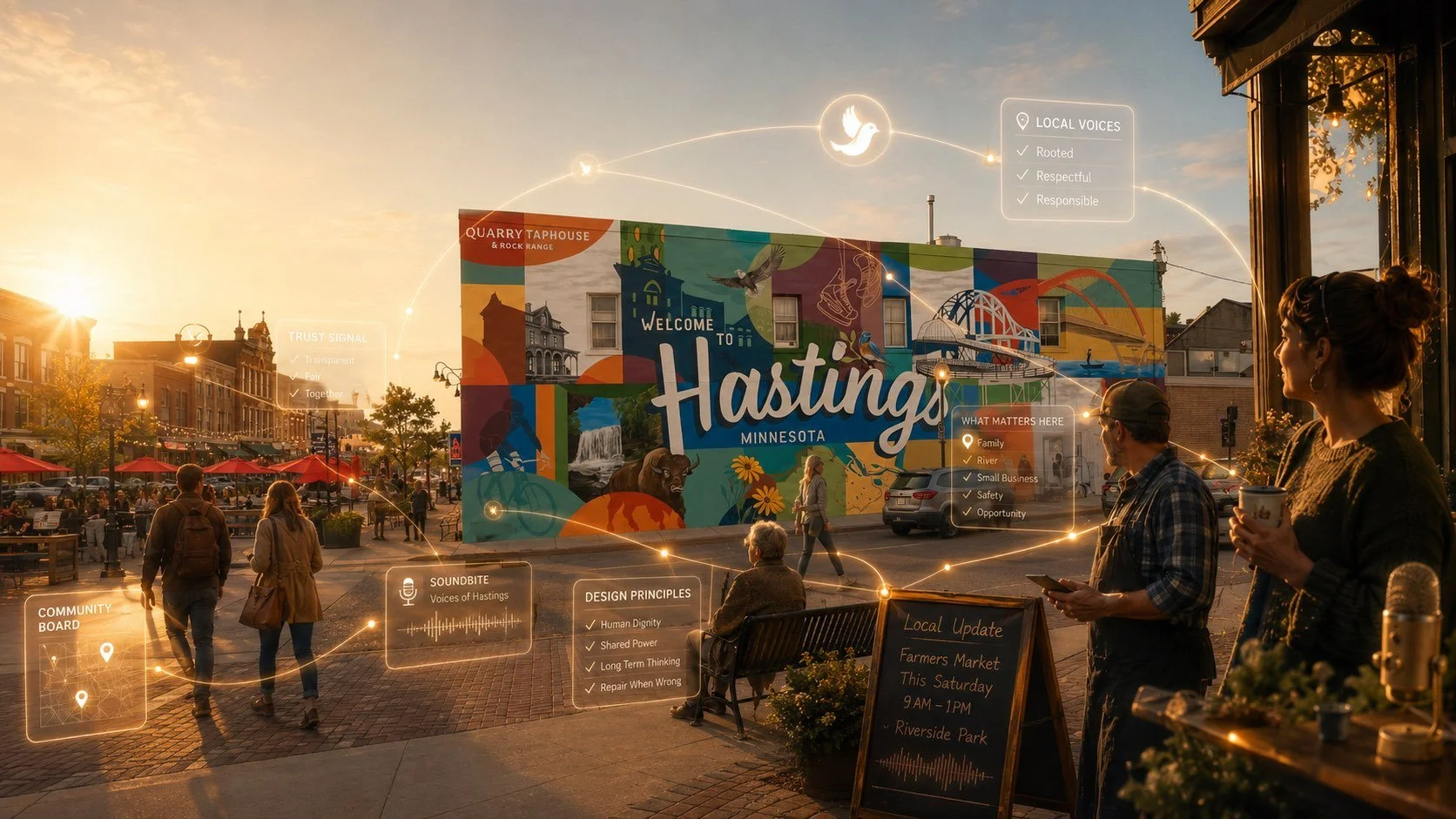
Historic Hastings, Minnesota is a hometown discovering a better way to trust itself. AI image by HastingsNow.com
What Local Pigeon, HastingsNow.com, and Soundbites are really building in Hastings, Minnesota
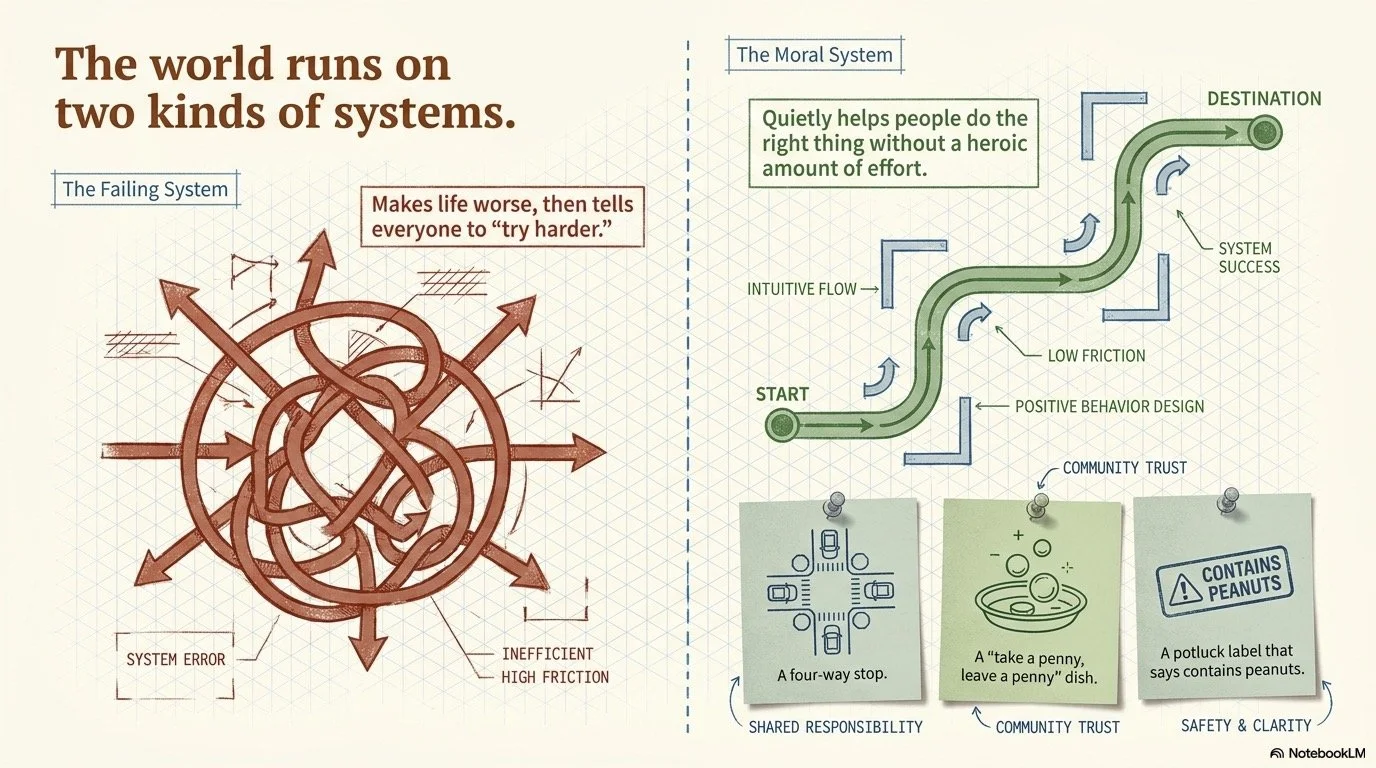
There are two kinds of systems in the world.
The first kind makes life worse and then tells everyone to “try harder.”
The second kind quietly helps people do the right thing without needing a heroic amount of effort.
A four-way stop is a moral system. So is a library card. So is a parade route. So is a school pickup line when it actually works. So is a “take a penny, leave a penny” dish. So is a potluck label that says contains peanuts, which may be one of the most underrated acts of civilization ever invented.
The best systems do not make people perfect. They make good behavior easier.
That is the heart of moral systems design.
It sounds like something that might require a tweed jacket, a chalkboard, and a committee meeting that somehow lasts three fiscal years. But it is actually very practical.
Moral systems design asks:
How do we build rules, tools, habits, labels, incentives, and workflows that help people trust each other more?
Not in theory. Not in a mission statement. Not in a “values” poster next to the breakroom microwave.
In real life.
In public.
On a Wednesday.
When someone is tired, a business owner is busy, an event date changed, a Facebook post disappeared, a sponsor wants attention, an AI tool offers to write something too confidently, and a resident simply wants to know:
What is actually happening in Hastings today?
That is where moral systems design becomes interesting.
And, in a small but real way, that is the work Local Pigeon and HastingsNow.com are beginning to do.
The Problem: Local Life Is Rich, But Local Information Is Messy
Hastings is not a boring place.
On any given week, there may be a fundraiser, a ribbon cutting, a youth sports update, a church dinner, a downtown sale, a city notice, a school event, a job opening, a nonprofit need, a restaurant special, a road closure, a concert, a class, a lost dog, a history post, a weather concern, and someone asking whether the bridge is backed up.
The problem is not that nothing is happening.
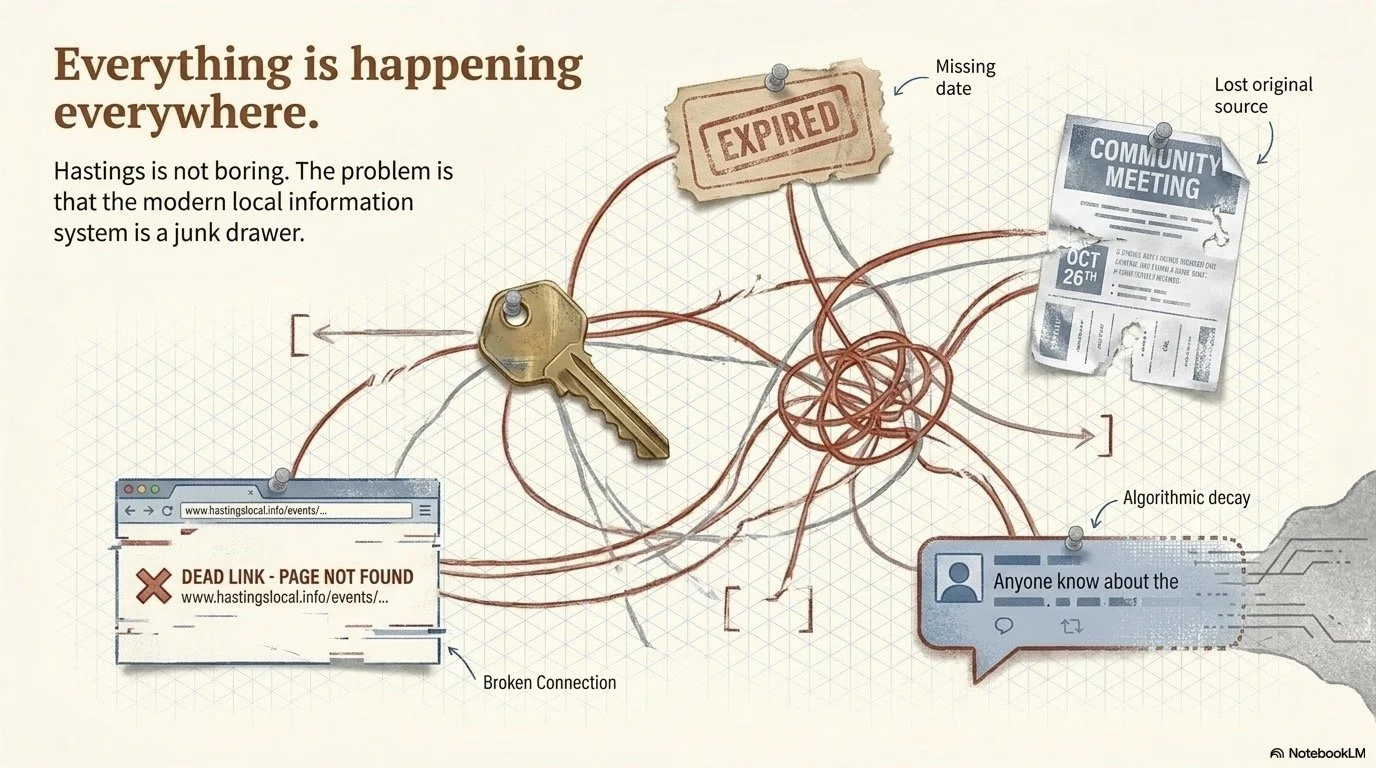
The problem is that everything is happening everywhere.
A business posts on Facebook. A nonprofit posts on Instagram. A city department posts on its website. A school sends an email. A chamber shares a newsletter. A resident hears something from a cousin. A flyer goes up near a cash register. Someone screenshots it. Someone else shares the screenshot. Three people ask if it is still happening. No one knows where the original source went.
This is not because people are doing anything wrong.
It is because the modern local information system is a junk drawer.
Important things are in there. Useful things are in there. Beautiful things are in there. But also old batteries, expired coupons, a mystery key, six rubber bands, and the instruction manual for an appliance you no longer own.
Local life deserves better than a junk drawer.
It deserves a system.
Not a cold system. Not a corporate system. Not a machine that replaces people.
A human system.
A trustworthy system.
A local system.
What Is Moral Systems Design?
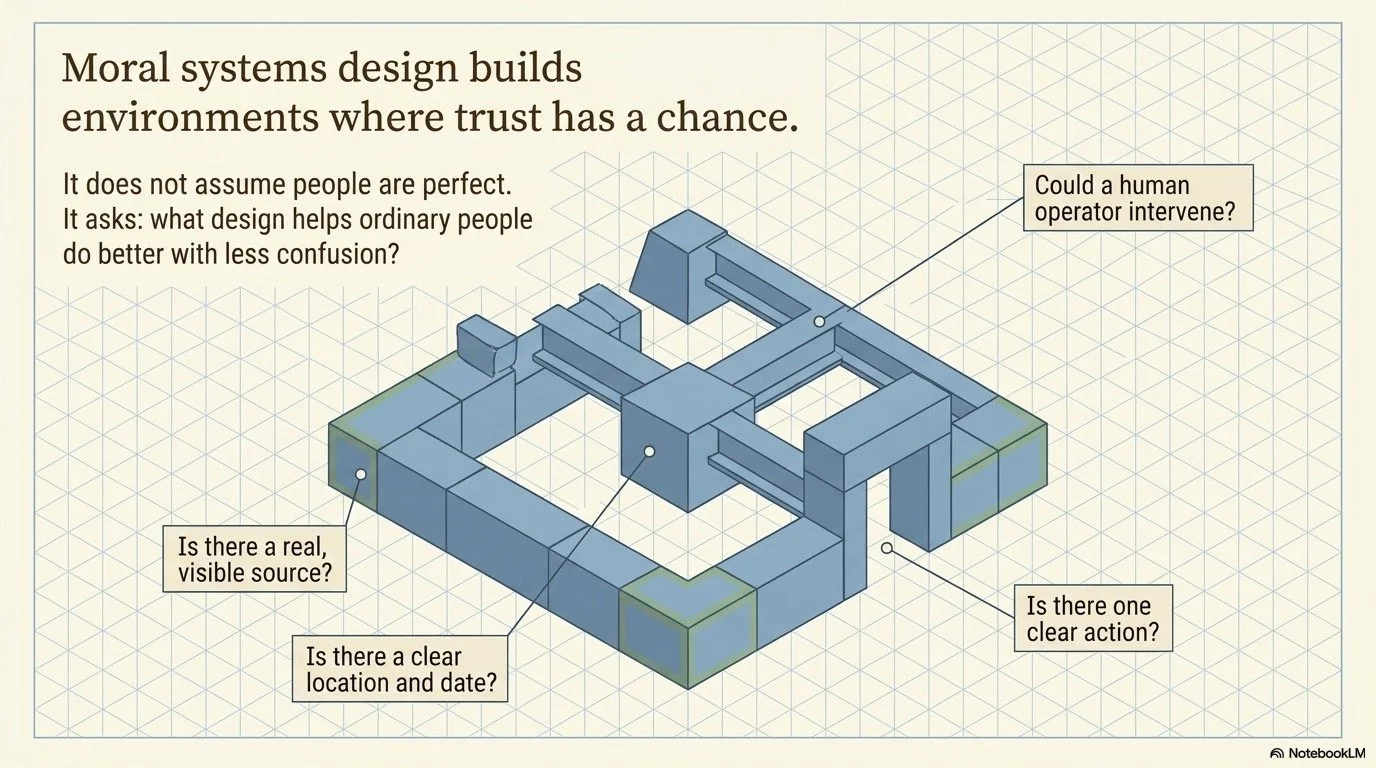
Moral systems design is the work of building environments where trust has a chance.
It does not assume everyone will behave perfectly.
It does not assume every mistake is malicious.
It does not assume technology will save us.
It simply asks:
What design would help ordinary people do better with less confusion?
For a local information platform, that means asking questions like:
Is there a real source?
Is the source visible?
Is the update current?
Is there a date?
Is there a location?
Is there one clear action?
Is this useful to residents, or mostly useful to the person promoting it?
Is money influencing placement?
Is AI helping, or is AI inventing?
Could a resident understand what to do next?
Could the source correct it later?
Could a human operator intervene if something goes wrong?
That is moral systems design.
It is not about being fancy.
It is about being careful where care matters.
The Three Words That Change Everything: “How We Know”
A lot of online information asks for trust without earning it.
It says:
Big news!
Don’t miss this!
Best ever!
Everyone is talking about it!
You need to see this!
Maybe true. Maybe not.
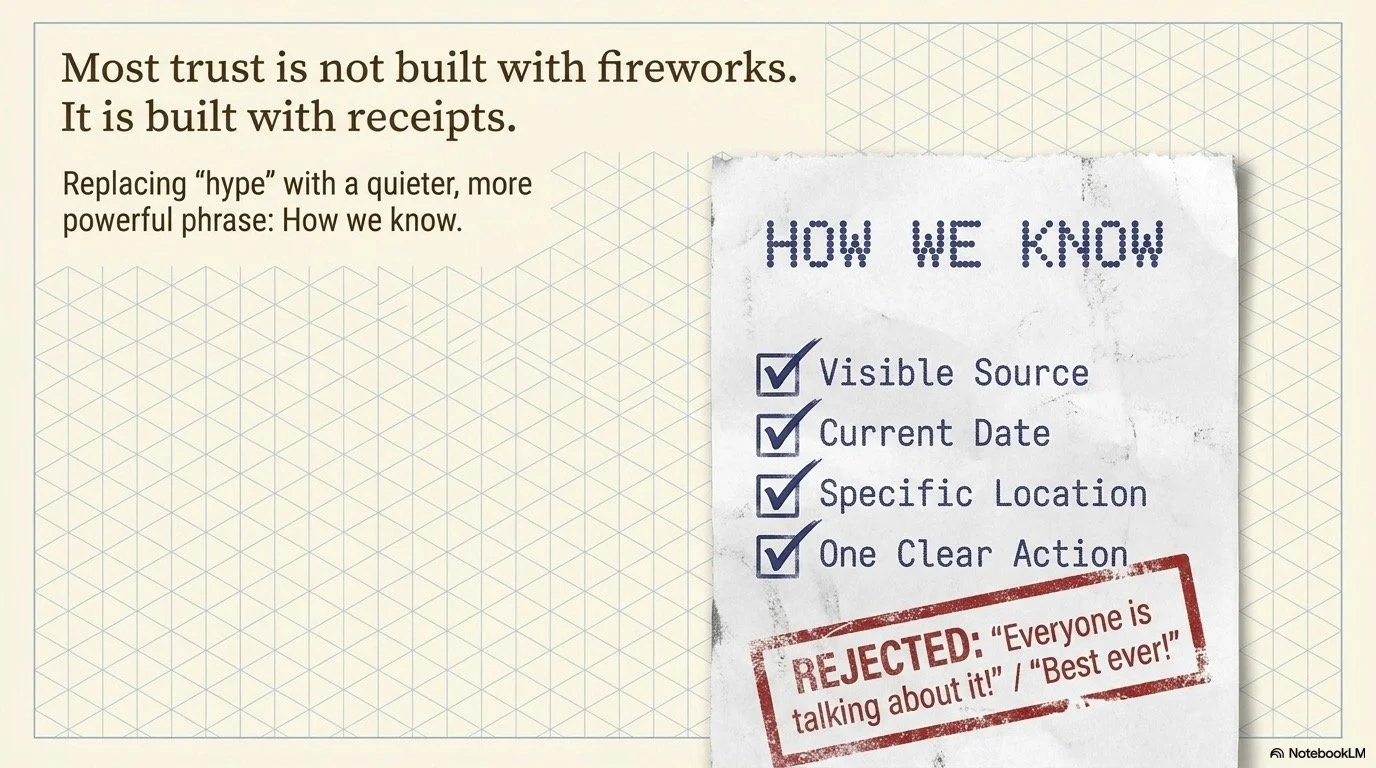
Moral systems design prefers a quieter phrase:
How we know.
That phrase changes the whole mood.
It turns hype into source-backed information.
It turns rumor into review.
It turns “someone said” into “here is where this came from.”
In local media, this matters because Hastings does not need more noise. Hastings needs useful signals.
A useful signal says:
Here is the source.
Here is the date.
Here is the location.
Here is what changed.
Here is who it affects.
Here is what you can do next.
That may not sound dramatic, but it is powerful.
Most trust is not built with fireworks.
Most trust is built with receipts.
What Does a Moral Systems Design Company Look Like?
A moral systems design company does not begin every meeting by asking, “How do we get more clicks?”
It asks:
What are we making easier?
What are we making harder?
Who could be harmed if this goes wrong?
What should require human review?
Where could money corrupt the promise?
What should never be automated?
How will people know what is true?
This kind of company still needs revenue. It still needs customers. It still needs marketing. It still needs to pay the bills, answer emails, fix bugs, and occasionally wonder why the printer has decided to become a spiritual enemy.
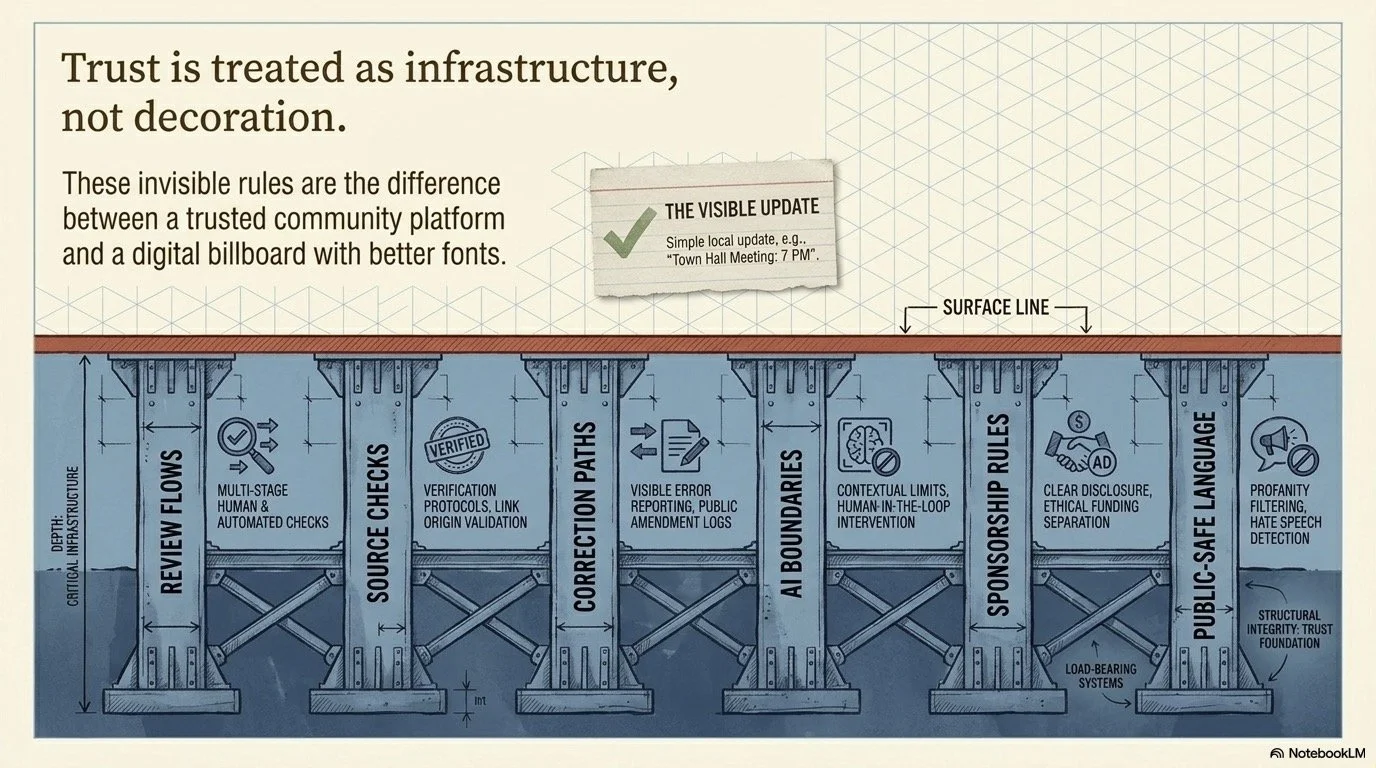
But it does not treat trust as decoration.
It treats trust as infrastructure.
That means the company spends time designing things most people never notice:
Labels.
Review flows.
Source checks.
Correction paths.
Privacy boundaries.
Editorial rules.
Sponsorship rules.
AI boundaries.
Operator training.
Public-safe language.
Clear calls to action.
That may sound boring until you realize these invisible rules are often the difference between a trusted community platform and a digital billboard with better fonts.
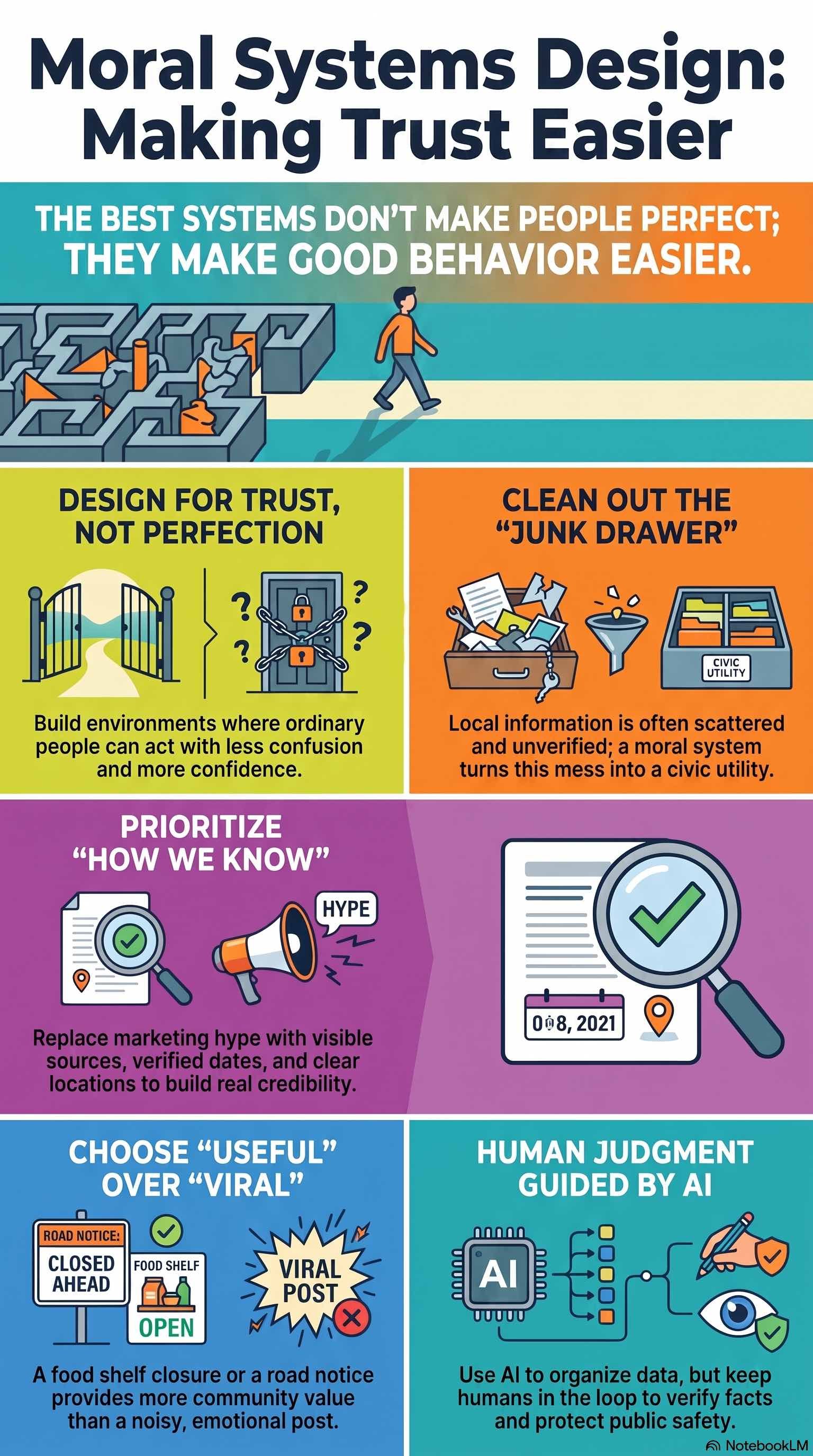
Infographic by HastingsNow.com
Local Pigeon as a Local Example
Local Pigeon is built around a simple idea:
Local voices should be easier to hear, easier to verify, and easier to act on.
That is where Soundbites come in.
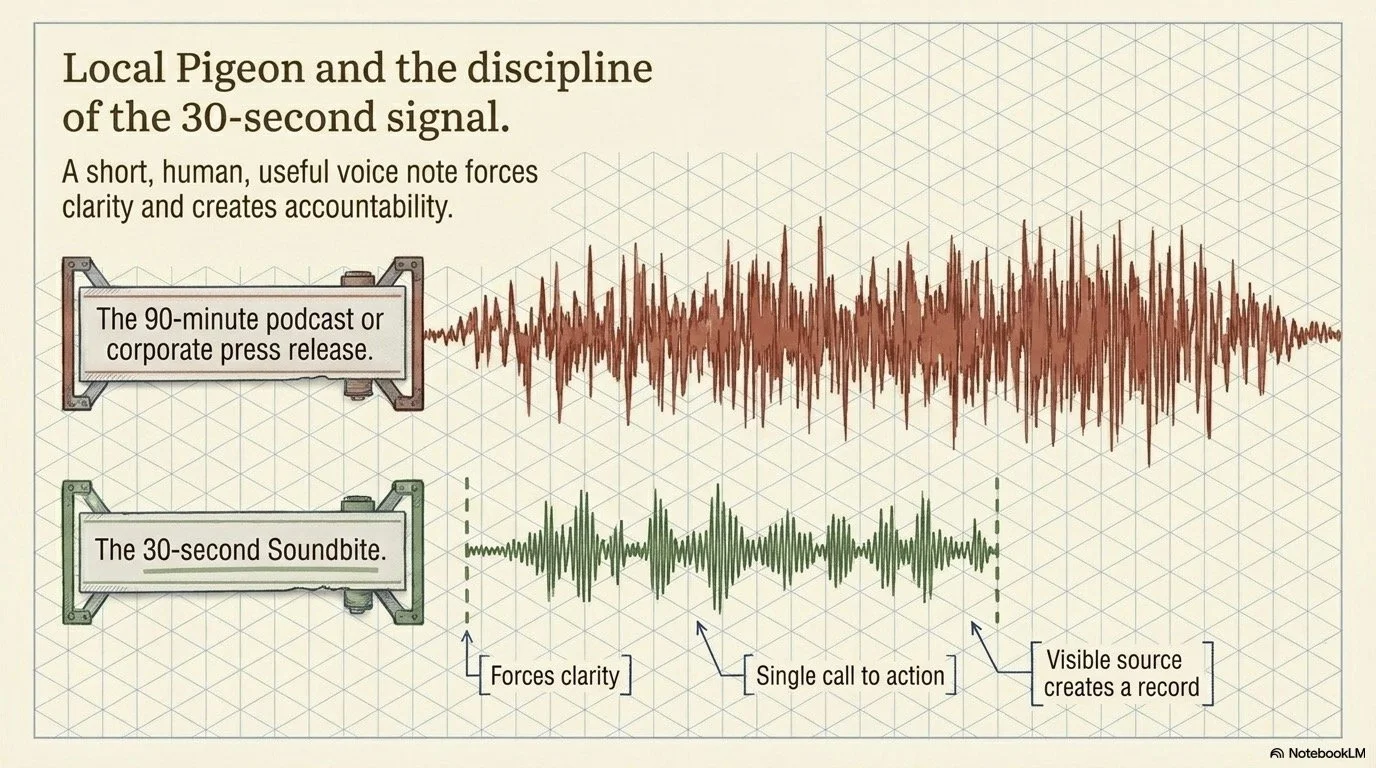
A Soundbite is designed to be short, human, and useful — the kind of quick local voice note that can help residents understand what a business, nonprofit, event organizer, or community source wants people to know.
Not a 90-minute podcast.
Not a corporate press release.
Not a vague “exciting things are coming soon” post.
A short, clear local signal.
Something like:
“We are hiring.”
“Our event is Friday.”
“We need donations this week.”
“Our summer class registration is open.”
“We changed our hours for the holiday.”
“Here is what residents should know before they visit.”
That small format matters.
Thirty seconds forces clarity.
A single call to action forces discipline.
A visible source creates accountability.
A reviewed public page creates a record.
That is moral systems design in action: not asking people to become perfect communicators, but giving them a better container.
HastingsNow.com as the Front Porch
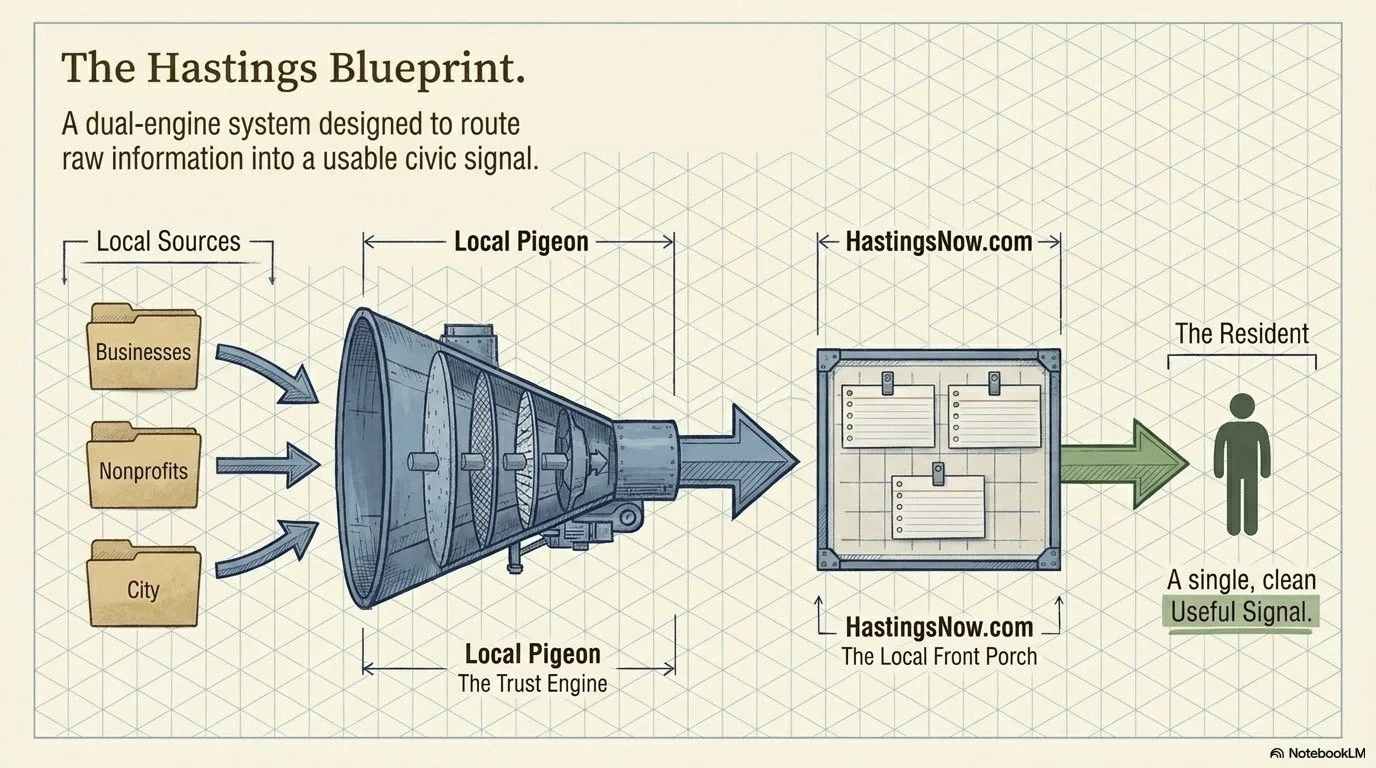
If Local Pigeon is the trust engine, HastingsNow.com is the local front porch.
The goal is not to replace every source. It is to help residents find the useful pieces faster.
HastingsNow can say:
Here is today’s weather.
Here is what happened on this date.
Here are the local updates worth knowing.
Here are events coming up.
Here are businesses sharing useful information.
Here are jobs, deals, announcements, and community signals.
Here is the original source.
Here is what you can do next.
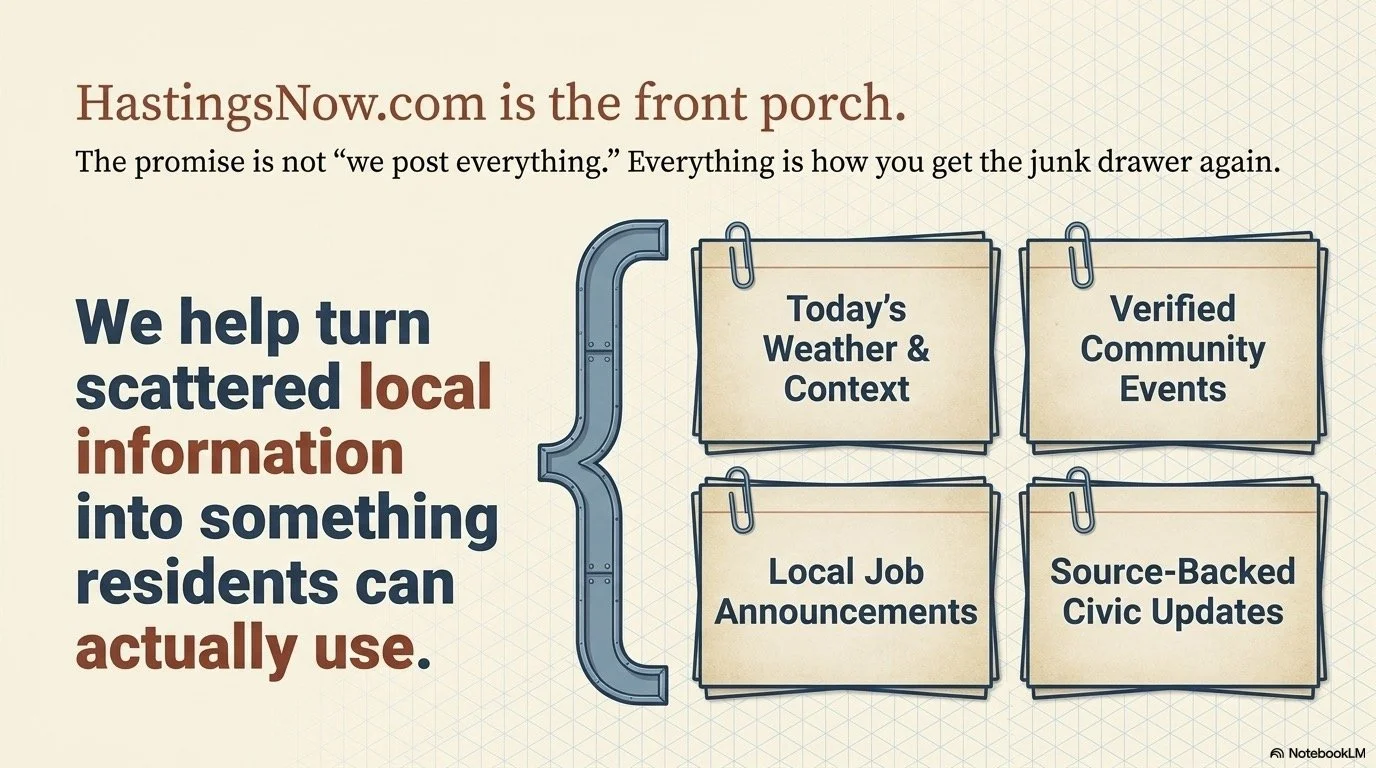
That is a different promise than “we post everything.”
No healthy local platform should post everything.
Everything is how you get the junk drawer again.
The better promise is:
We help turn scattered local information into something residents can actually use.
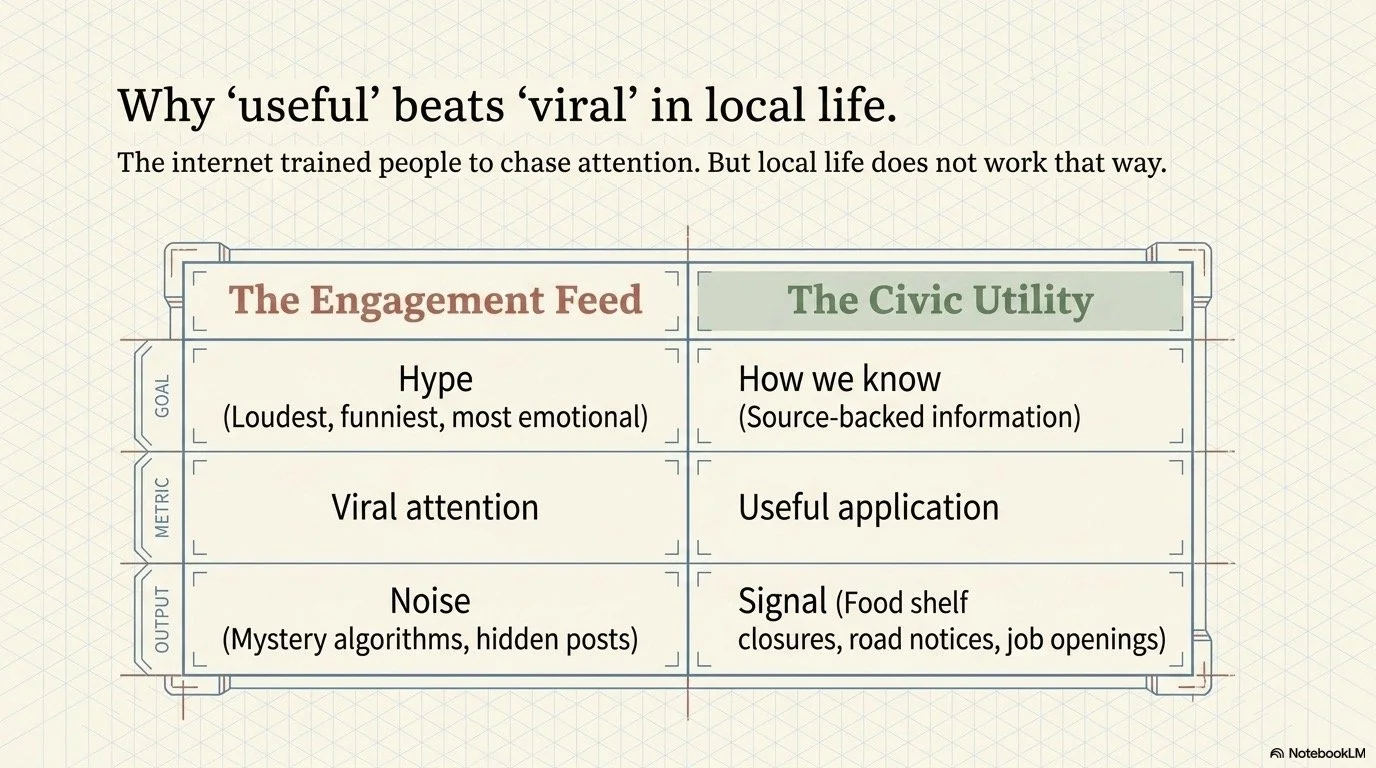
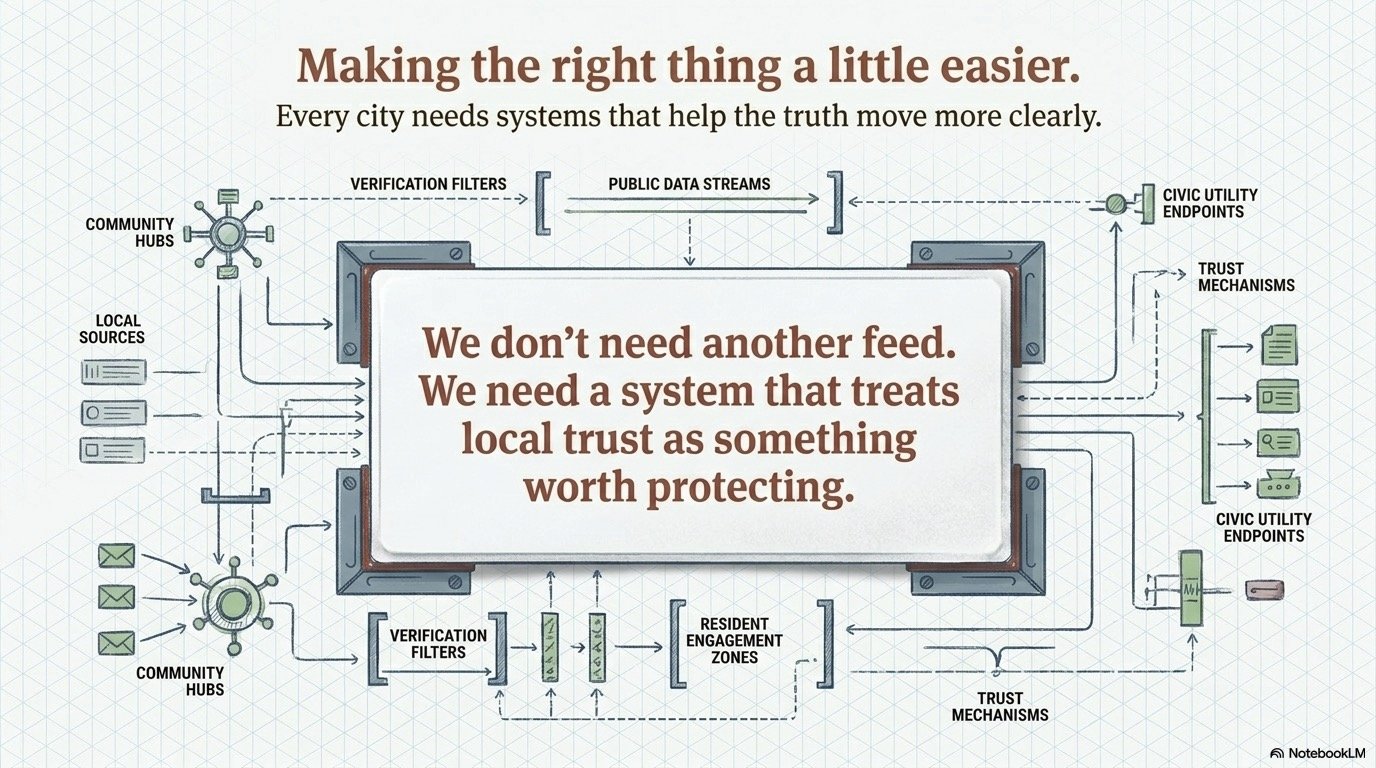
That is the difference between a feed and a civic utility.
A feed says, “Here is more.”
A civic utility says, “Here is what helps.”
Why “Useful” Beats “Viral”
The internet trained a lot of people to chase attention.
But local life does not always work that way.
The most useful update in Hastings on a given day might not be the funniest, loudest, or most emotional post.
It might be:
A food shelf closure.
A job opening.
A parade route.
A school deadline.
A small business changing hours.
A road construction notice.
A fundraiser that needs volunteers.
A local class with only three spots left.
A stormy afternoon forecast before an outdoor event.
That kind of information may not “go viral.”
But it helps.
And helping is underrated.
A moral systems design company does not confuse popularity with value. It can notice attention, but it does not worship it.
Sometimes the most moral design choice is to say:
This is not flashy, but residents need it.
That is the kind of editorial judgment Local Pigeon and HastingsNow.com are trying to protect.
The Dangerous Temptation: Paid Trust
Every local platform eventually faces the same temptation.
A business wants visibility.
A sponsor wants proof.
A platform needs revenue.
A resident needs trust.
Those needs can coexist, but only if the rules are clear.
The dangerous version says:
“Pay us and we will make you look important.”
The moral systems version says:
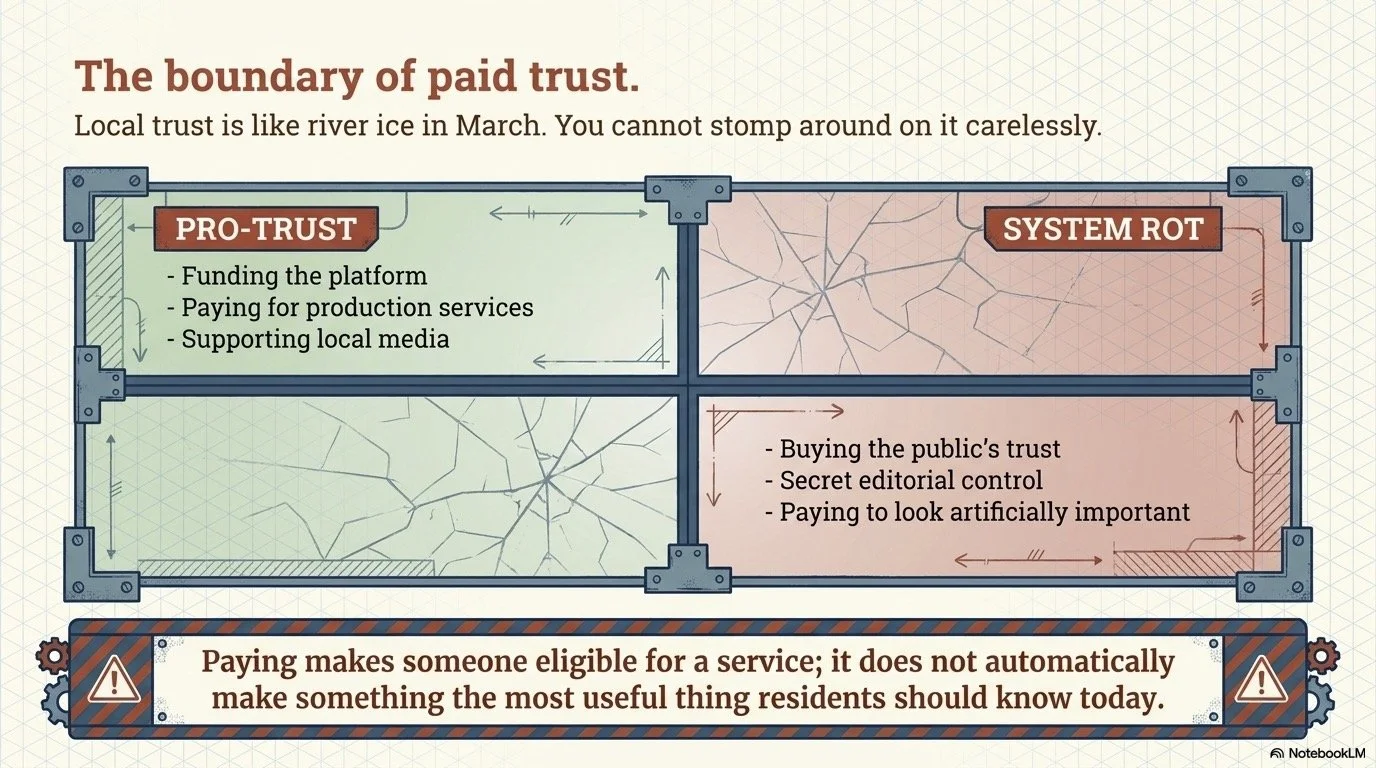
“Paying can support the platform, but it does not buy the public’s trust.”
That distinction matters.
A sponsor can support local media.
A business can pay for services.
A brand can get help telling its story.
But if money secretly controls what appears to be editorial judgment, the whole system starts to rot.
Residents can smell it.
Maybe not immediately. But eventually.
Local trust is like river ice in March: stronger than it looks in some places, weaker than it looks in others, and not something you should stomp around on carelessly.
So a moral systems design company needs sponsorship boundaries.
It needs to be able to say:
A paid relationship may make someone eligible for a service.
It may support production.
It may fund the platform.
It may help a business create better updates.
But it does not automatically make something one of the most useful things residents should know today.
That is not anti-business.
That is pro-trust.
And in the long run, trust is better for businesses too.
AI Makes Moral Systems Design More Important, Not Less
AI is amazing.
AI can summarize, organize, draft, sort, cluster, format, and help small teams do work that used to require a newsroom, an agency, a developer, a designer, and someone named Greg who somehow knew where every file was.
But AI also has a problem.
It is very good at sounding confident.
Sometimes too confident.
For local information, this can be dangerous. A wrong date, wrong price, wrong location, wrong owner, wrong phone number, wrong quote, or wrong claim can create real-world confusion.
In national news, an error may be embarrassing.
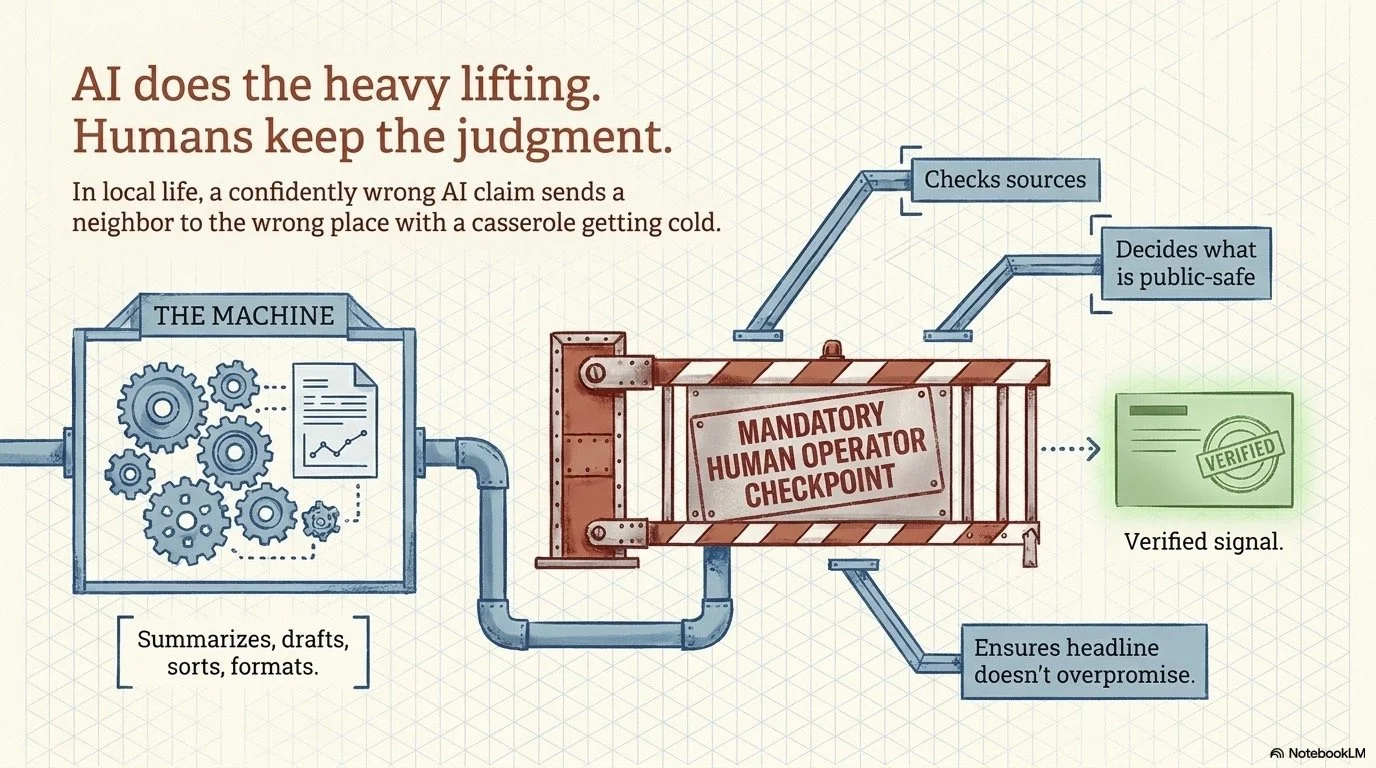
In local life, an error may send your neighbor to the wrong place at the wrong time with two kids in the backseat and a casserole getting cold.
That is why moral systems design does not ask:
“How can AI replace the operator?”
It asks:
“How can AI assist the operator while humans keep judgment?”
AI can help prepare drafts.
Humans should verify.
AI can help summarize updates.
Humans should check sources.
AI can suggest categories.
Humans should decide what is public-safe.
AI can help write a headline.
Humans should make sure the headline does not overpromise.
The future is not AI versus humans.
The future is humans with better tools and better guardrails.
What It Feels Like to Work at a Moral Systems Design Company
It feels different.
You may spend an hour debating one label.
You may ask whether a button should say Claim, Learn More, RSVP, or Call.
You may decide not to publish something because the date is unclear.
You may remove a sentence because it sounds too certain.
You may ask a business owner for a source link.
You may tell a sponsor, kindly, that they cannot buy their way into the public-interest lane.
You may celebrate a tiny improvement because it prevents a future misunderstanding.
You may become the kind of person who says things like:
“Is this public-safe?”
“Where is the source?”
“What does the resident do next?”
“Can we make this clearer?”
“Should this expire?”
“Does this need review?”
“Are we accidentally promising too much?”
“Can we say this in plain English?”
At first, this can sound fussy.
Then you realize it is the work.
A moral systems design company is not morally serious because everyone uses serious words.
It is morally serious because small decisions add up.
A label is a small decision.
A review queue is a small decision.
A correction path is a small decision.
A “no paid rank” rule is a small decision.
A one-CTA limit is a small decision.
But together, these small decisions tell the public:
You can trust this more than a random feed.
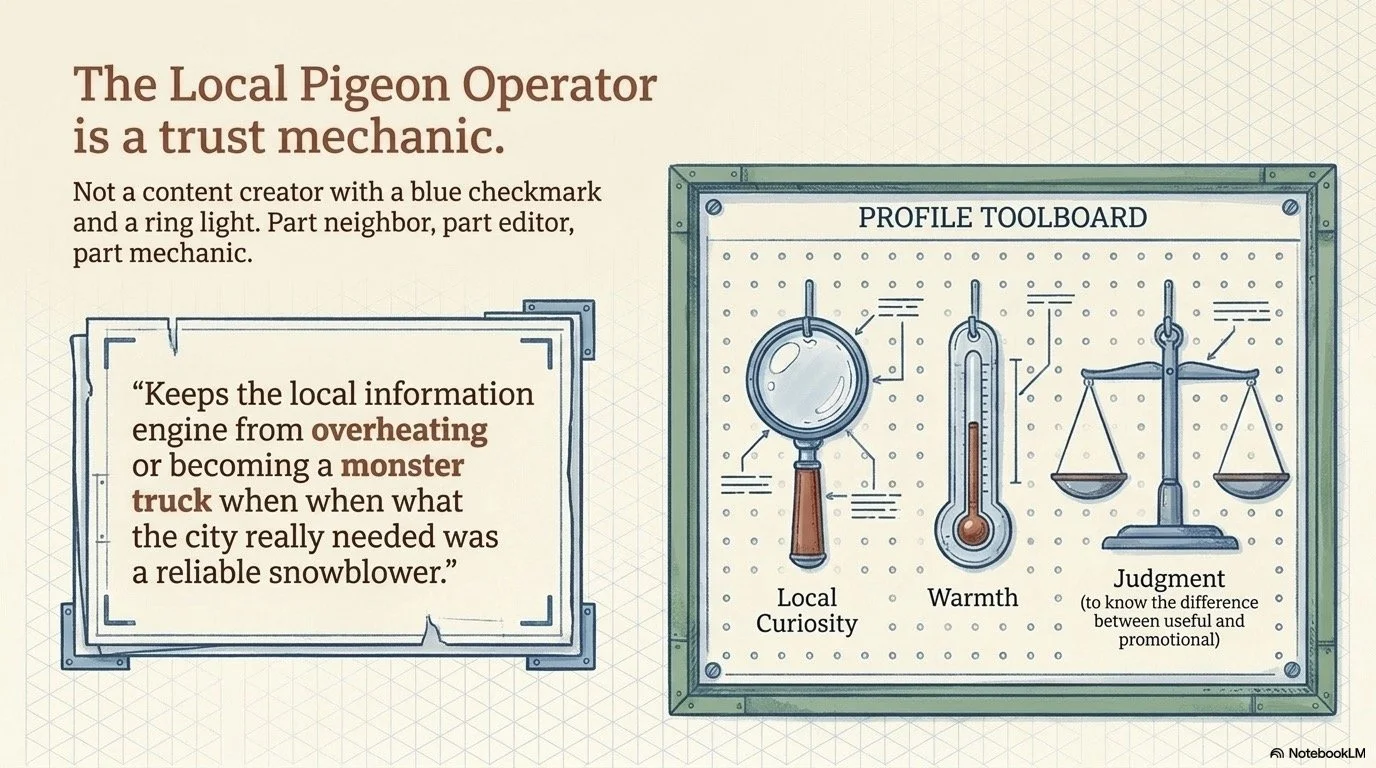
The Local Pigeon Operator: Part Neighbor, Part Editor, Part Trust Mechanic
If Local Pigeon grows to other cities, the most important person in each city may be the Local Pigeon Operator.
This person does not need to be famous.
They do not need to be loud.
They do not need to have a blue checkmark, a ring light, or a personal brand involving six fonts and a podcast intro.
They need judgment.
They need warmth.
They need local curiosity.
They need to care whether the date is right.
They need to know the difference between useful and promotional.
They need to be able to talk to a restaurant owner, a nonprofit director, a chamber ambassador, a librarian, a coach, a pastor, a photographer, a city staff member, and a resident who just wants to know where to park.
They need to be the kind of person who can say:
“This is great. Let’s make it clearer.”
Or:
“We should confirm that before publishing.”
Or:
“That is probably a Local Update, but not a LOCAL 10 item.”
Or:
“We can help you tell that story, but we cannot promise ranking.”
A Local Pigeon Operator is not just a content person.
They are a trust mechanic.
They keep the local information engine from overheating, leaking oil, or becoming a monster truck when what the city really needed was a reliable snowblower.
Why This Matters in Hastings
Hastings is big enough to have complexity and small enough for trust to matter.
That is the sweet spot.
In a city like Hastings, people still recognize names. People still care who said what. People still notice when something feels off. A local business is not an abstract brand. It is a person you may see at the grocery store, at school pickup, at church, at the riverfront, or standing in line behind you while you are buying exactly one thing and somehow leaving with twelve.
Local media here cannot behave like a giant anonymous platform.
It has to behave like a neighbor.
But a neighbor with a system.
Because neighborliness alone is not enough anymore.
The old town square has been split across websites, social feeds, inboxes, group chats, posters, event calendars, and AI search results.
So the question becomes:
Can Hastings build a better local signal system before the national platforms define local reality for us?
That is a big question.
But the answer may begin with very small actions:
A business records a clear Soundbite.
A nonprofit posts a specific update.
An operator checks a source.
A resident sees one useful thing.
A sponsor supports the platform without buying the public’s trust.
A correction is made quickly.
A daily habit forms.
That is how systems change.
Not all at once.
One trustworthy signal at a time.
Moral Systems Design Is Not About Being Perfect
This part matters.
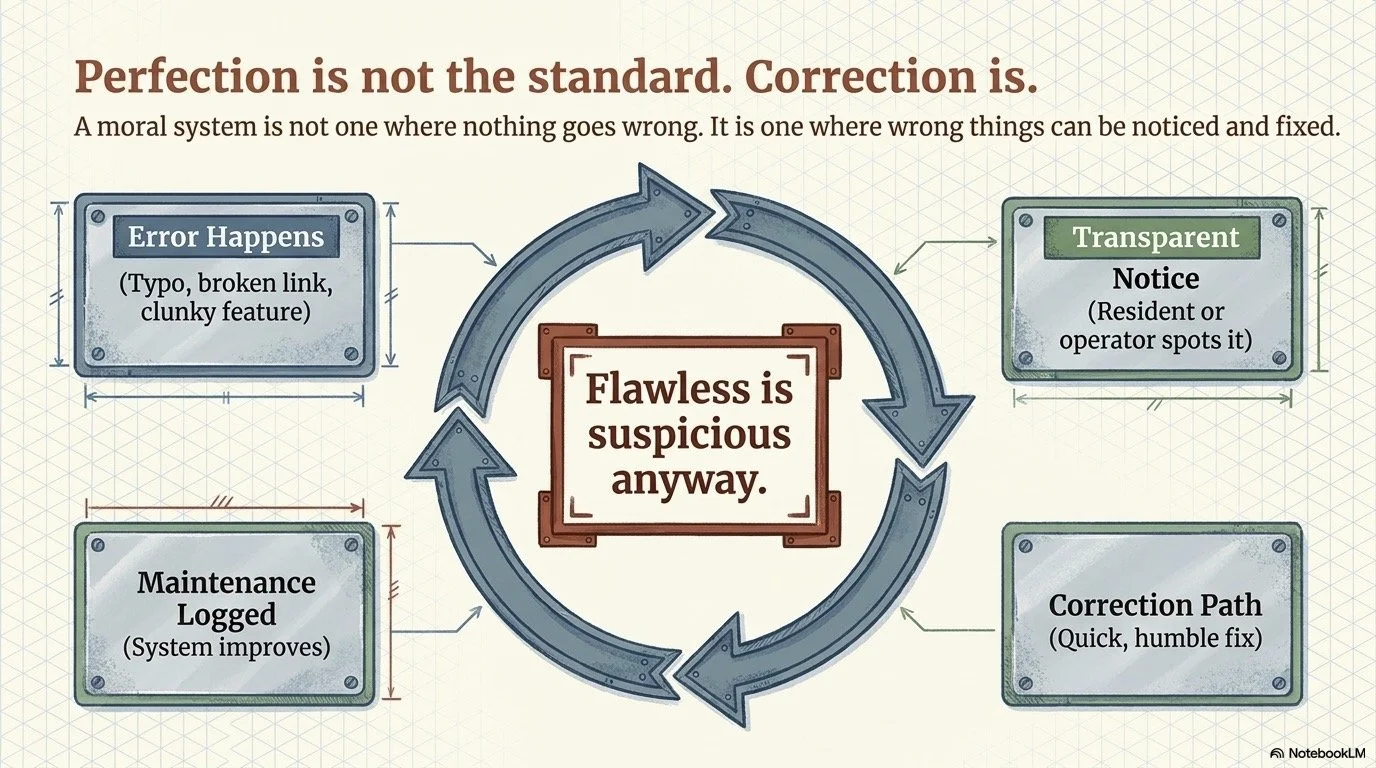
A moral systems design company will still make mistakes.
A typo will happen.
A link will break.
A date will need correcting.
A feature will be clunky.
A policy will need revision.
Someone will misunderstand the offer.
A Soundbite will need a better title.
A business will ask for something that does not fit.
A resident will point out something the team missed.
That does not mean the system failed.
It means the system needs a correction path.
Perfection is not the standard.
Correction is the standard.
Transparency is the standard.
Humility is the standard.
A moral system is not one where nothing goes wrong.
A moral system is one where wrong things can be noticed, corrected, learned from, and prevented next time.
That is a much better goal than pretending to be flawless.
Especially in local life, where everyone knows flawless is suspicious anyway.
The Entertaining Truth: Good Systems Are Surprisingly Human
People sometimes hear “systems” and think of cold machinery.
But good systems are often deeply human.
A recipe is a system for making sure grandma’s bars taste right even when cousin Mark insists he “basically remembers” the measurements.
A baseball lineup is a system for giving everyone a role.
A church bulletin is a system for keeping Sunday from becoming complete improvisational theater.
A restaurant menu is a system for helping hungry people make decisions before the server has visited the table six times.
A parade lineup is a system for preventing the marching band, the fire truck, the dance studio, and the person in the eagle costume from all occupying the same piece of pavement.
Systems are not the enemy of humanity.
Bad systems are.
Good systems protect human energy for the things humans are best at: judgment, care, humor, creativity, repair, courage, and connection.
That is why moral systems design is not sterile.
It is actually very alive.
It is the art of making room for people to be better together.
What Residents Can Do
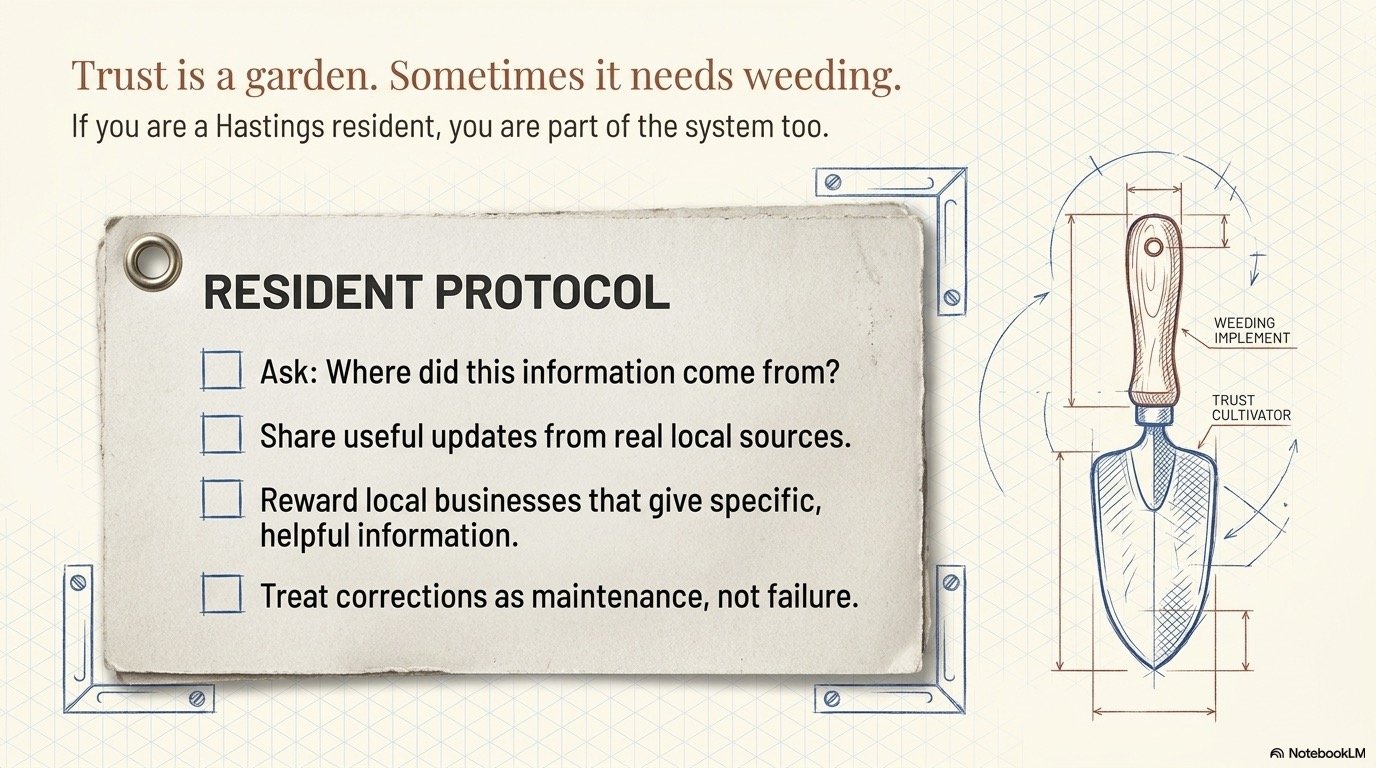
If you are a Hastings resident, you are part of the system too.
You can help by asking:
Where did this information come from?
Is there a current source?
Is the date clear?
Is this useful to residents?
Would a short local voice explanation help?
Does this need a correction?
Who should know about this?
That does not mean everyone needs to become a fact-checker.
It means we can all become a little more source-aware.
When you see a useful update from a real local source, share it.
When you notice something unclear, ask kindly.
When a local business gives specific helpful information, reward that behavior.
When a platform corrects something, do not treat the correction as failure. Treat it as maintenance.
Trust is not a statue.
It is a garden.
And yes, sometimes the garden needs weeding.
What Local Sources Can Do
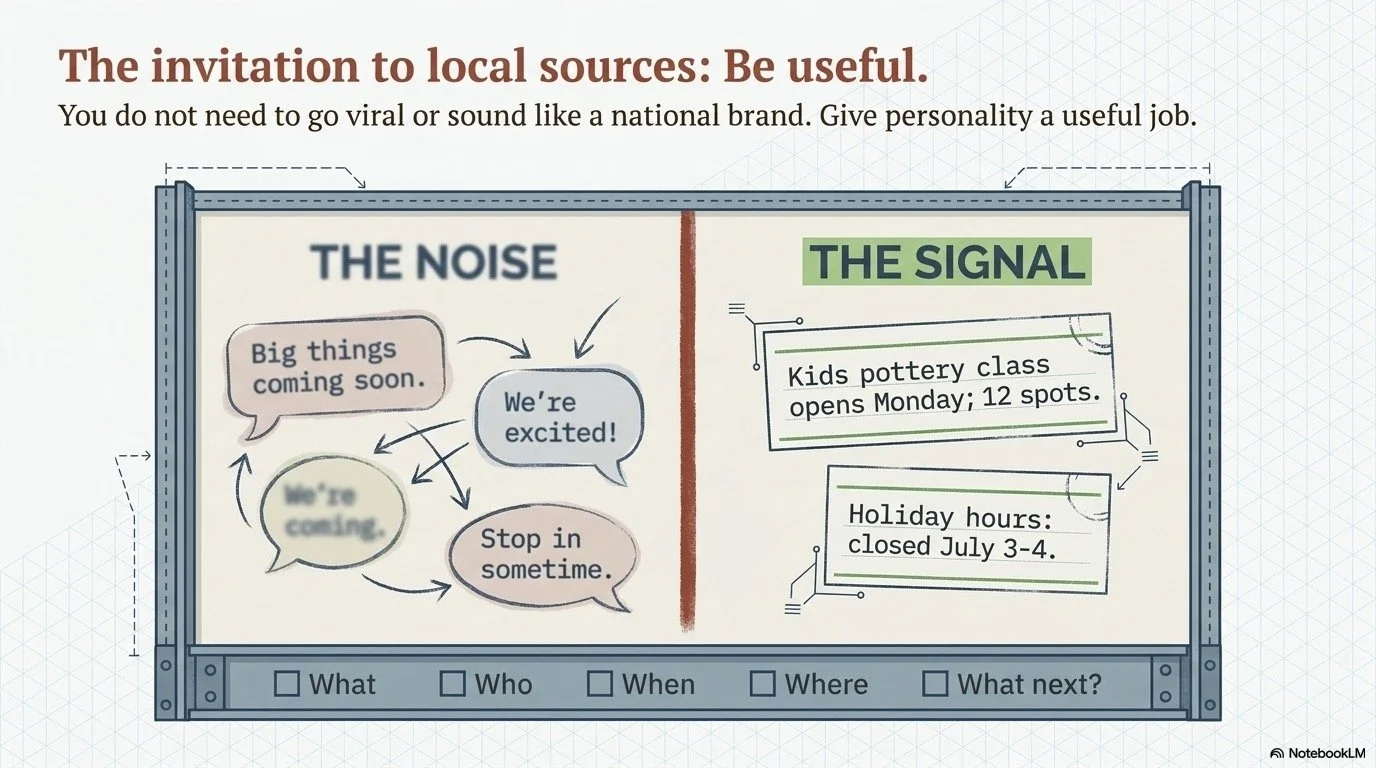
If you are a business, nonprofit, school, church, civic group, event organizer, artist, maker, restaurant, gym, shop, or local service provider, the invitation is simple:
Be useful.
You do not need to sound like a national brand.
You do not need to go viral.
You do not need to become a content machine.
Start with one clear update:
What is happening?
Who is it for?
When is it?
Where is it?
What should people do next?
What source confirms it?
Would your voice help explain it?
That is enough.
A useful local update beats a vague promotional post almost every time.
“Big things coming soon” is mysterious.
“Kids pottery class opens Monday; 12 spots; ages 8–12; register here” is useful.
“We’re excited!” is nice.
“We need volunteers Saturday from 9 to noon; sign up here” helps.
“Stop in sometime” is friendly.
“Holiday hours: closed July 3–4, reopening Monday at 9” saves someone a trip.
Moral systems design does not remove personality.
It gives personality a useful job.
The Future: Local Trust as Infrastructure
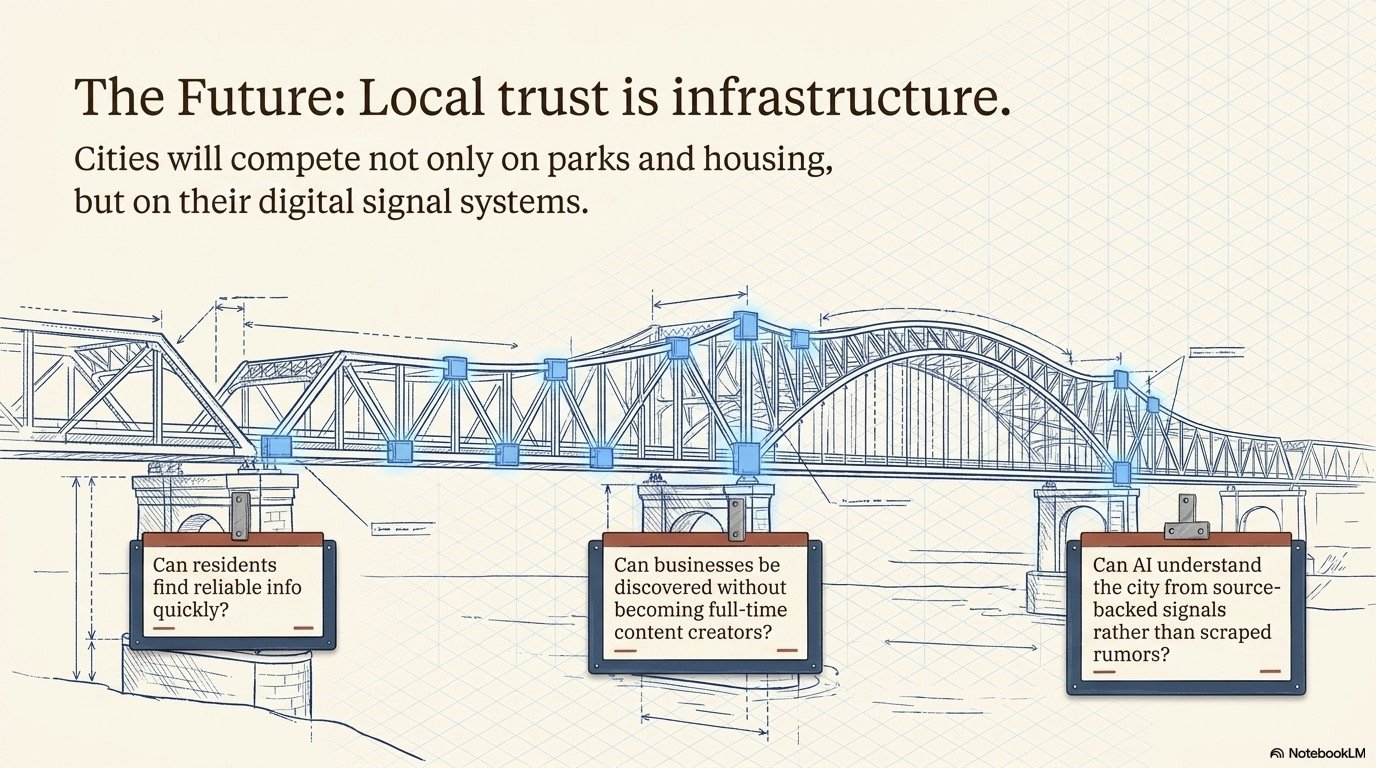
In the future, cities may compete not only on schools, parks, restaurants, housing, trails, and river views.
They may also compete on trust.
Can residents find reliable local information quickly?
Can small businesses be discovered without becoming full-time content creators?
Can nonprofits reach people without shouting?
Can civic updates travel without getting distorted?
Can AI tools understand a city from source-backed local signals rather than scraped rumors?
Can local media serve residents, businesses, and sponsors without selling the public’s trust?
These are not abstract questions.
They are economic questions.
They are civic questions.
They are family questions.
They are Saturday morning questions.
They are “what’s happening downtown?” questions.
They are “is this still open?” questions.
They are “who is hiring?” questions.
They are “how can I help?” questions.
Local trust is infrastructure.
It may not look like a bridge, but people cross it every day.
And like any bridge, it needs design, maintenance, inspection, funding, and care.
The Big Idea, Plainly
Moral systems design is not about claiming to be morally superior.
It is about admitting that good intentions are not enough.
If we want better local information, we need better local systems.
If we want trustworthy AI, we need human review.
If we want useful updates, we need source clarity.
If we want sponsors, we need boundaries.
If we want community, we need correction.
If we want residents to care, we need to save them time.
If we want local businesses to participate, we need to make it simple.
If we want Hastings to know what matters, we need a system that treats local trust as something worth protecting.
That is the work.
It is humble work.
It is nerdy work.
It is neighborly work.
It is surprisingly entertaining work, because local life is never as tidy as the spreadsheet says it will be.
And it may be some of the most important work a local media company can do now.
Not because Hastings needs another app.
Not because the world needs another feed.
But because every city needs people and systems that help the truth move a little more clearly, the useful things rise a little faster, and the right thing become a little easier.
That is moral systems design.
And around here, we might just call it:
Helping Hastings know what matters.