It’s the Love That Stays: The True Story Behind Hastings Author Diane Davies’ Willy’s Broken Heart
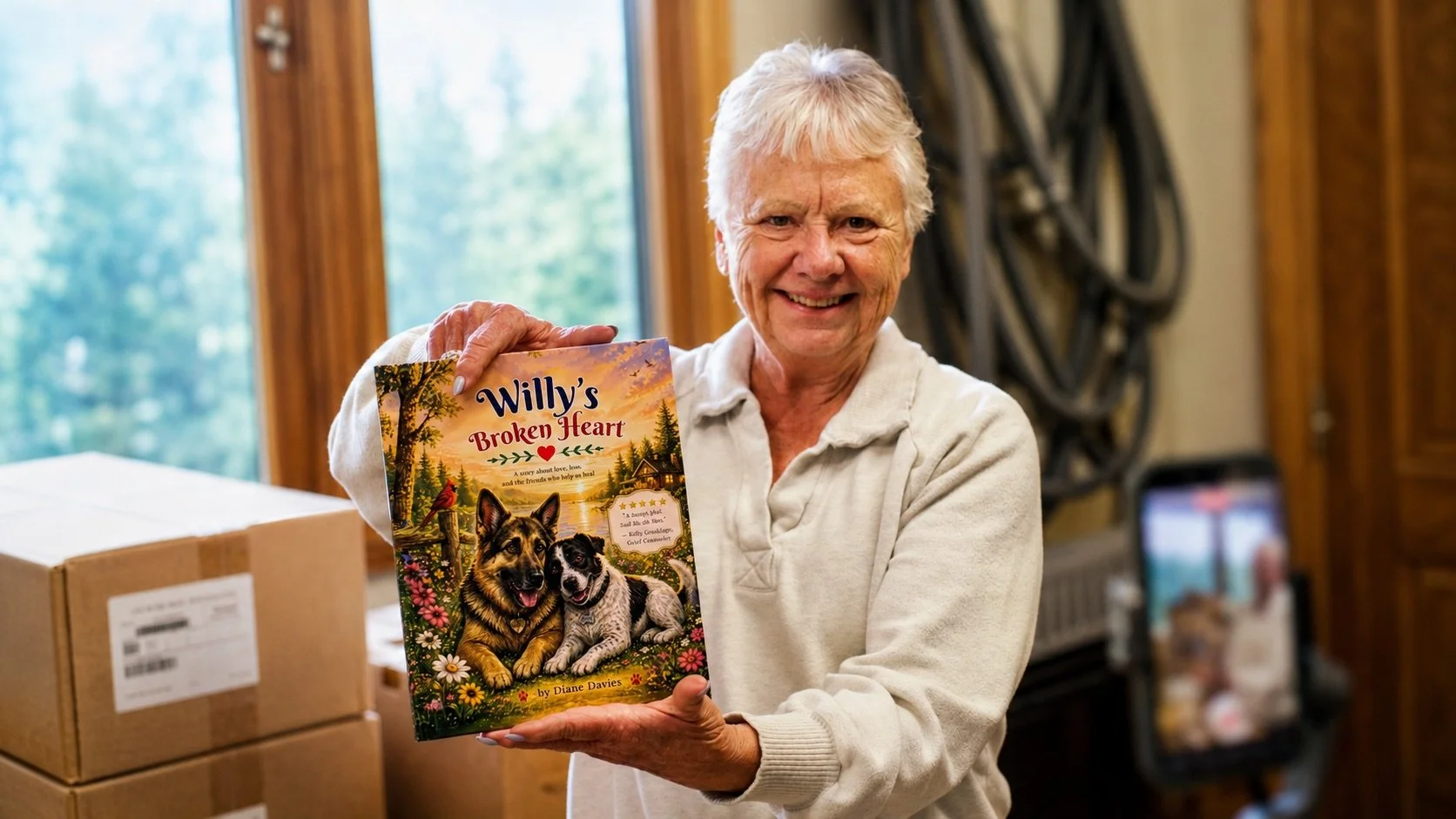
Photo by Ashley Media. AI enhanced by HastingsNow.com
Two rescue dogs became inseparable along Minnesota’s St. Croix River. After Bailey died—and after Diane Davies lost her husband of 53 years—their friendship became a children’s story about grief, honest words and the possibility of opening one’s heart again.
From the edge of the field, the game looked like a riddle.
How could a white tail chase two black ears?
Then the ears would turn, and the tail would race away.
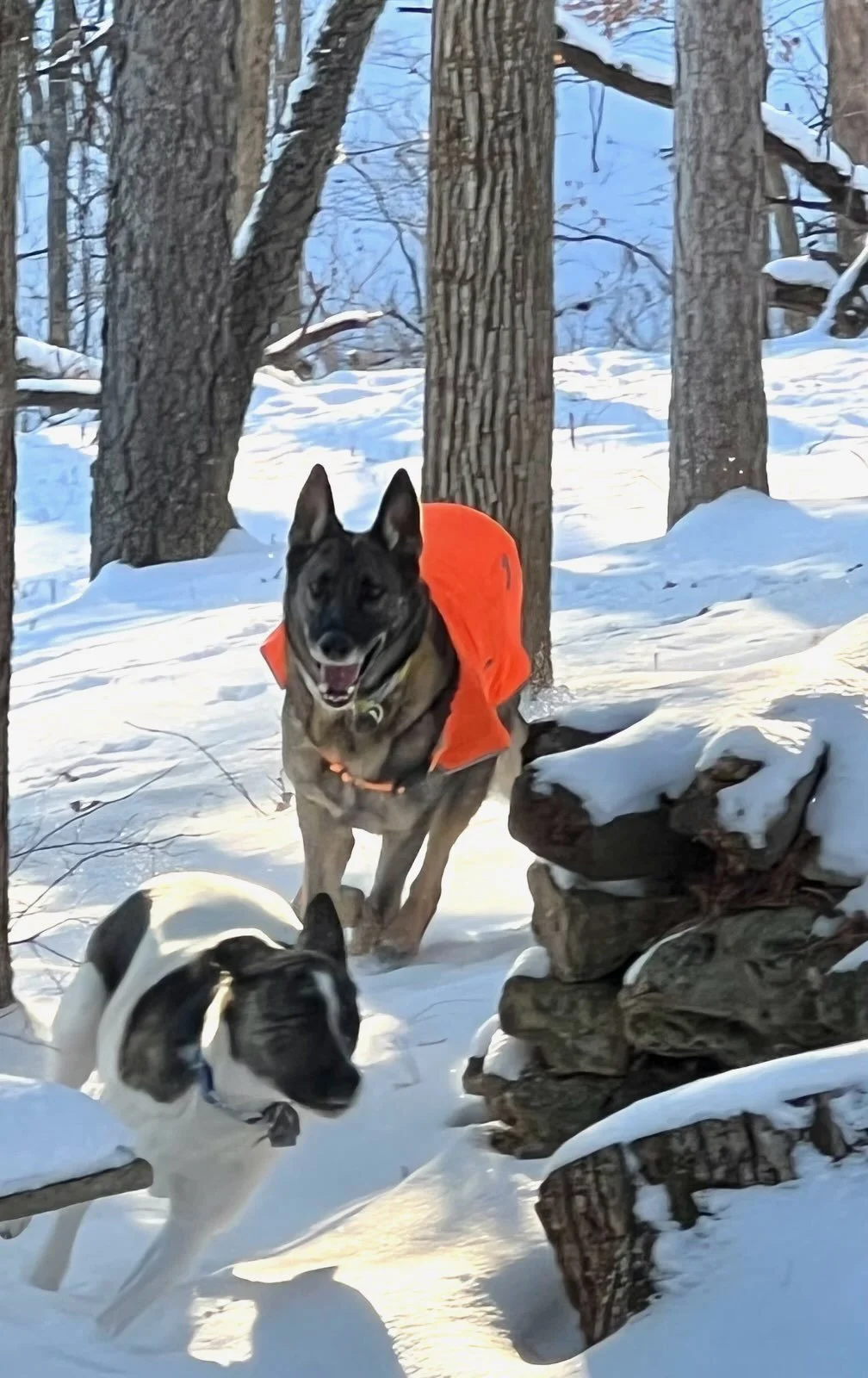
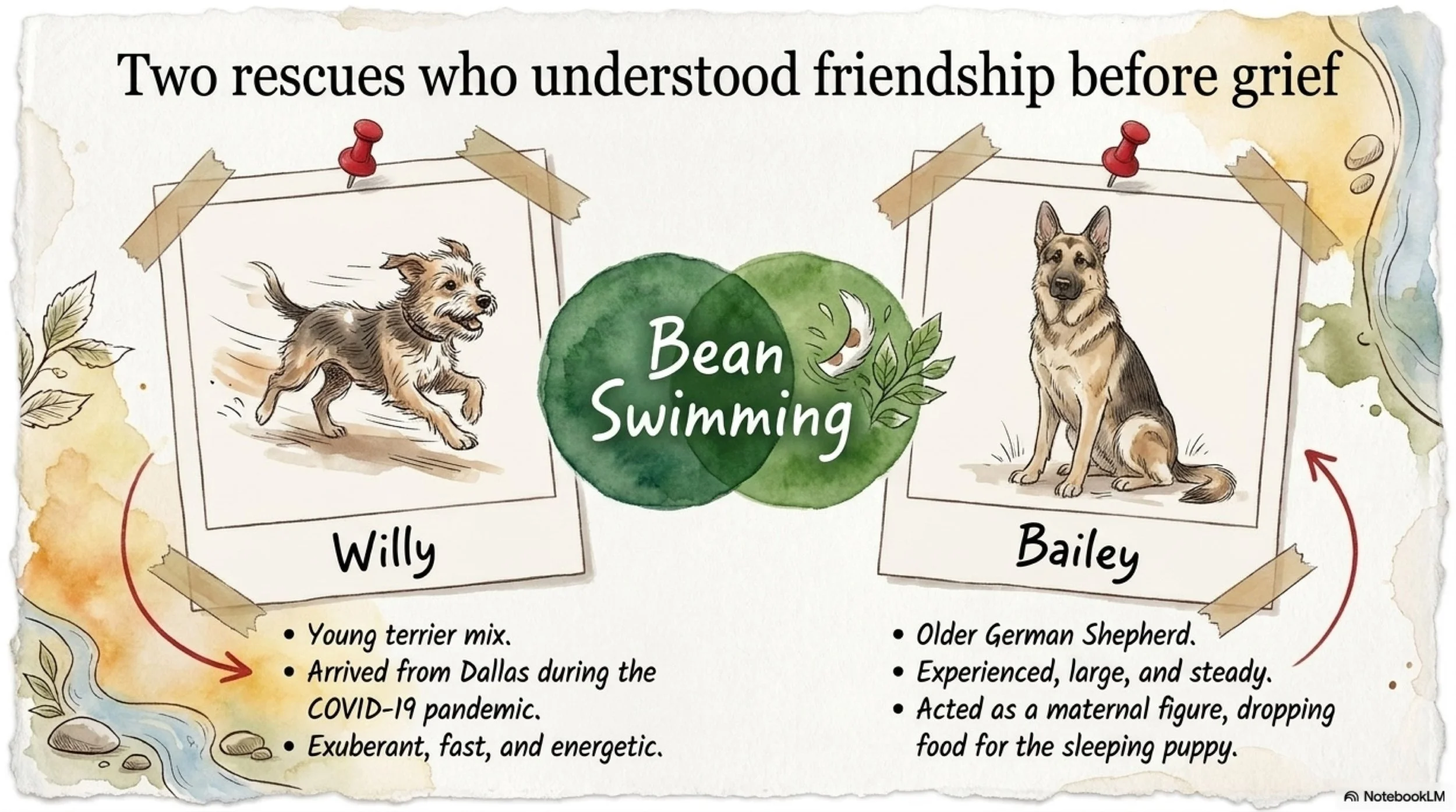
The dogs themselves had nearly disappeared beneath the green leaves. All that could be seen above the soybeans was the bright white tail of a young terrier mix named Willy and the pointed black tips of Bailey’s German shepherd ears.
Around their homes in the woods near Minnesota’s St. Croix River, the families had a name for this game.
They called it “bean swimming.”
Sometimes Willy chased Bailey. Sometimes Bailey chased Willy. To anyone watching from the edge of the field, it appeared that a tail and two ears had developed minds of their own.
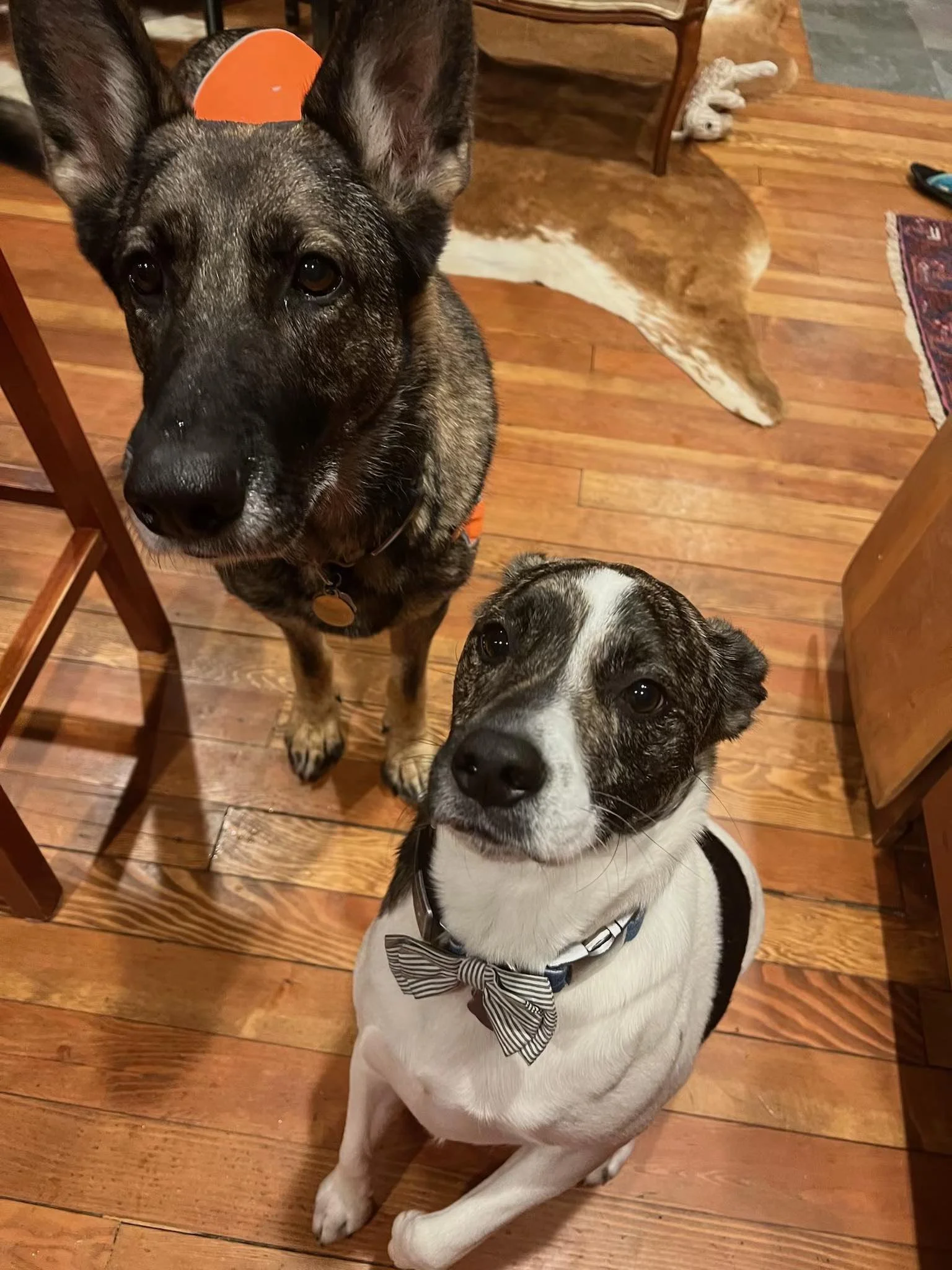
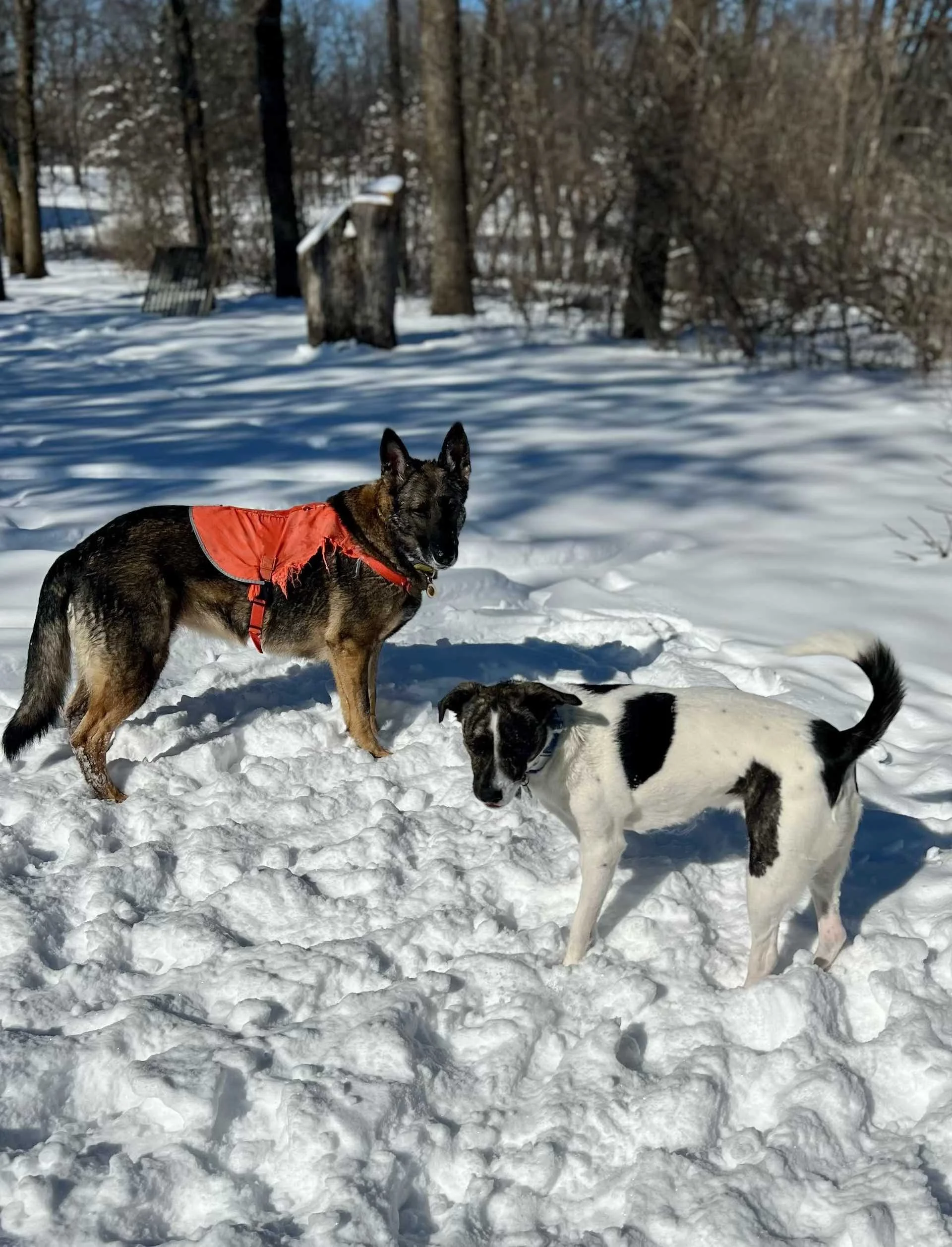
It was one of countless adventures shared by two rescue dogs who looked very different but seemed to understand almost immediately that they belonged together.
Before either of them understood grief, they understood friendship.
What is Willy’s Broken Heart?
Willy’s Broken Heart: A Story About Love, Loss, and the Friends Who Help Us Heal is a children’s picture book by Hastings author and former elementary educator Diane Davies.
Inspired by the friendship between two real rescue dogs, the story follows Willy after his best friend Bailey dies. With help from the wise and compassionate Cardinal Red, Willy learns what grief is, why it can hurt his heart and tummy, and how sadness can gradually soften while love and memories remain.
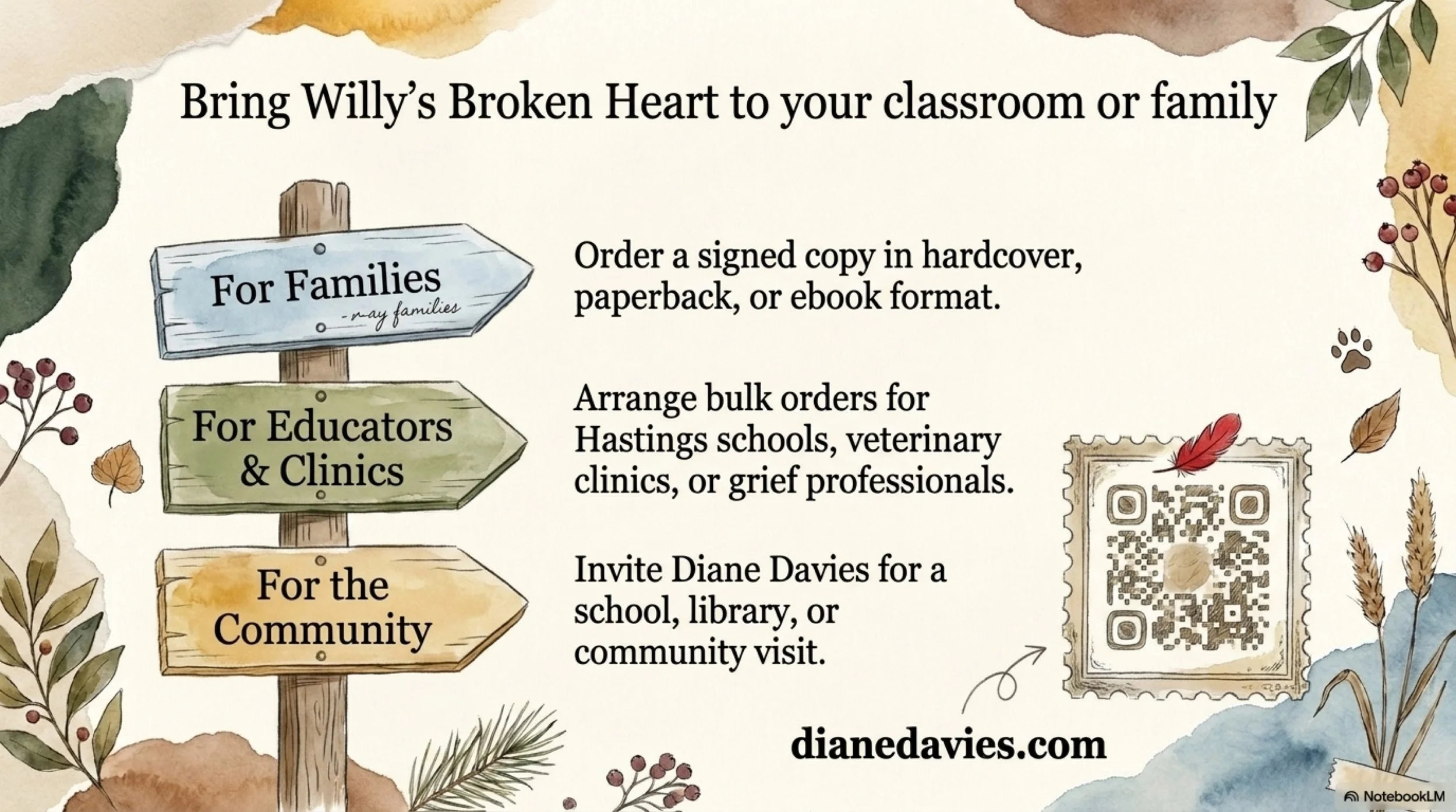
Diane created the book for children grieving a pet or loved one—and for the parents, grandparents, teachers, counselors and other caring adults searching for gentle but honest words. Her official website offers the book in hardcover, paperback and ebook formats, with signed-copy, bulk-order and school or counselor options.
But before there was a book, there were two dogs.
The puppy who rode north
Willy’s life in Minnesota began during the unsettling early months of the COVID-19 pandemic.
Diane was searching online for a puppy to adopt. She hoped to find a terrier mix: short-haired, energetic, good with children and ready to become a companion to Diane, her husband and their grandchildren.
On the website for Rough Start Rescue, one puppy caught her attention.
His name was Daniel.
Daniel was one of three puppies in the litter, alongside Shane and Spike. He traveled from Dallas to Minnesota on a bus carrying 17 other puppies, according to Diane. When he arrived at his new home, Daniel received a new name.
He became Willy.
He also became part of the family.
Willy entered his new life with all the energy and curiosity Diane had hoped to find. The woods, fields, river and animals surrounding his home offered a world filled with things to inspect, chase and discover.
Bailey lived a short distance up the road.
She was an older German shepherd, also rescued and adopted after passing through foster homes. Where Willy was young, small and exuberant, Bailey was large, experienced and steady.
The contrast between them was immediate.
So was the affection.
“Bailey became kind of a mother to Willy,” Diane recalled.
When Willy climbed onto the neighbor’s couch and fell asleep, Bailey would sometimes bring mouthfuls of dog food and drop them near him. Then she would wait for the puppy to wake up and resume their adventures.
Soon, the two were running through the woods, inventing games in the fields and seeking each other out almost every day.
Willy needed a companion. Bailey appeared to enjoy having someone younger to watch over. Each dog gave the other something that had been missing.
“They seemed to receive from each other a very special love and companionship,” Diane said. “They became the best of friends.”
When love learns to slow down
In the early years, Willy and Bailey’s friendship was expressed through motion.
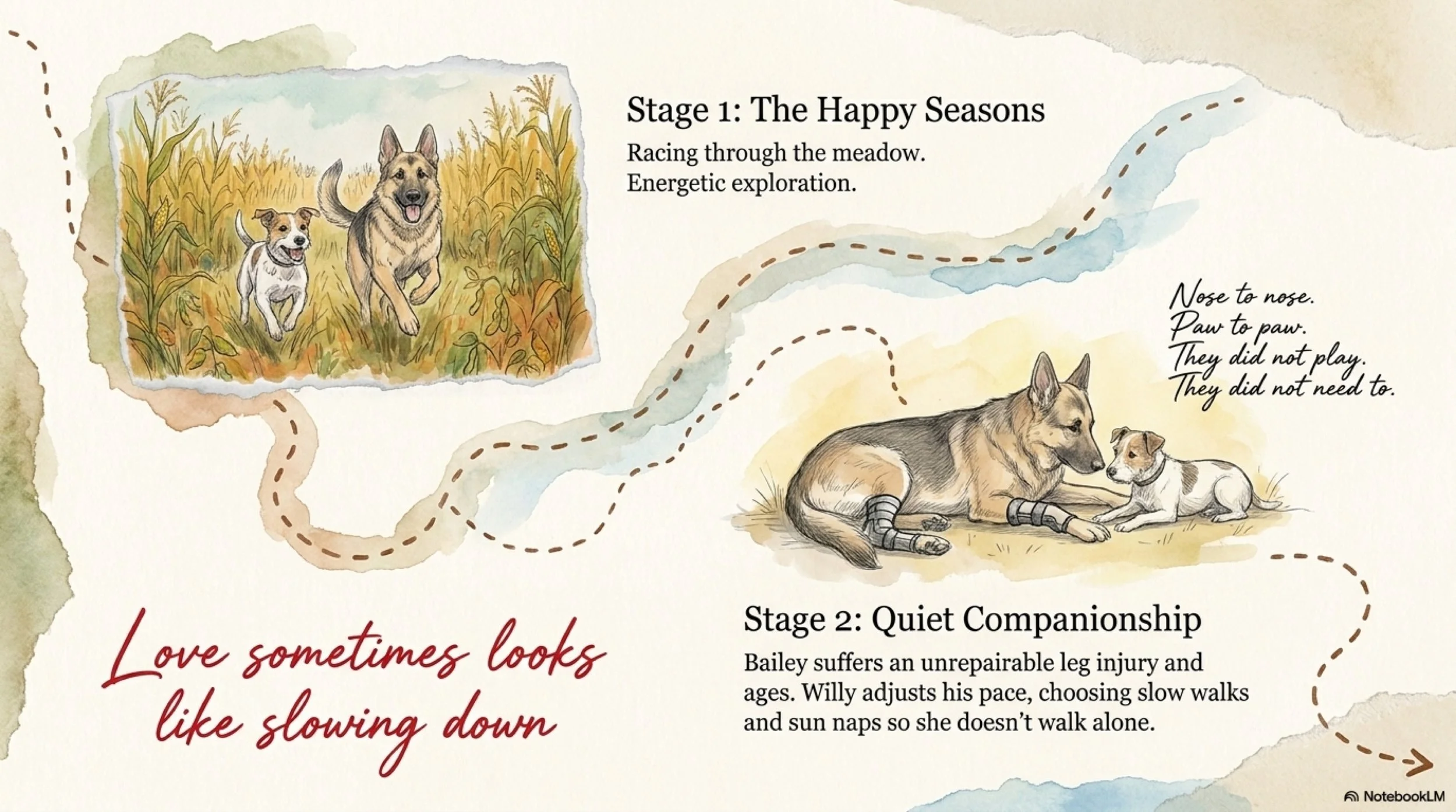
They chased each other through the corn. They swam through the soybeans. They explored the woods and meadow between their homes.
Then Bailey was injured.
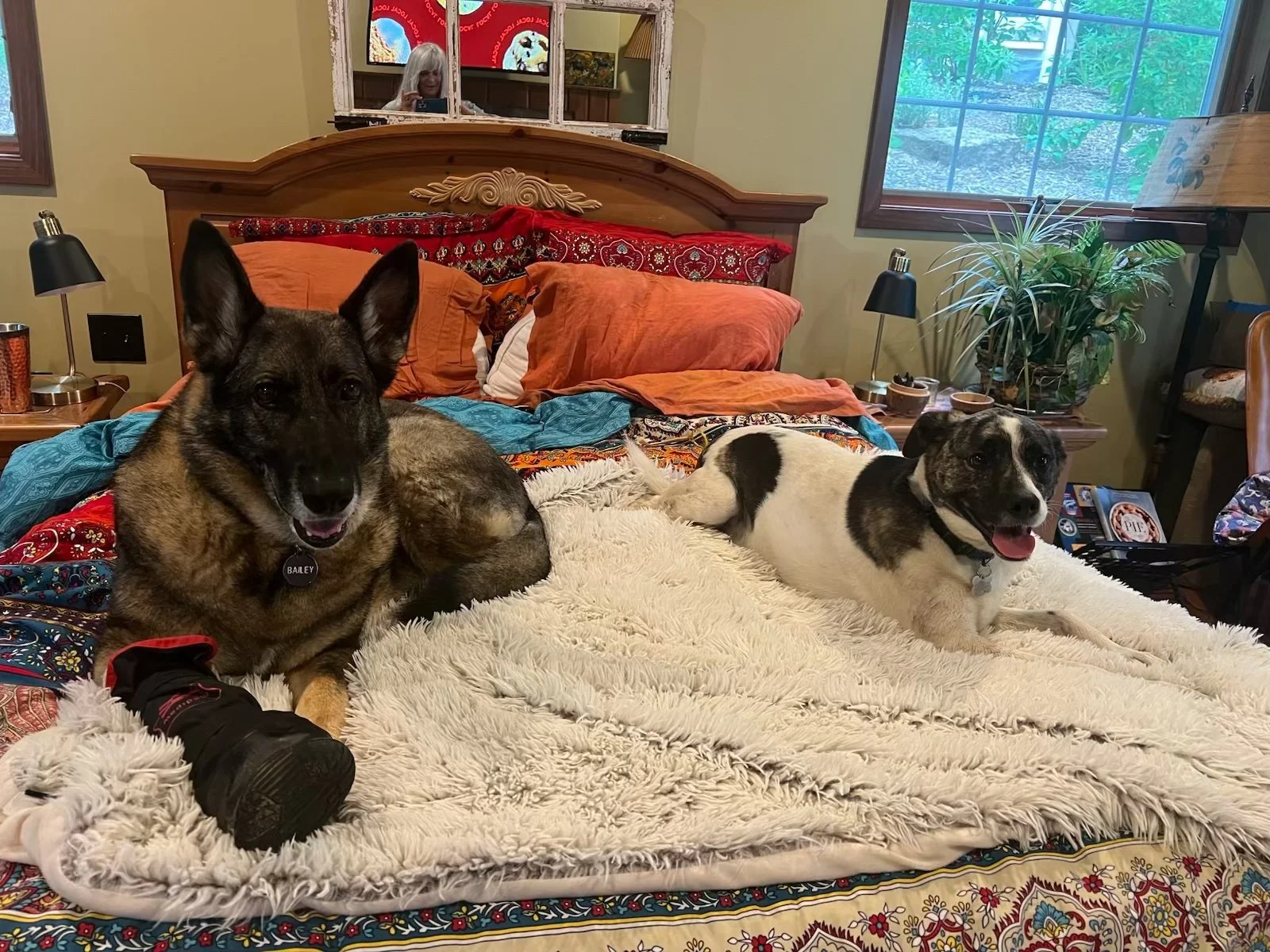
While running through the woods, she became tangled in a pile of brush and seriously damaged her right front leg. The injury could not be fully repaired. Bailey began wearing a brace that allowed her to continue using the leg, but her days of effortless running were ending.
The injury slowed Bailey.
Then age and other health problems slowed her further.
Willy seemed to notice.
The younger dog who once wanted to run everywhere began adjusting his pace so his friend could remain beside him. When Bailey needed to stop, Willy stopped. When she rested in the sun, he lay down with her. The rough-and-tumble games gradually became slow walks, afternoon naps and quiet companionship.
“It just seemed real natural for Willy to do that,” Diane said.
He no longer needed Bailey to race through the meadow.
Being with her was enough.
There is a lesson in that change that reaches beyond the lives of two dogs.
Love sometimes looks like running together through the happiest seasons of life.
Later, love may look like slowing down so someone does not have to walk alone.
Bailey and Willy Image Gallery
Image credit: Pam Nielson
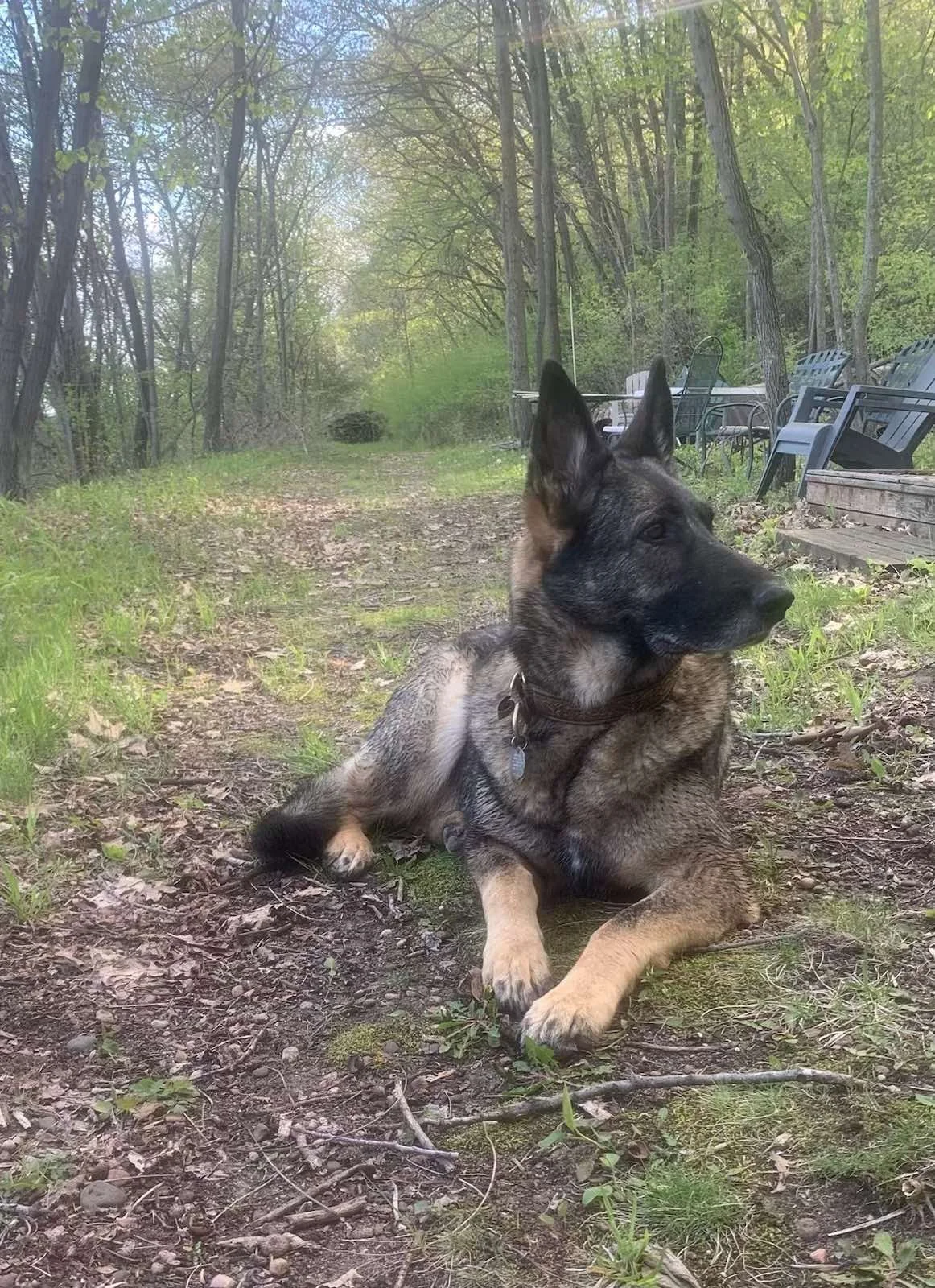

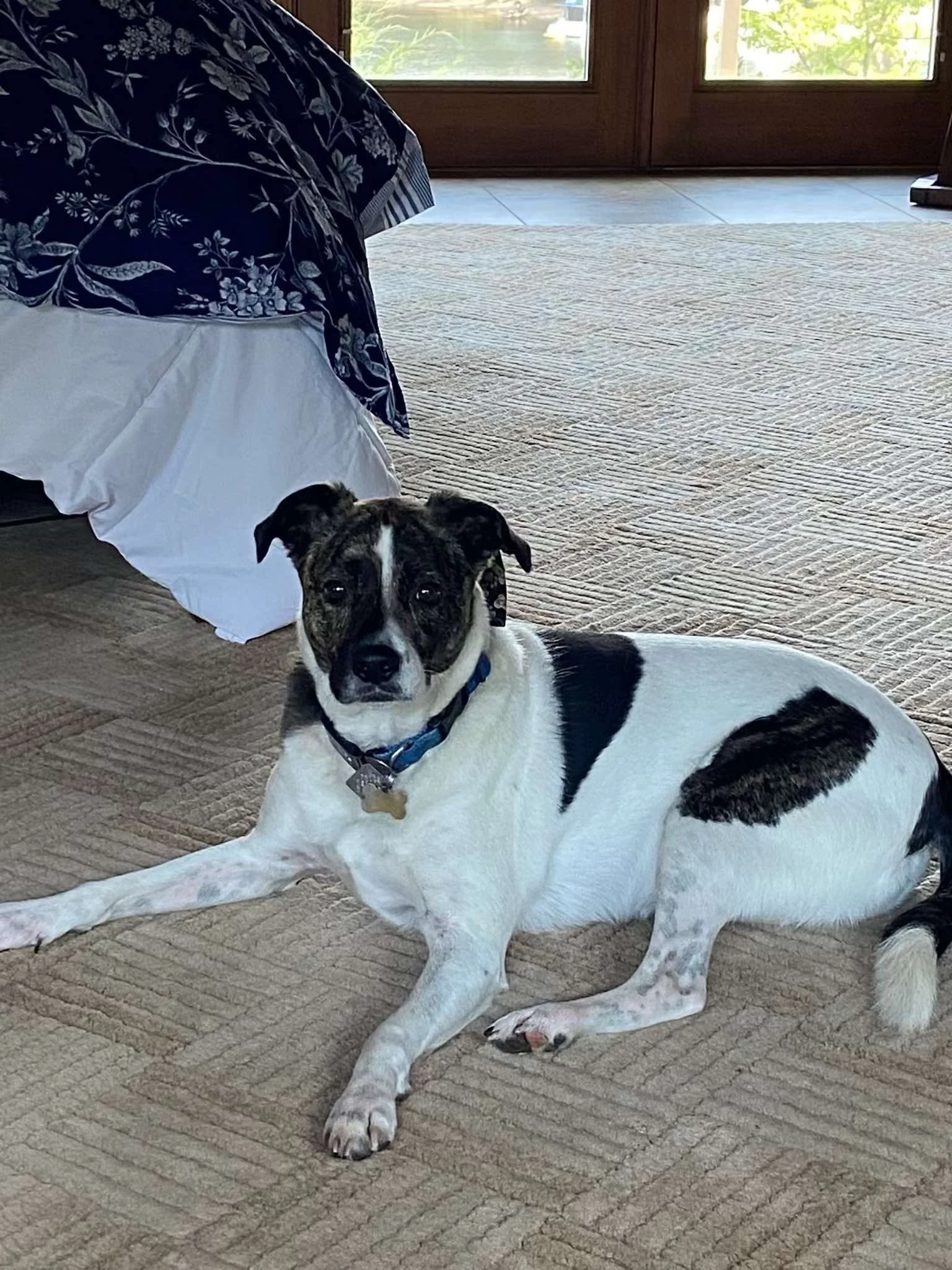
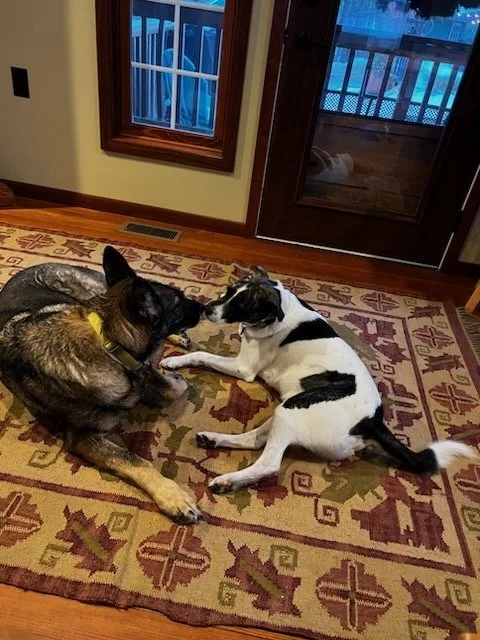
Nose to nose, paw to paw
As Bailey’s health continued to deteriorate, her family understood that the end of her life was approaching.
Willy and Diane visited her shortly before she died.
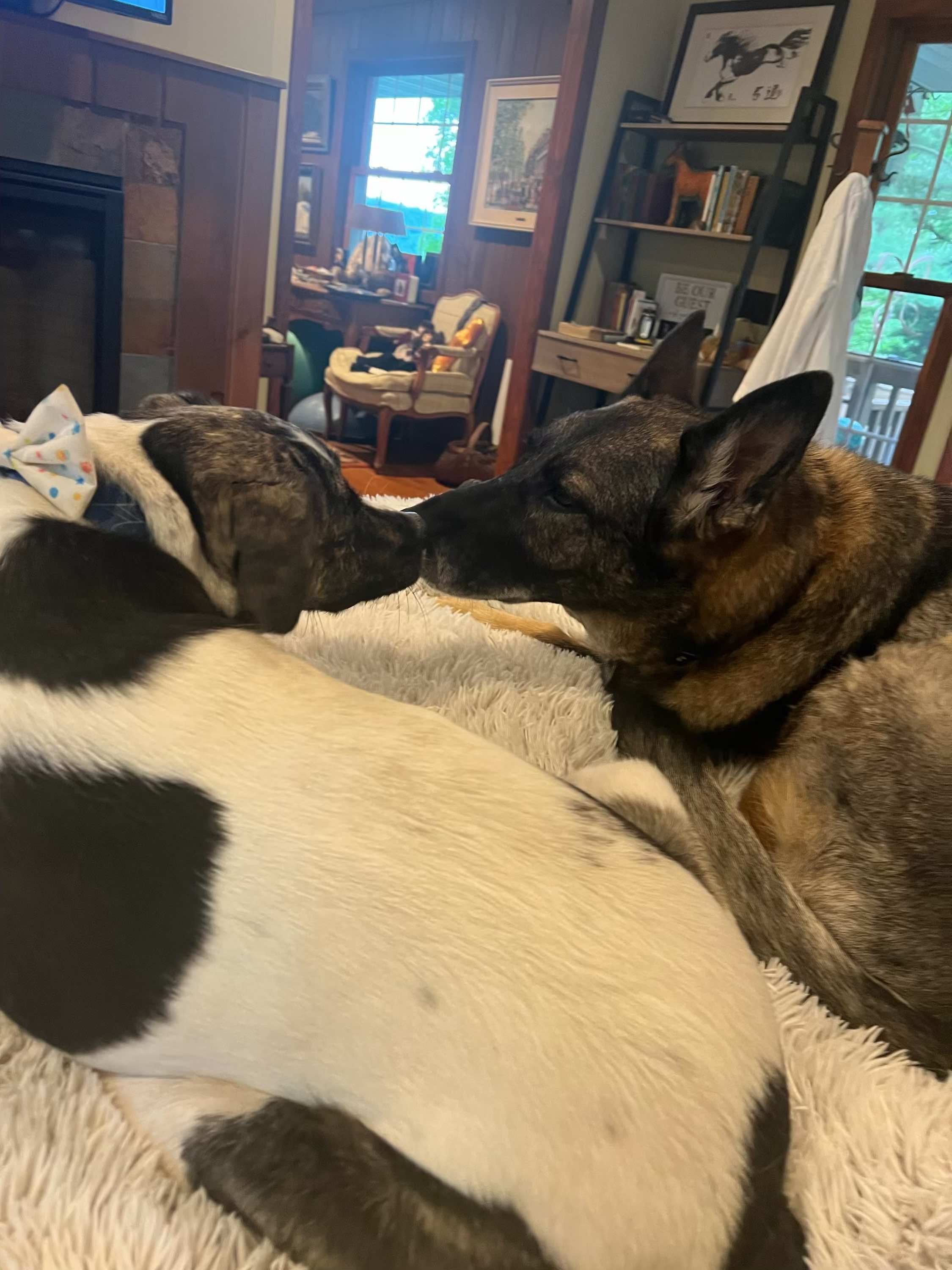
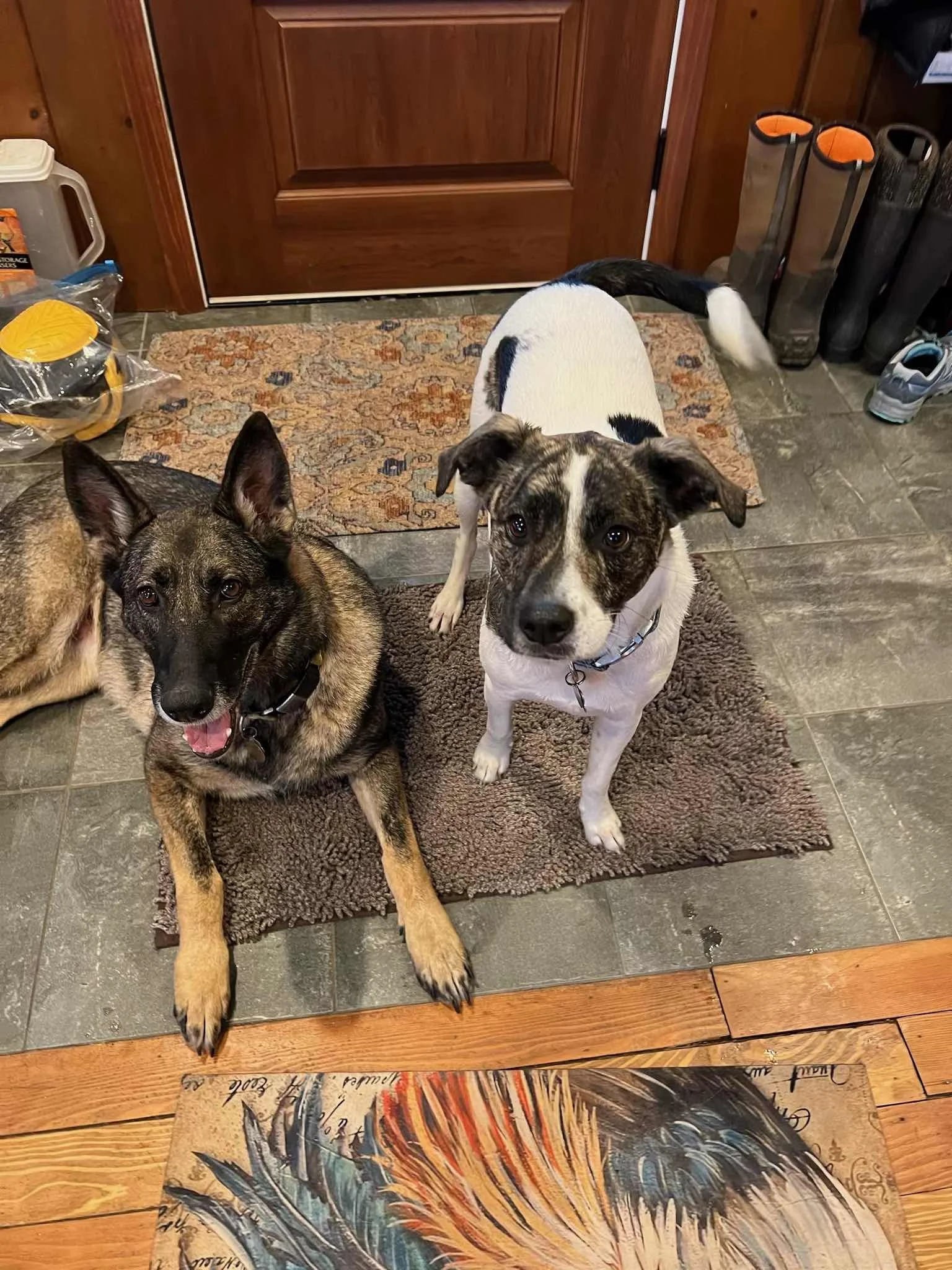
The two dogs lay together on a rug near the door.
Nose to nose.
Paw to paw.
They did not play. They did not need to.
Diane remembers watching them and feeling that both dogs understood something important was happening. She cannot know precisely what passed between them, but she believed they were communicating in the quiet way animals sometimes appear to communicate—with proximity, stillness and the decision to remain beside one another.
Bailey died late that fall, before the snow arrived.
She was buried in a flower garden overlooking the river.
Willy changed.
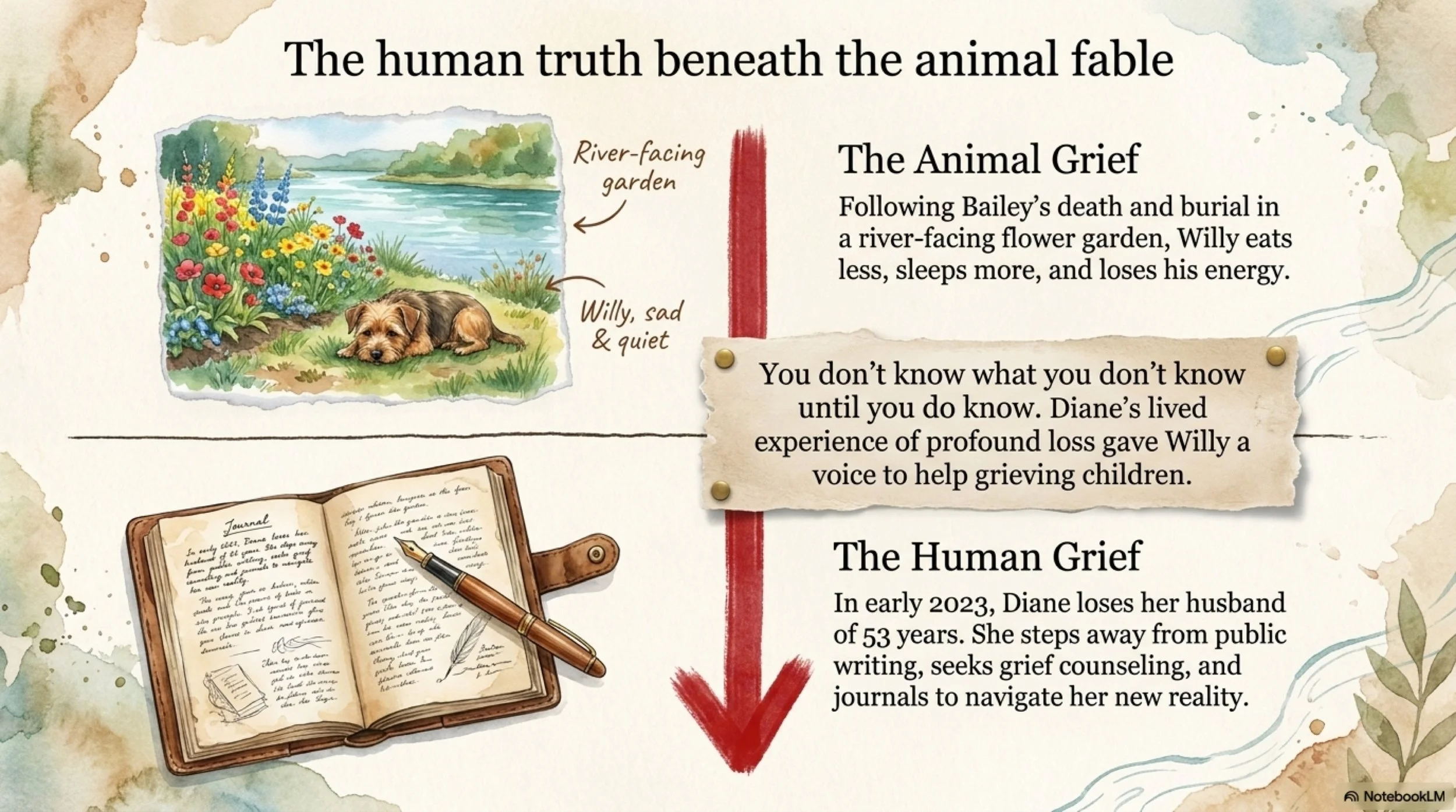
The energetic dog ate less and slept more. His expression and demeanor appeared sad. He spent time lying in the garden near the place where Bailey had been buried.
Diane and her family did not try to force him back into his old behavior. They gave him kindness, space and permission to be quieter and even a little grumpier than usual.
“He was upset and missing his friend,” Diane said. “It took a while for him to come out of that.”
Willy could not explain what he felt.
But Diane could see that the loss had affected his appetite, energy and behavior. She believed he was grieving.
At the time, it was a painful family story about a dog who had lost his closest companion.
Years later, it would become something more.
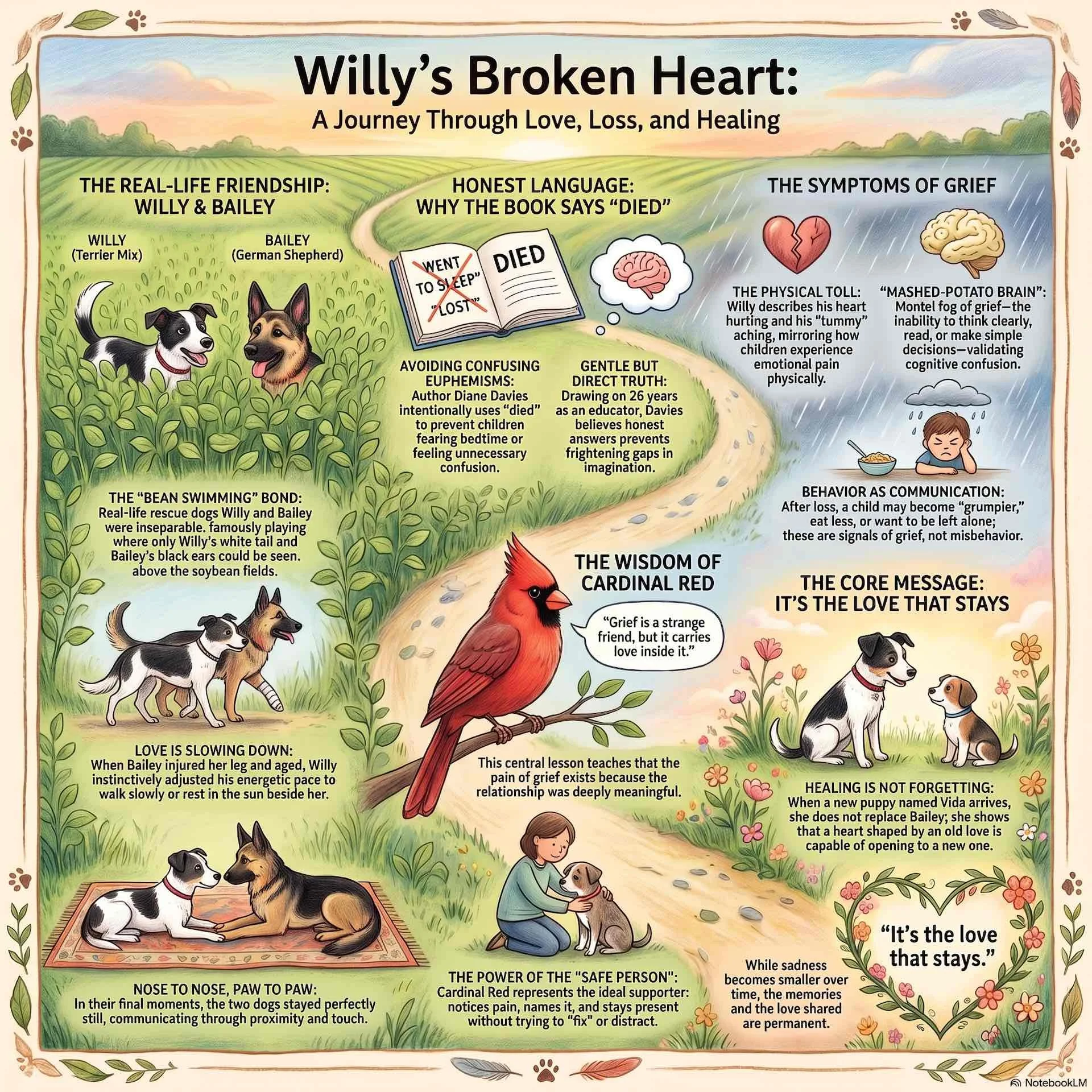
Infographic by HastingsNow.com
The story that returned after another loss
There are times when a writer chooses a subject.
There are other times when a subject waits quietly until the writer is ready to understand it.
In early 2023, Diane’s husband of 53 years died suddenly.
He had not been feeling well. Within only a few hours, Diane’s life had changed completely. She left home as a wife following an ambulance to the hospital and returned as a widow.
In the months that followed, she stopped writing publicly.
She journaled privately instead.
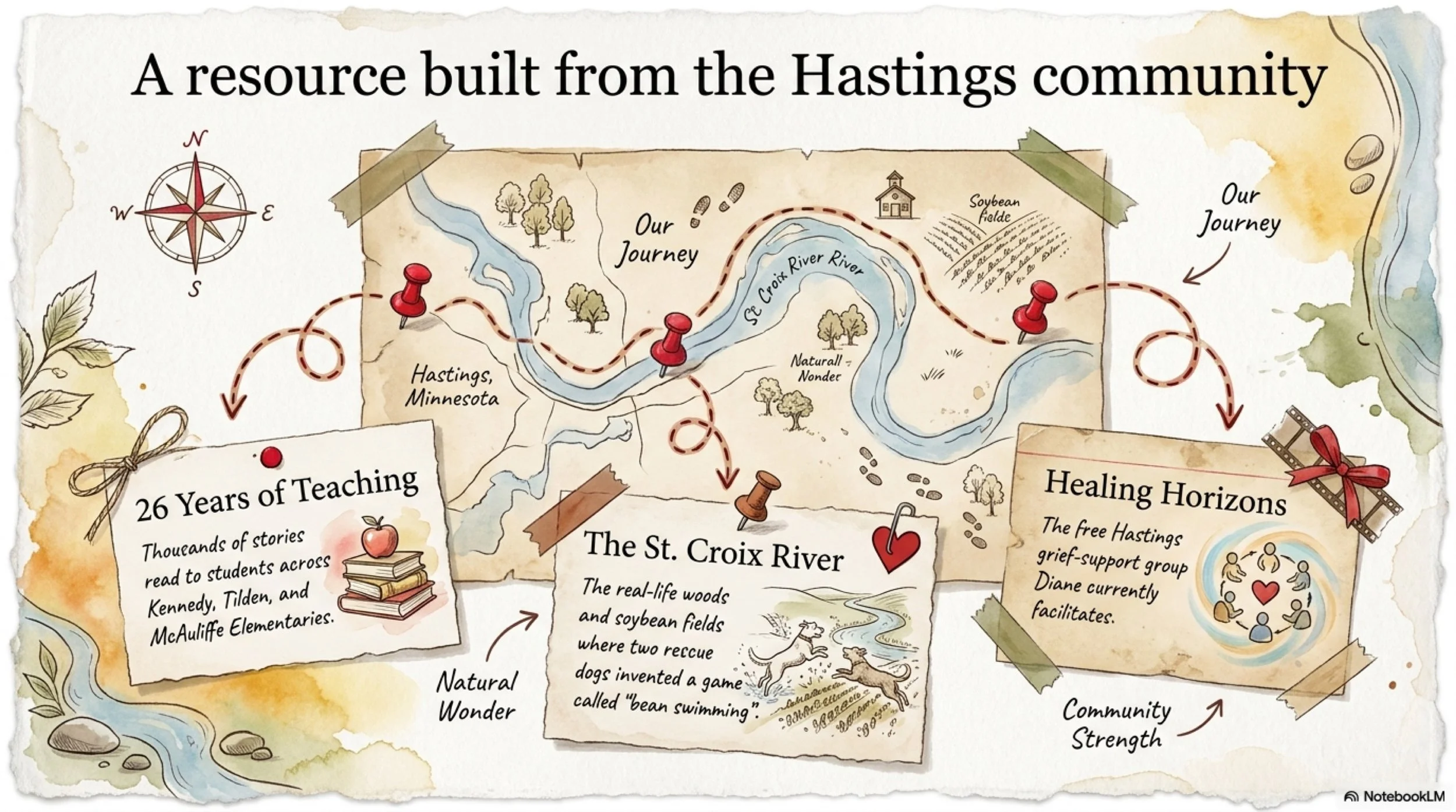
She sought grief counseling and began the difficult work of learning how to live inside a life that no longer resembled the one she had expected. She watched her grandchildren grieve the death of their grandfather. She also became involved with Healing Horizons, a free grief-support group that she now facilitates in Hastings.
As Diane tried to understand her own grief, she began thinking again about Willy.
She remembered his changed appetite, his tiredness and the days he spent lying in Bailey’s garden. She remembered how he had seemed lost without the friend who had helped shape his life.
She also remembered her grandchildren.
Diane had always known that children experience loss. But grief had now become something more than an idea she understood as a teacher. It had become a condition she was living through herself.
“You don’t know something that you don’t know until you do know,” she said.
The sentence may sound circular, but anyone whose life has been divided into a before and an after understands its meaning.
Some truths can be studied.
Others are learned only when they arrive at the door.
As Diane watched children grieve and tried to make sense of the physical, mental and emotional effects of her own loss, one thought continued returning:
Children need this story.
Willy had a story to tell.
His experience could give children language for the pain in their hearts, the discomfort in their stomachs, the confusion in their minds and the loneliness that can follow the death of someone they love.
Why the book says “died”
Many adults struggle to speak plainly with children about death.
We reach for expressions that sound softer.
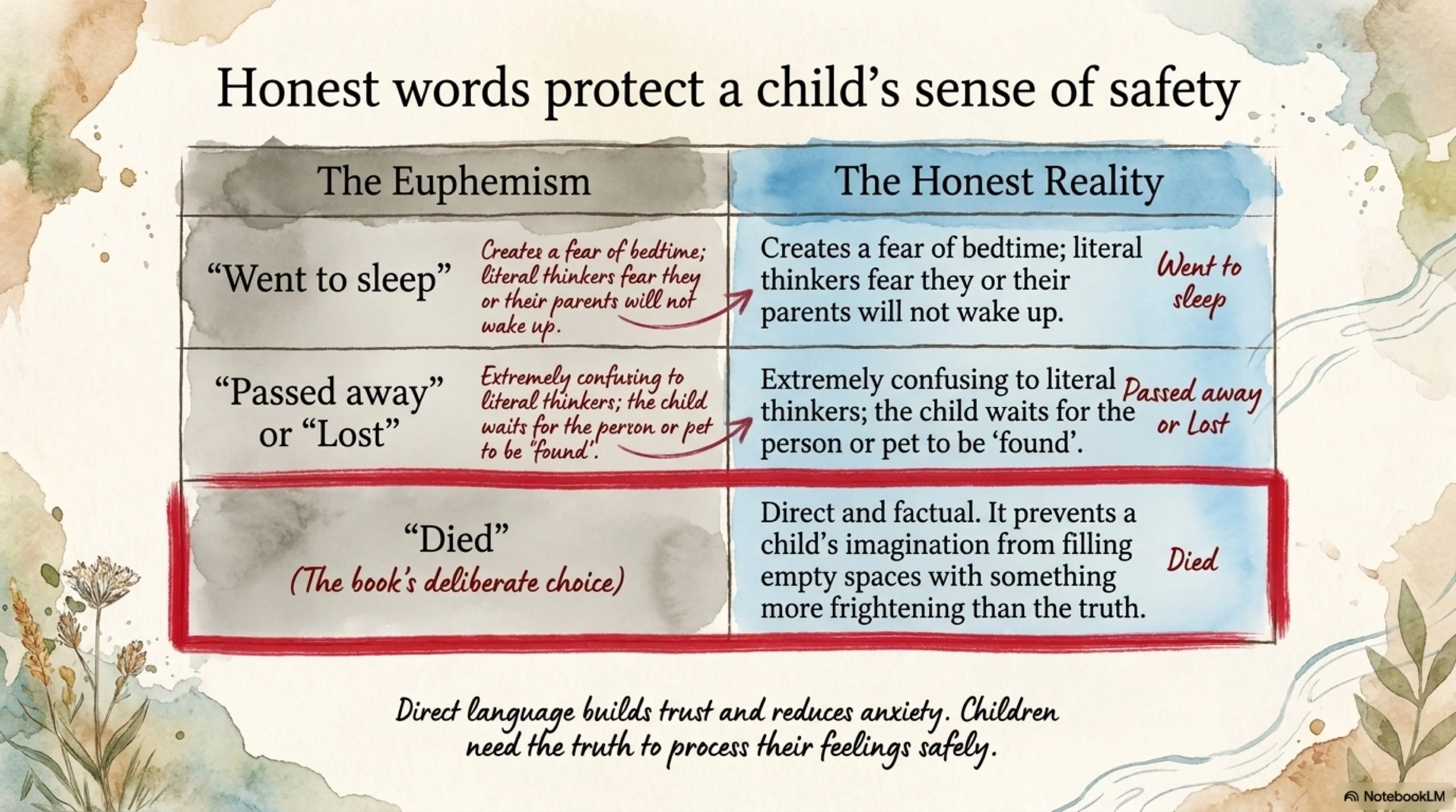
A pet has “gone away.”
A grandparent has “gone to sleep.”
Someone has been “lost.”
Diane made a deliberate decision not to hide behind those expressions in Willy’s Broken Heart.
Bailey died.
Willy is grieving.
Those words are direct, but the way they are presented is gentle.
Diane’s philosophy was shaped by 26 years as an elementary educator, during which she read thousands of stories to children. Her books frequently help families begin conversations about subjects adults may find difficult to explain, including a cancer diagnosis and now grief.
“I feel that it’s very important for adults to use language with children that is gentle but not language that’s confusing,” she said.
Telling a young child that someone “went to sleep,” Diane explained, may create a fear of bedtime. A child might wonder whether going to sleep means they, too, will disappear and never return.
When children are given incomplete or confusing explanations, their imaginations may fill the empty spaces with something more frightening than the truth.
Diane believes children deserve honest answers, expressed simply and with care.
That philosophy is consistent with guidance from the American Academy of Pediatrics and the Dougy Center, which encourage adults to use clear, age-appropriate language, listen carefully and allow a child’s questions to guide the conversation. Vague expressions such as “went to sleep” can be especially confusing for children who interpret language literally.
Adults do not need perfect answers.
They need the courage to remain present.
When grief hurts the heart—and the tummy
In the book, Willy tells Cardinal Red what has been happening inside him.
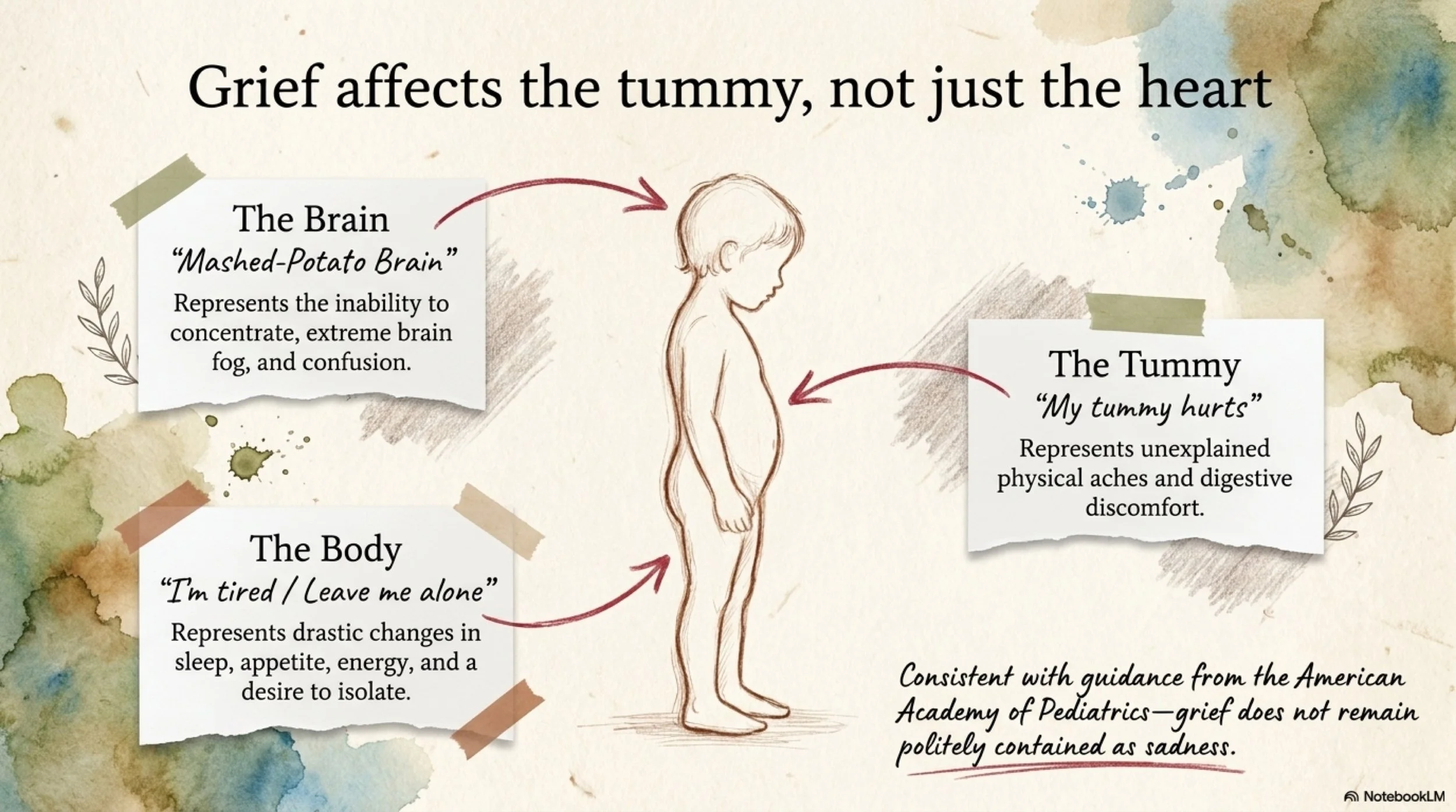
“My heart hurts, and my tummy even hurts when I think about her.”
He also says he does not understand what grieving means.
Cardinal Red explains that grief is a strong feeling that can follow the death of someone or something close to us. It may bring sadness, confusion and anger.
Sometimes, Cardinal Red says, it can feel as though a person has mashed potatoes in place of a brain.
That description came from Diane’s own experience.
After her husband died, she sometimes struggled to think clearly, read or make ordinary decisions. Her mind felt so foggy that she began calling the sensation “mashed-potato brain.”
She wanted children to understand that grief does not always remain politely contained inside an emotion labeled sadness. It may affect how a person thinks, eats, sleeps, concentrates and participates in everyday life.
A child may not approach an adult and say, “I am experiencing grief.”
The child may say:
“My tummy hurts.”
“I’m tired.”
“I don’t want to go.”
“I can’t think.”
“Leave me alone.”
Those statements can have many possible causes and should not automatically be attributed to grief. But following a death, they may offer an opening for a gentle conversation.
Helping children name what they feel, Diane believes, can make a frightening experience less mysterious.
The American Academy of Pediatrics similarly notes that grief can affect sleep, regular meals, physical well-being and daily functioning. Children may require additional support when symptoms are severe, persistent or interfere significantly with everyday life.
Diane does not present Willy’s Broken Heart as a cure for grief.
It is an invitation to begin talking.
Cardinal Red does not try to fix Willy
Cardinal Red is one of the wisest and kindest animals living in what Diane calls “the neck.”
He is also a recurring presence in Diane’s world of stories.
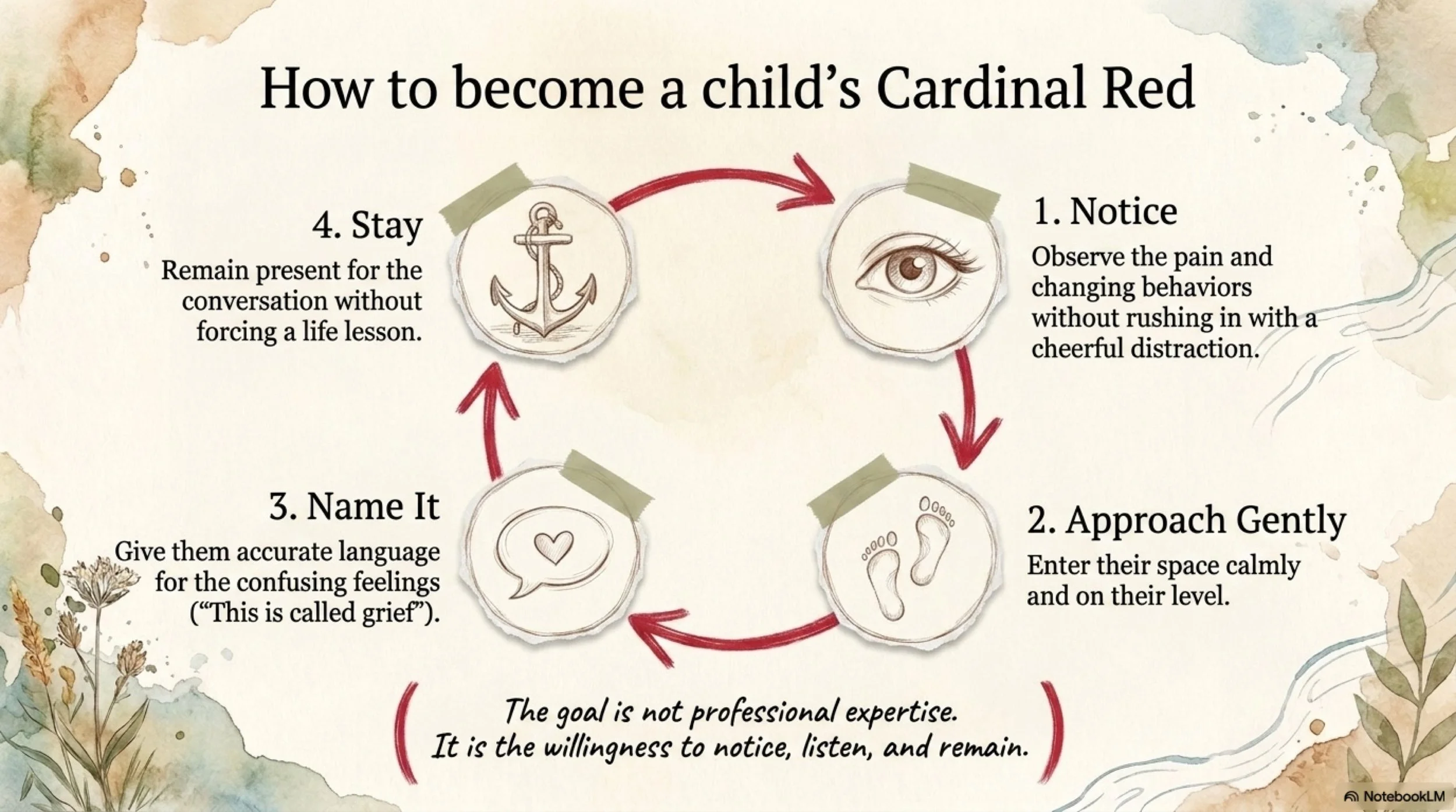
When he sees Willy crying beside Bailey’s garden, Cardinal Red does not rush in with a cheerful distraction. He does not tell Willy to stop crying, count his blessings or find another dog to play with.
He notices.
He approaches gently.
He names what is happening.
Then he stays for the conversation.
Cardinal Red tells Willy it is all right—and even good—to talk about his grief. He explains that strong feelings may become smaller and that family and friends can help when the sadness feels too large to carry alone.
To Diane, the cardinal represents wisdom, healing and the safe person a grieving child can trust.
A cardinal is also meaningful to many people who see the bright red bird as a comforting reminder of someone who has died. Diane does not insist upon one interpretation. Within the story, Cardinal Red is first and foremost the compassionate friend willing to sit beside someone in pain.
“I think adults should take a close look at the way Cardinal Red talks to Willy,” Diane said. “It’s important, as a parent, to become that wise, safe person that your child wants to talk to about the important things in life.”
Children need accurate explanations.
But they also need a Cardinal Red.
That person might be a parent, grandparent, teacher, counselor, librarian, pastor, coach, veterinarian or trusted family friend.
The defining quality is not professional expertise.
It is the willingness to notice, listen and remain.
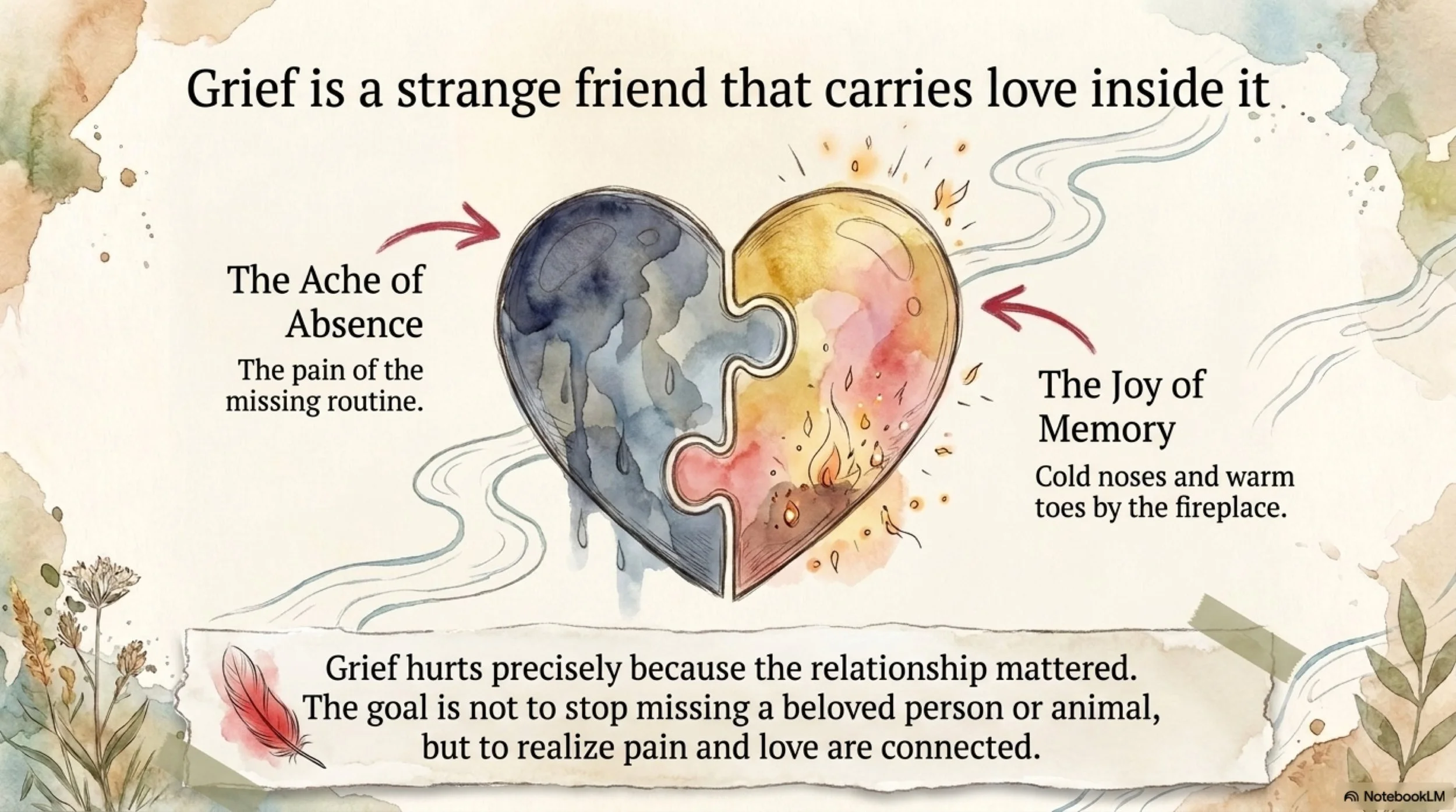
Grief is a strange friend
Winter comes quickly to the neck after Bailey dies.
Willy spends more time indoors beside the fireplace. Memories of Bailey arrive unexpectedly: chasing children on the toboggan hill, waiting at the door to be let inside and snuggling together until their cold noses and toes became warm.
Each memory carries two feelings.
There is the ache of Bailey’s absence.
There is also joy in remembering that she lived.
The book offers children a sentence that adults may need just as much:
“Grief is a strange friend, but it carries love inside it.”
Grief hurts because a relationship mattered.
The goal is not to persuade a child to stop missing a beloved animal or person. It is to help the child understand that pain and love are connected—and that remembering does not prevent life from continuing.
Spring eventually returns.
The snow melts. Willy runs across the meadow again.
Then a door opens.
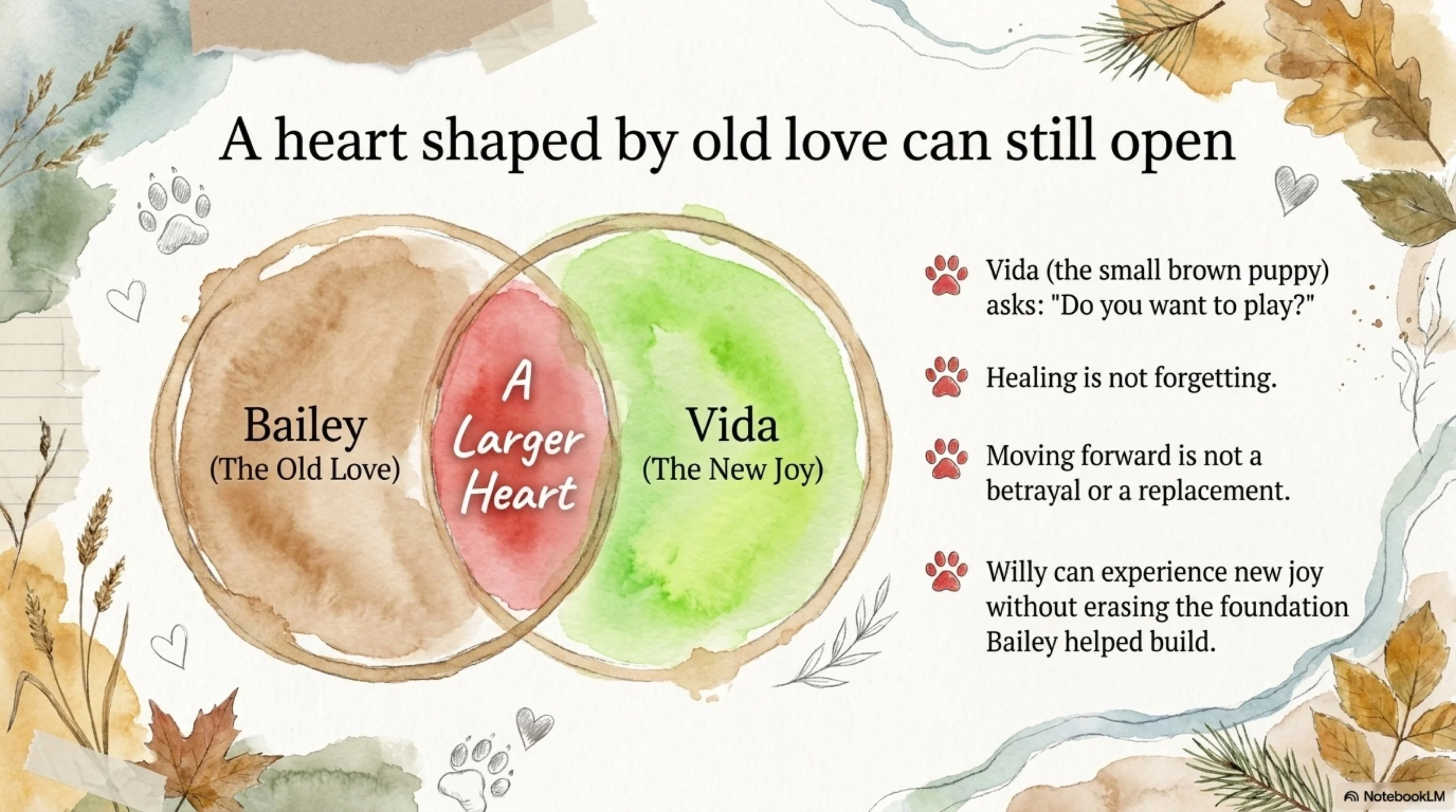
Out comes Vida, a small brown puppy whose legs appear to be flying in every direction. She races toward Willy, introduces herself and asks the most uncomplicated question imaginable:
“Do you want to play?”
Willy runs.
Vida does not replace Bailey
Ending the book with a new friend required care.
A story about pet loss can easily imply that the solution is simply to get another animal. That is not the lesson Diane wanted to offer.
Vida does not replace Bailey.
No dog could.
Willy’s relationship with Bailey helped form the dog he became. Their adventures, routines and years together remain part of his life.
But remembering Bailey does not require Willy to refuse every future friendship.
“Healing is not forgetting,” Diane said. “It’s not replacement, and it’s not betrayal.”
Willy can remember Bailey and still run again.
He can experience new joy without erasing old love.
Diane connects that message directly to her own life. Her 53 years of marriage remain part of who she is. Moving forward does not mean abandoning those years or the person with whom she shared them.
“Life goes on,” she said. “It does not stop just because your loved one has passed.”
That continuation is not always welcome at first. Grieving people may feel that the world should stop because their world has changed so completely.
Eventually, however, the heart may discover that memory and new experience are not enemies.
It can carry both.
Vida does not repair Willy’s heart by taking Bailey’s place.
She shows him that a heart shaped by an old love can still open itself to a new relationship.
A Hastings educator returns to one of life’s hardest lessons
Diane Davies spent 26 years teaching elementary school students.
She taught at Kennedy, Tilden and McAuliffe elementary schools in Hastings and has continued returning to classrooms as an author, reading her stories and answering children’s questions about writing, books and the natural world.
Her writing career grew from lived experience.
After breast cancer changed her life, she wrote about survivorship and became an advocate for other patients. She later wrote Jeannie Ann’s Grandma Has Breast Cancer to help adults speak with children about a frightening family diagnosis.
Now grief has become part of that continuing mission.
Willy’s Broken Heart is a children’s story, but Diane does not believe it should be read once and returned permanently to a shelf.
She hopes parents and grandparents will use it to begin conversations at home.
She hopes teachers and librarians will read it with children.
She hopes school counselors, veterinarians, hospice organizations, family-support programs and grief professionals may find ways to use it as a resource.
“I want it to be a discussion starter,” she said, “a place where adults and children alike can use it as a jumping-off point.”
The book is not meant to supply every answer.
It is meant to make the first question easier to ask.
What is happening inside me?
Why does my tummy hurt?
Why am I angry?
Will I always feel this sad?
Is it all right to laugh again?
Can I love someone new without forgetting the one who died?
Those are not only children’s questions.
They belong to nearly everyone who has loved and lost.
How families can read Willy’s Broken Heart together
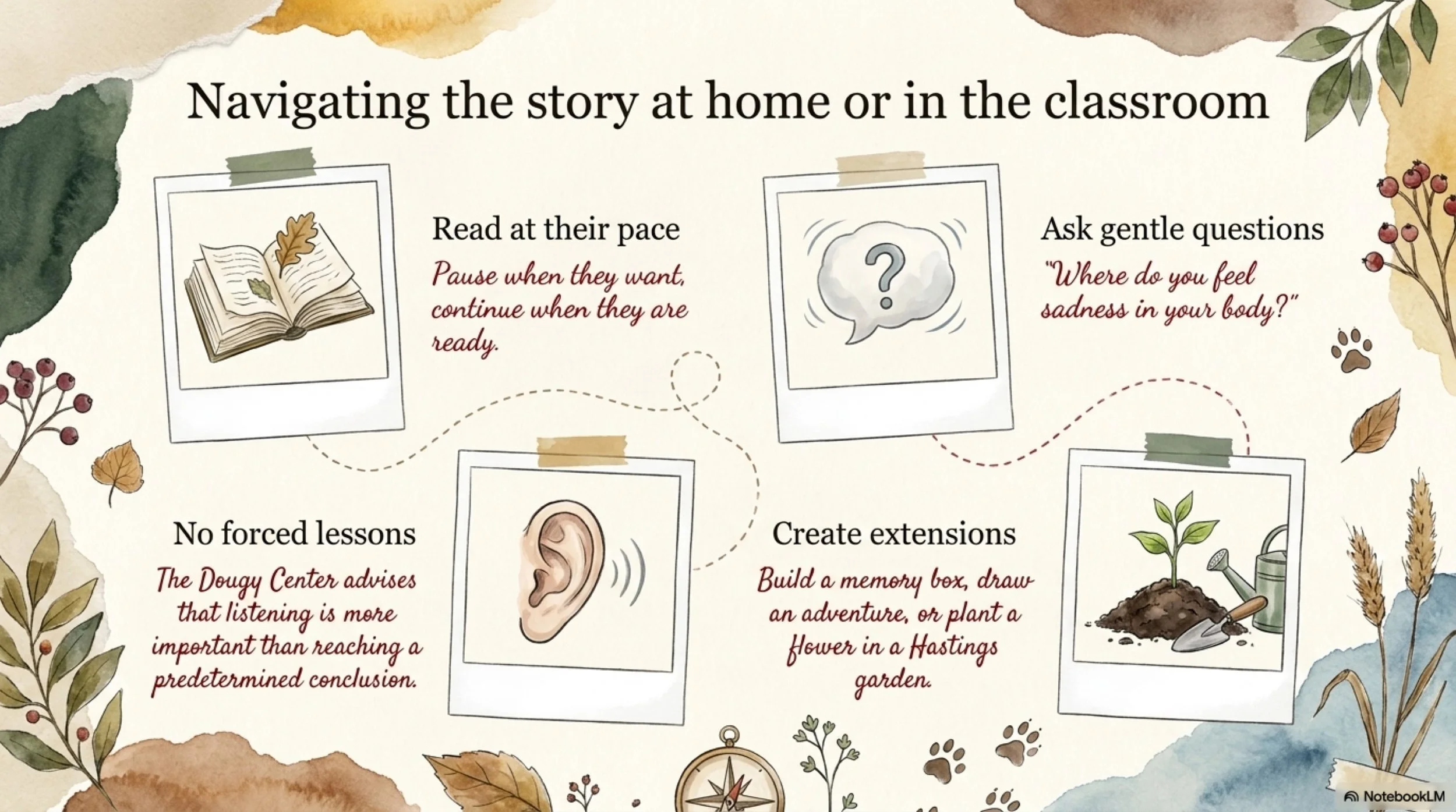
Adults reading the book with a grieving child do not need to transform the experience into a formal lesson.
They can begin by sitting close.
They can pause when the child wants to pause and continue when the child is ready. They can talk about Willy’s feelings without demanding that the child immediately discuss their own.
Questions might arise naturally:
What do you think Willy is feeling in the garden?
Where do you think sadness can be felt in the body?
Why does Cardinal Red stay with Willy?
What do you think Bailey taught Willy?
Does Vida make Willy forget Bailey?
What is one memory you would never want to lose?
A child may answer every question.
A child may answer none.
Listening remains more important than completing an activity or reaching a predetermined conclusion. The Dougy Center advises adults to allow children choices in how they grieve and to resist the urge to direct every part of the experience.
A family might also create a memory box, draw a favorite adventure, write a letter, plant a flower or tell stories about a pet or person who died.
But nothing must happen immediately.
Sometimes reading together is enough.
The story beneath the story
On its surface, Willy’s Broken Heart is about a small terrier who loses a German shepherd.
Beneath that story is another one.
It is the story of a teacher who spent decades helping children understand the world, then discovered that grief could make even familiar parts of that world difficult to recognize.
It is the story of a widow who began to understand the grieving dog in her garden differently after experiencing a devastating loss of her own.
It is the story of grandchildren missing their grandfather.
It is the story of adults trying to find words that tell children the truth without taking away their sense of safety.
And it is the story of two rescue dogs who gave each other exactly what they needed during the years they shared.
Willy gave Bailey energy, play and someone to care for.
Bailey gave Willy companionship, patience and a model of steady love.
When Bailey could run, they ran together.
When she could no longer run, Willy rested beside her.
When she died, he carried what she had given him into the life that remained.
The white tail runs again
By the end of the book, spring has returned to the neck.
Willy and Vida run until they are exhausted. Then they collapse together in the shade, their front paws touching.
It is easy to see a new beginning in that scene.
But it is not a beginning made from nothing.
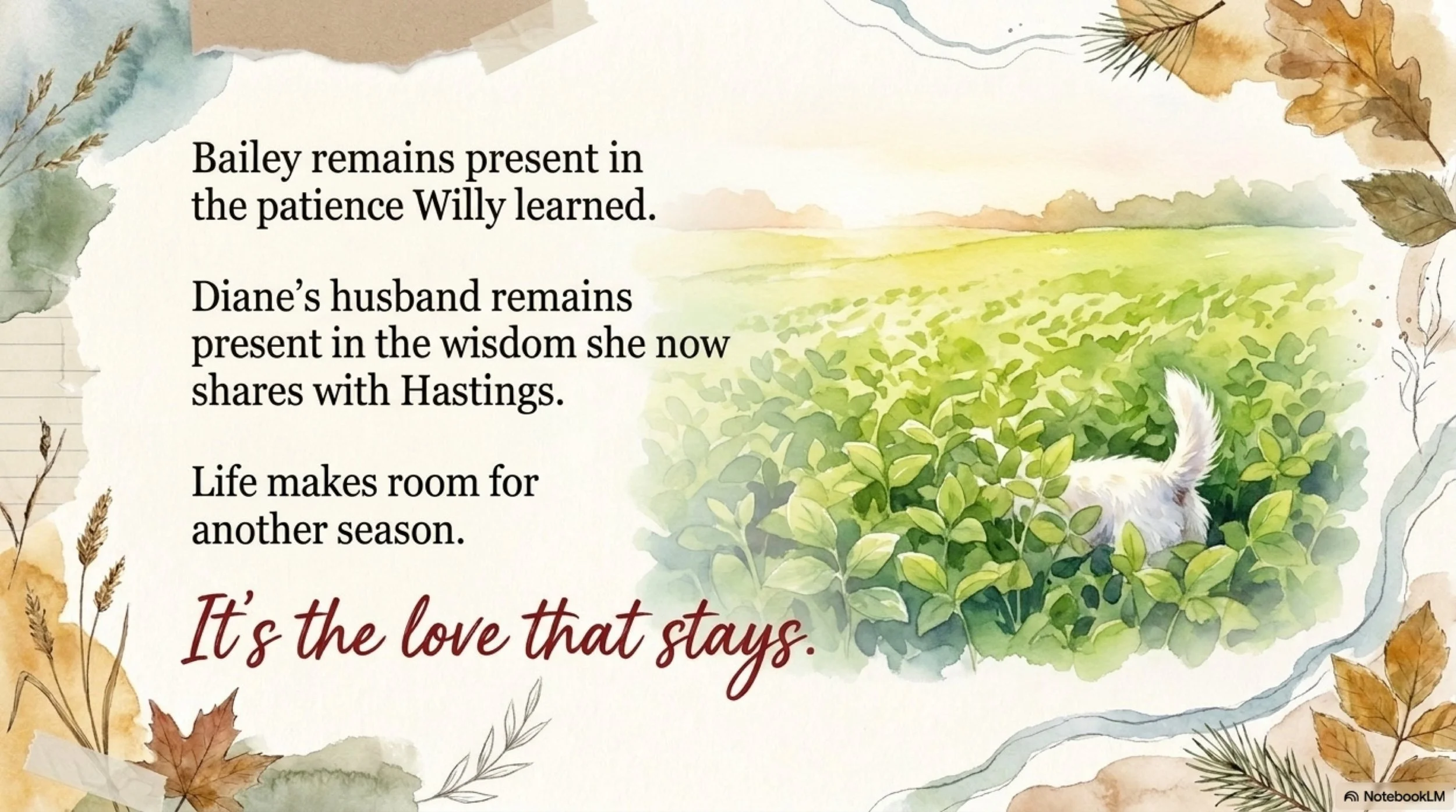
Bailey is present in the patience Willy learned, the friendship he now knows how to offer and the capacity for love she helped deepen within him.
The sadness has not been declared over.
The relationship has not been erased.
Life has simply made room for another season.
When Diane imagines a child or family closing the book, she hopes one truth remains with them:
“The sadness becomes smaller as time passes, while the love and the memories remain.”
She repeats the idea in simpler words.
“It’s the love that stays.”
In the neck of the woods, the white tail runs again.
The love that taught it how has never left.
About Diane Davies and Willy’s Broken Heart
Diane Davies is an award-winning Minnesota author, former elementary educator, grandmother and breast cancer survivor-advocate. Her books help children and families begin honest conversations about friendship, illness, grief and other significant life experiences.
Willy’s Broken Heart: A Story About Love, Loss, and the Friends Who Help Us Heal is available in hardcover, paperback and ebook formats. Signed copies, bulk orders and school or counselor orders are available through Diane’s official website.
Invite Diane for a School, Library or Community Visit
Watch the official Willy’s Broken Heart video
Frequently asked questions
-
The book was inspired by the real friendship between Willy, a rescued terrier mix, and Bailey, an older rescued German shepherd. The story uses imaginative characters and conversations—including Cardinal Red’s guidance—to help children understand grief.
-
The story explains that grief can involve sadness, confusion, anger, physical discomfort and difficulty thinking. It reassures children that they can talk with trusted people, that strong feelings can gradually become smaller, and that love and memories remain.
-
Diane chose direct but gentle language because phrases such as “went to sleep” can confuse or frighten young children. The story names death honestly while surrounding the conversation with reassurance and care.
-
Cardinal Red is the wise and compassionate friend who notices Willy’s pain, helps him name what he is feeling and stays to listen. Diane hopes adults will consider how they can become similarly safe and trustworthy people for grieving children.
-
No. Vida represents the possibility of new friendship and joy. Willy continues to love and remember Bailey. One of the book’s central messages is that moving forward is not the same as forgetting.
-
The book was created for children and families, as well as parents, grandparents, teachers, librarians, school counselors, veterinarians and other adults helping children understand loss.